

Why the selloff turned into a bargain hunt
A $1 trillion semiconductor drawdown in a single session should have broken the story. Instead, it exposed a split in how investors read the market. Skyworks, onsemi, and Amkor did not just recover; they rebounded quickly, jumping 6.5%, 4.5%, and 5.4% as sentiment stabilized. The trigger was strategic rather than company-specific: Jensen Huang framed the selloff as a chance to buy at a discount because AI infrastructure is still in the early stages of buildout.
That framing matters. Bulls see a classic reset, where equity prices overshoot on financing fear and then reprice toward the real bottleneck. In this case, the bottleneck is not just flagship GPUs. It is the broader infrastructure layer that attaches, routes, powers, and packages compute as adoption accelerates. Bears will argue this was only a technical bounce after an overreaction. Maybe. But Huang's message that the industry is still early in building the AI-fueled future makes that harder to sustain if demand signals keep showing up.
The opportunity is straightforward: if the AI buildout is still in its first innings, the names that benefit from density, bandwidth, and system complexity can rerate again. The risk is that the rebound proves shallow. For now, though, the market is choosing to buy the infrastructure rails rather than walk away from them.
Why the rally made sense: AI is becoming a factory buildout
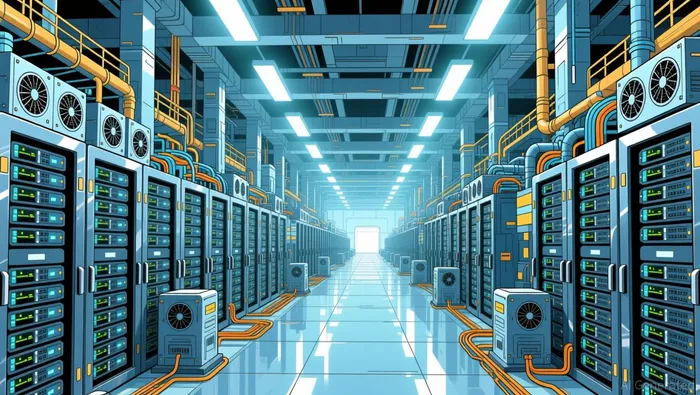
The rebound makes more sense when you shift the lens from chip scarcity to system buildout. At Computex, Huang effectively argued that AI is becoming an industrial process: data centers are now AI factory era assets that turn compute into monetized tokens, while market focus moves from isolated GPU specs to complete "AI infrastructure" or "AI factories". That changes which bottlenecks matter.
The system, not the die, is becoming the constraint
The clearest proof was operational, not promotional. Huang said Vera Rubin is in full production, and he emphasized how quickly Grace Blackwell racks can now be assembled. That is not just a manufacturing headline. It suggests AI deployment is moving up the S-curve into rack-level and factory-scale integration, where packaging, power delivery, thermal design, and interconnect determine how fast capacity becomes revenue. Citi captured the same shift, saying market focus is moving beyond individual GPUs toward complete "AI infrastructure" or "AI factories".
Why packaging, power, and signals matter more
When every token is treated as a revenue unit, the winners are not only the companies making the fastest core chip. They are also the companies that can carry more signal, move more power cleanly, and keep complex systems tested and synchronized as adoption accelerates. Huang also said Nvidia has enough supply to accommodate robust growth for CPUs as well as GPUs. If that message holds, the near-term choke point shifts away from raw chip allocation and toward the surrounding infrastructure layer.
That helps explain why Skyworks, onsemi, and Amkor rallied. They sit in paths that can benefit from higher density, more demanding power delivery, and greater system complexity.
What could break the logic
Bears will argue that supply comments only mean demand is strong enough to absorb inventory, not that the bottleneck has truly shifted. Fair enough. The watchpoint is now clear: if rack assembly speed, production scaling, and supply availability keep improving, the market may keep paying up for the rails that make AI factories runnable. If those signals stall, the rerating loses its mechanism.
Not every rebounding chip stock is on the same curve
The rebound was broad, and that is exactly where investors need to be careful. After the $1 trillion semiconductor drawdown, the afternoon recovery lifted Skyworks 6.5%, onsemi 4.5%, and Amkor 5.4%. A move like that should not be read as a clean verdict on any one company. It shows sentiment snapped back across the sector. The harder question is which names are riding durable AI-infrastructure demand and which are simply enjoying a relief bounce.
Different businesses, different rerating quality
The strongest setups are the companies most directly tied to the AI factory buildout: packaging, power delivery, system integration, and other infrastructure layers that scale as adoption accelerates. In those cases, revenue can compound because the bottleneck is structural, not merely cyclical.
The weaker setup is the name whose recovery depends more on mobile stabilization, automotive recovery, or industrial demand returning on schedule. Those are real businesses, but they sit on a different curve. If the market starts discriminating again, generic "chip recovery" logic does not protect a multiple.
Why Amkor looks more exposed to a reset
That points to Amkor as the most vulnerable of the three to a post-bounce multiple reset. The bull case is straightforward: if AI buildout keeps deepening, packaging and testing should benefit from higher system complexity. But the bear case is more fundamental. StockStory describes Amkor as facing a bumpy ride, citing underwhelming revenue growth, weak free cash flow, and a quality profile below its standards.
Recent operating data cuts both ways. Amkor posted Q1 revenue of $1.68 billion and Q2 revenue guidance of $1.8 billion, both above expectations. But it also generated negative Q1 free cash flow of $79.52 million, and inventory days rose to 31 from 25. That combination matters. It suggests the business can beat estimates, but not yet with the cash conversion or durability that fully justifies a premium multiple.
The practical filter
The hierarchy is simple: favor the names with the clearest line of sight into AI infrastructure spend. Onsemi still carries more automotive and industrial exposure than a pure AI rail, but Amkor has the weakest operating quality to fall back on if the sector stops treating every rebound as equal. Not every rocket stock is on the same S-curve.
How to position without chasing the hype
The practical move is to stay selective inside the rally, not chase every rebounding chip name. Huang already set the confirmation window: the second half should be very, very busy with Grace Blackwell and Vera Rubin, and Vera Rubin is in full production. After the selloff, he also told investors to be glad they can buy at a discount. That is opportunity, not a free pass.
What to watch next
The cleanest filter is whether the market keeps paying for complete "AI infrastructure" or "AI factories", not just flagship GPUs. If rack-level design, power delivery, and system integration keep showing up in supplier commentary and production milestones, selective exposure still makes sense.
If those signals fade and the market returns to treating semis as one broad basket, the easier trades may disappear quickly.