

The question isn't whether a senator bought consumer staples stocks. The question is whether the factor stack that would justify buying them is still intact or whether valuation has caught up and the rest is coasting. When Sen. Gary Peters (D-Mich.) recently disclosed several stock transactions in April 2026, the narrative wrote itself: a politician betting on defensive names amid inflation and recession whispers. But in our book, a story is just context. The real work happens when you place those stocks inside their sector and check valuation, growth, and profitability against peers.
Start with the unusual part. Peters bought only two stocks in 2025 and bought no stocks in 2024, and he's been supportive of legislation to ban members of Congress from buying and selling stocks and other investments. That makes his April purchases notable, but not necessarily a signal to follow. The two names were PepsiCo and J.M. Smucker, both classic consumer staples with PepsiCo stock up 6.8% year-to-date in 2026 and J.M. Smucker stock up 3.8% year-to-date in 2026. The sector itself has seen rotation, with the Consumer Staples Select Sector SPDR Fund XLP rising approximately 13% year-to-date through early February, marking one of its strongest starts in over a decade. But sector momentum is not a stock-specific thesis.
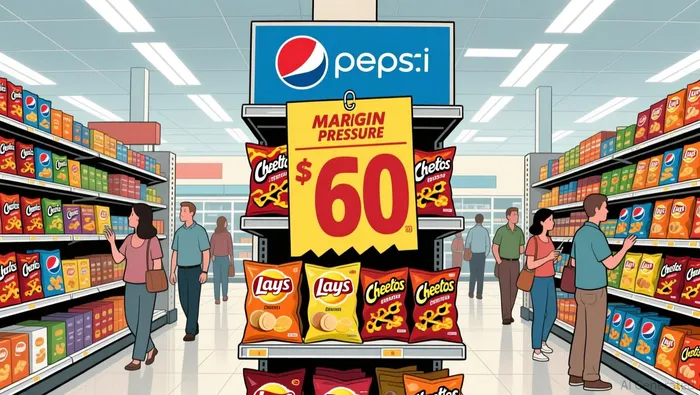
PepsiCo trades at $151.85 with a P/E TTM of 23.8 and a forward P/E of 33.5 - that's a 41% expansion in the forward multiple, which usually means analysts expect earnings to contract. The dividend yield sits at 3.75%, respectable but not exceptional for a defensive name. What's missing is the sector comparison: without the median consumer staples P/E, we can't say whether 23.8 is cheap or expensive. But the forward P/E spike tells its own story - the market is pricing in softer earnings ahead, which contradicts the "steady defensive cash flow" narrative. PepsiCo's Q1 2026 results beat expectations and the company is cutting prices on core U.S. snack brands by up to 15% to drive volume, but that margin pressure shows up in the forward multiple.
J.M. Smucker shows a more concerning pattern. At $100.33, the stock has a P/E TTM of -8.5 and a forward P/E of -60.9 - both negative, which is unusual for any consumer staples company, let alone one being positioned as a defensive holding. The dividend yield is higher at 4.36%, but negative earnings mean the payout isn't covered by current profits. The stock has shown better recent momentum with 8.8% gains over the past 20 days versus PepsiCo's 2.5% decline over the same period, but momentum without fundamentals is just price action, not a thesis.
The senator's purchases fit a classic defensive rotation playbook that investors instinctively fall back on when geopolitical risk rattles the markets. But as J.P. Morgan strategists note, the inflation playbook of buying energy and consumer staples may be becoming increasingly outdated, with utilities and healthcare offering more compelling defensive characteristics. The real test for these stocks isn't whether they're owned by a senator. It's whether they show collective strength across valuation, growth, and profitability relative to their sector peers - and whether momentum and revisions confirm the timing.
Without full sector median data for all metrics, we can't assign definitive Z-score grades. But the available numbers raise flags: SJM's negative earnings metrics don't align with defensive characteristics, and PEP's forward P/E expansion suggests earnings pressure ahead. If you're building a consumer staples sleeve for uncertainty, the answer isn't to follow political signals. It's to screen for stocks with strong valuation vs. sector, durable growth, and solid profitability - then use momentum and revisions to time entry. The senator's story is interesting context. The factor stack is the investment case.