

The campaign is a precise, scaled theft operation. Researchers identified 26 fraudulent applications on the Apple App Store, each meticulously mimicking a major crypto wallet like Metamask, Ledger, and Trust Wallet to deceive users. This is not a new scheme but a revival of the SparkKitty/SparkCat scheme active since 2024, now distributing through a new phishing app vector. The core mechanism is a classic phishing-to-trojan pipeline: users download the fake app, are redirected to a spoofed App Store page, and install a malicious wallet via a developer provisioning profile, all while the app targets their recovery phrase.
The iOS variant introduces a significant tactical upgrade. Unlike earlier versions that scanned local photo galleries, this new malware scans for cryptocurrency wallet mnemonic phrases, which are in English. This shift broadens its reach beyond regional language barriers, making it a threat to any user with English recovery phrases on their device, regardless of their App Store region. The campaign has been active since at least fall 2025, with Kaspersky attributing it to the same actors behind the earlier SparkCat operation.
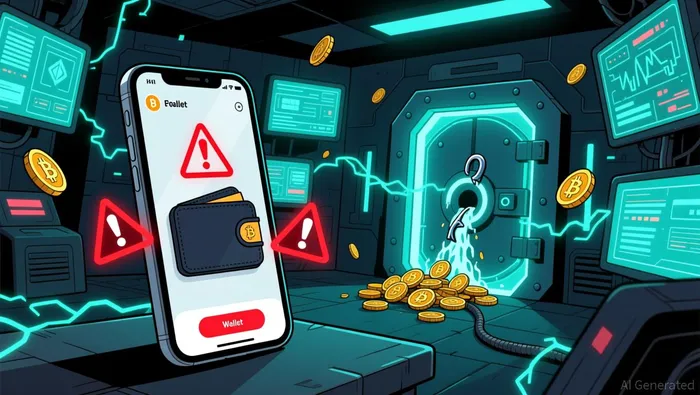
The scale of the theft is contained but representative of a persistent, evolving threat. The 26 apps are a small number in the vast App Store, but each is engineered to steal private keys from a major hot wallet. The mechanism-using stub apps to deliver trojanized wallets via provisioning profiles-has proven effective enough to be revived and adapted. The key vulnerability remains user trust in the App Store's vetting, which attackers exploit by masquerading as legitimate, popular tools.
Market Context: Volume and Price Action
The isolated theft from the 26 fake apps is a drop in the bucket for the dominant forces shaping crypto's price and liquidity. Bitcoin is holding firm, trading at $75,901.41 and up 0.76% today. This resilience occurs against a backdrop of massive, structural growth, with the underlying crypto wallet market projected to balloon to $98.57 billion by 2034.
The real flow that moves the needle is the staggering scale of protocol-level theft. In just 18 days of April 2026, crypto protocols lost over $606 million to hacks. That figure alone dwarfs the potential total from the App Store phishing apps and makes April the single worst month for exploits since early 2025.
This contrast frames the actual risk. While the fake wallet apps prey on individual user error, the $606 million in recent protocol losses represents a systemic drain on the ecosystem's capital. It highlights that the dominant liquidity flows are not in user-facing apps, but in the DeFi infrastructure that underpins the entire market.
Catalysts and Risks: What Moves the Needle
The real price action will be driven by macro flows and geopolitical currents, not isolated app thefts. The primary macro risk is a stalling of institutional inflows. With US CPI at 3.3% and oil hovering around $84 per barrel, concerns over inflation and recession are pressuring capital flows into Bitcoin ETFs. This creates a headwind that could outweigh any minor on-chain volatility from phishing campaigns.
Geopolitical events are now a direct catalyst for market moves. Bitcoin's price stability is linked to international diplomacy, as seen when US–Iran talks collapsed, causing a $350 million wipeout in long positions. This demonstrates how global tensions can trigger sharp, liquidity-driven price swings, making the market sensitive to news beyond pure crypto fundamentals.
The dominant long-term flow driver is the sheer scale of adoption. With 559 million people now holding crypto worldwide, a vast base of potential on-ramp and transaction volume is in place. This creates a powerful, underlying demand for wallet infrastructure and trading liquidity, which will continue to support the ecosystem even as security threats like the fake App Store apps persist.