

A messy market can still hide smaller names worth reviewing
Asian markets have been dealing with geopolitical tensions and fluctuating energy prices, and that noise has kept attention fixed on the big, familiar names. That leaves plenty of smaller businesses in the region still flying under the radar. Even with rising inflation pressures and higher energy costs, some of the best opportunities may still be sitting in places investors are too busy or too cautious to review.
Why I am looking here
I am not chasing flashy stories. I am looking for simple businesses with real-world utility, visible demand, and balance sheets that can survive a rough patch. From the broader 978 stocks from our Asian Penny Stocks screener, I am narrowing the search to names that still have room to grow. Yes, this is a risky corner of the market: investors are warned about pump-and-dump schemes and potential total investment losses. So the job is simple: pass on the junk and keep only what clears the smell test.
The three names I want to discuss next have to pass that test in plain English:
- Does the business have a simple model people can understand?
- Is there actual consumer demand or repeat business?
- Is there still room for the stock to move if the market finally notices?
TK Group: a straightforward manufacturer with profit and payout
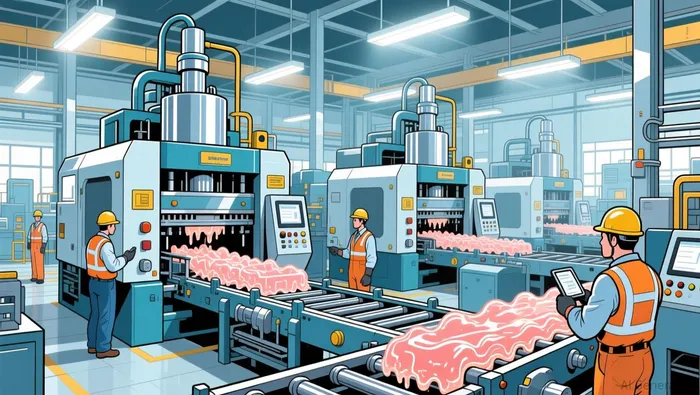
TK Group is the kind of name you either overlook or overreact to. It makes plastic parts and molds for well-known global clients, mostly in consumer electronics and related categories. No magic, no balance-sheet acrobatics. Just injection molding, tooling, and delivery. In other words, it passes the first smell test: simple business, tangible product, clear customer need.
The 2023 results show a real operating business
In 2023, TK posted revenue of HK$1.95 billion, profit of HK$200 million, and a full-year payout ratio of 82.8%. That payout matters. It is one thing to argue that profits exist on paper; it is another for cash to keep going out to shareholders. If a company can maintain a high payout in a weak consumer environment, the earnings are probably more credible than skeptical investors want to admit.
There is also a useful cushion in the business mix. TK is not just a parts assembler; it also does mold fabrication, which can help tie customers into the relationship earlier. Even with weak recovery momentum and client destocking, the plastic components business contracted more than the mold fabrication business, which still posted modest growth. That mix matters when demand is soft.
Why the stock can still rerate
Bulls see a boring manufacturer with a HK$830 million order book, a proven payout, and a company valued at about HK$1.93 billion in market capitalization. Bears see a cyclical parts maker riding one decent cycle, with consumer electronics demand still shaky after post-pandemic inventory digestion. I lean bull, but only conditionally: if repeat orders hold and margins stay reasonable, the stock is not priced like a proven cash generator.
What to watch
What separates a rerating from a value trap here is simple: repeat orders, stable margins, and dividends that keep getting paid. If those signals show up together, this boring manufacturer starts looking a lot less boring.
PC Partner Group: a visible way to review AI-adjacent hardware demand
PC Partner Group is easy to understand. It designs, manufactures, and trades VGA cards, mini-PCs, and motherboards for OEM/ODM customers and under its own ZOTAC, Inno3D, and Manli brands. It also provides EMS solutions for globally recognized brands across ATM and POS systems, industrial devices such as accelerator and control cards, and various consumer electronic products. That is plain-vanilla hardware with real-world utility, not a balance-sheet puzzle.
Why AI demand matters here
The catalyst is straightforward: if AI demand is showing up in the real world, it will not stay confined to giant data-center racks forever. Investors will also look at the edge devices, embedded systems, and graphics hardware that support that ecosystem. PC Partner has strong business relationships with NVIDIA and AMD, so if those ties translate into more orders for graphics boards and related systems, this business has a simple way to benefit.
The stock is not cheap enough to ignore, but it is not priced like a finished success story either. Shares are around SGD$2.33, the company is worth about SGD$915.41 million, and that gets you roughly 11.25x earnings plus a 3.89% forward yield. The market has already moved higher over the past year, and market cap has increased by 100.00% in one year, so this is no longer a totally hidden name. But if demand is still building, today's price may still leave room.
The debate from here
Bulls argue the rerating can hold because the company sells tangible products tied to actual GPU demand, has established ties with major chip brands, and still looks reasonably priced for a business riding an AI hardware tailwind. Bears argue the stock has already had its run and could fade once excitement cools. I lean bull only if the business keeps passing the smell test.
What would prove this is real
I would want to see orders follow the narrative. The clearest proof points would be stronger product mix, evidence that NVIDIA and AMD relationships are driving more sustained demand, and results that show PC Partner is benefiting from the compute cycle rather than just trading on it.
CNMC Goldmine: a watchlist name, not a slam dunk
This one belongs on a watchlist, not in the buy-it-blind pile.
CNMC Goldmine shows up in the broader screen at roughly SGD$559.3 million market capitalization, so it fits the size filter. But the evidence trail here is thin. The only concrete stock detail I could verify is a Share Price as of 2026-04-06 listing on SGX's Catalist. That is not enough for me to say the business has passed the smell test. In this corner of the market, I would rather miss a trade than confuse hard to value with hidden gem.
A cleaner alternative in the same screen
If the goal is still a sub-$2B Asian name with a simpler story to verify, Activation Group Holdings looks like the cleaner watchlist candidate at about HK$714.95 million market cap. Same spirit as the other picks: keep it simple, then review customer quality, product demand, and whether the numbers look like real operating progress.
The lesson here is practical: screening is only the starting line. A small market cap can create big upside, but only if you can actually understand the business and back it up with more than a ticker. That is why now matters. Markets stay unfocused in a noisy backdrop of geopolitical tensions and fluctuating energy prices, so watchlists can get useful fast. Just stay risk-aware: pump-and-dump schemes and potential total investment losses are real, so move only when the evidence gets better.