

The question isn't which markets are moving. It's which factor stacks are holding up when the headlines say they shouldn't.
When a U.S.-Iran conflict escalated in March, the textbook said defense stocks should rally, gold should shine, and Saudi equities should tremble. Instead, the iShares U.S. Aerospace & Defense ETF dropped about 12% while the S&P 500 added 3.5% over the same period. Gold fell 14.5% in the first month of the conflict while equities dropped less. And Saudi Arabia's Tadawul All Share Index showed resilience, declining by just 0.06 percent amid the turmoil.
In our book, a contradiction is data. Here are three the Iran war is revealing about how markets actually price risk versus how they're supposed to.
1. Defense Stocks: The War Play That Isn't Working
Lockheed Martin trades at 24.5 times trailing earnings and 28.6 times forward earnings - not cheap by any sector standard. The defense ETF's 12% decline since March came despite RTX missing Wall Street's forecast and Lockheed Martin posting weaker-than-anticipated earnings for the first quarter. Both stocks recorded their worst weeks since 2020.
The factor stack here is clear: valuation was already warm, growth disappointed, and momentum turned negative. The war narrative arrived too late to rescue a sector that was priced for perfection. Bank of America analyst Ronald Epstein said earnings expectations were "skewed too high", resulting in post-release sell-offs. Investors are now wondering if "peak defense" has been reached.
The portfolio lesson: a sector-specific catalyst needs a supportive factor stack to matter. Defense stocks had the catalyst but not the grades.
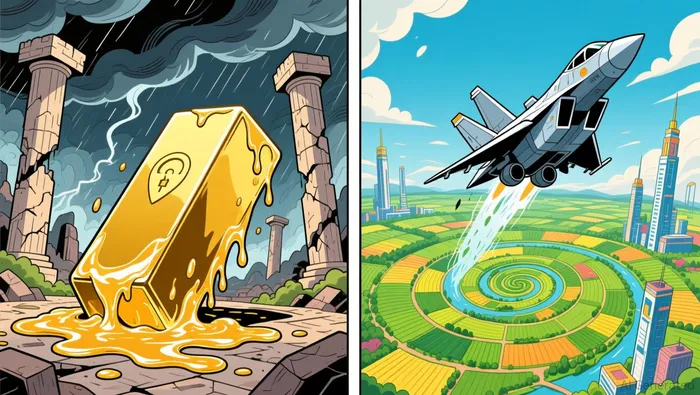
2. Gold: The Safe Haven That Isn't Safe
Gold's 14.5% decline in March marked a departure from prior geopolitical crises, when the metal typically outperformed. The FTSE All-World Index dropped 9%, the S&P 500 lost 7.8%, and U.S. Treasuries declined 3.6%. Gold tracked more closely with bonds than with conflict risk.
Morgan Stanley's analysis is blunt: "Gold's sensitivity to monetary policy has taken over as the key price driver". The conflict triggered an energy supply shock that reduced hopes for lower U.S. interest rates - an environment that hurts gold. Elevated oil prices and supply chain disruptions can push rate expectations higher, and gold doesn't always provide protection against inflationary shocks.
Spot gold now trades around $4,528.99 per ounce, down roughly 10% from pre-conflict levels. The factor grade for "safe haven" is breaking because monetary policy factors are stronger than geopolitical ones.
3. Saudi Equities: The Direct Exposure That Isn't Panicking
Iran warned that any attack on its oil infrastructure would trigger retaliatory strikes on Saudi Arabian energy facilities. Yet the Saudi market's 0.06% decline suggests either the market sees limited escalation risk, or valuations already priced the worst-case.
Brent crude surged to $126.41 a barrel - a four-year high - before settling around $120. Goldman Sachs raised its oil price forecast, blaming "lower Persian Gulf production" and estimating that 14.5 million barrels a day of Persian Gulf crude production has been lost. Exports through the Strait of Hormuz have fallen to just 4% of normal levels.
The contradiction: oil prices reflect supply disruption, but Saudi equities don't reflect existential risk. Either the market believes Saudi facilities will be spared, or it sees the conflict as containable. The factor stack for Saudi stocks includes oil revenue upside but excludes catastrophic scenario pricing.
The Barbell Response
When correlations break down, the answer is more structure, not louder predictions. The Iran conflict shows three competing forces: geopolitical risk, monetary policy sensitivity, and sector-specific fundamentals. Defense stocks are losing to earnings concerns, gold is losing to rate expectations, and Saudi equities are winning on containment hopes.
The portfolio move isn't to chase the obvious war plays. It's to build a barbell: energy exposure for the oil premium (Exxon trades at 25.4 times earnings with a 2.7% dividend yield), quality growth for when the conflict resolves, and cash for optionality when the factor stack clarifies.
The market's signal lives in the comparison set, not in the story. Right now, the comparison says monetary policy matters more than missiles, and earnings matter more than escalation. Watch the factor grades, not the headlines.