

The question isn't whether oil spiked 3.33% to $104.60 per barrel after Trump rejected Iran's peace proposal. It's whether energy stocks, already up 22% this year, have the factor stack to keep running when the headlines fade. The market's real signal lives in the sector comparison set, not in the narrative - and right now, that comparison says the rotation from tech to "real economy" stocks has more room than the geopolitical drama suggests.
When futures show a 0.1% decline against a backdrop of rejected peace deals and drone incidents, you're looking at noise, not signal. The signal is in the sector factor stacks that have been building since February: energy up 22%, industrials up 16%, consumer defensives up 13.3%. Those aren't headline reactions - they're structural rotations with earnings growth, valuation support, and momentum that predates this weekend's geopolitical flare-up.
Energy: The 22% Run That Matters More Than the 3.33% Spike
Brent crude at $104.60 gets the headlines, but the sector's year-to-date performance tells the real story. Energy stocks have delivered 22% gains not because of today's geopolitical noise, but because the factor stack - valuation relative to earnings growth, profitability margins, and momentum - has been building for months. The question for portfolio construction isn't whether to chase today's oil move; it's whether the sector's factor grades still support adding exposure after a 22% run. In our book, a sector that's already delivered that kind of performance needs to show either improving profitability or accelerating earnings revisions to justify new money. The headline spike is just the exclamation point on a sentence that's been writing itself since February.
Industrials: The Unseen Infrastructure Play
While defense stocks like Lockheed Martin and RTX grabbed attention with 3.37% and 4.71% rallies in March on similar Middle East tensions, the broader industrials sector tells a more durable story. Up 16% year-to-date, this isn't a geopolitical fear trade - it's an infrastructure and AI data center buildout story. Companies supplying the physical backbone for AI expansion, from Caterpillar's generators to GE Vernova's power systems, are seeing demand that has nothing to do with Strait of Hormuz politics. The defense pop was déjà vu; the industrial sector's momentum is something different entirely.
Consumer Defensives: The Quiet Rotation
Up 13.3% while the geopolitical drama plays out, consumer staples names are doing what they always do in uncertain environments: delivering steady earnings with pricing power. This isn't a flight to safety in the traditional sense - it's a rotation into sectors with visible cash flow and defensive characteristics when growth uncertainty rises. The factor stack here shows profitability stability rather than explosive growth, which is exactly what a barbell portfolio needs on the defensive side.
The Barbell Answer to Geopolitical Uncertainty
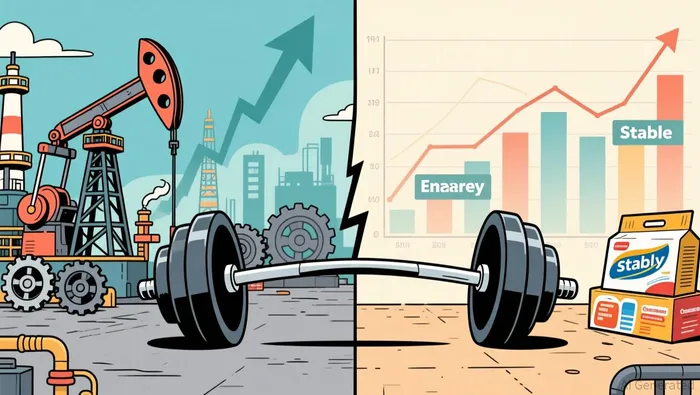
When headlines scream and futures dip 0.1%, the response isn't more conviction about geopolitics - it's more structure in the portfolio. The barbell approach pairs the energy and industrial growth stories with the defensive stability of consumer staples, creating a portfolio that can weather headline volatility while capturing the sector rotations that actually matter. Energy's 22% run needs the counterweight of defensive cash flow; industrials' infrastructure momentum needs the balance of stable consumer demand.
The trigger to change this allocation isn't another geopolitical headline. It's a deterioration in the sector factor stacks: if energy's valuation stretches beyond earnings growth, if industrials' order books show softening, if consumer defensives lose their pricing power. Until then, the 22% year-to-date energy run matters more than today's 3.33% oil spike, and the sector rotation that started in February has more staying power than the weekend's rejected peace proposal.