

Summary
- The S&P 500 trades at a trailing P/E of 31.6x - near levels that historically preceded corrections, not extensions.
- U.S. consumer sentiment has fallen to a record low for a third straight month, driven by gasoline prices tied to the Middle East war.
- The Strait of Hormuz closure has knocked roughly 6.7 million barrels per day of oil production offline. Brent crude could average $115 a barrel in 2026.
- May 26's data - consumer confidence and the Case-Shiller home price index - will move the market a few dozen points in either direction. The structural backdrop demands more than day-trading attention.
- Persistent inflation, stretched valuations, and geopolitical supply disruption make defensive positioning essential. Gold, U.S. mega-cap value, and energy stocks with real production exposure are the right allocation response.
I always keep an eye out for irrational false narratives that frequently take the stock market by storm - and "Will the S&P 500 go up or down on May 26?" is the latest in a long line of headlines that confuse noise with signal.
The answer, obviously, is that no one knows. What matters far more is that the S&P 500 is currently trading at a trailing price-to-earnings ratio of 31.6x, meaning investors are paying $31.60 for every dollar the index's companies earned over the past 12 months. That figure sits near the highest levels in the index's modern history. The forward P/E - based on next year's projected earnings - is 22.5x. Elevated, but not untethered. The trailing multiple, however, tells a different story: the market is pricing in perfection while the economic data below the hood is deteriorating.
That being the case, the May 26 calendar - which features the S&P Case-Shiller 20-city home price index and the Conference Board's consumer confidence reading - is a distraction. These are backward-looking indicators that will produce a headline and a few ticks of index movement before being forgotten by 1 p.m. The real data worth watching is already here, and it is flashing warning lights.
Consumer sentiment has collapsed. U.S. consumer sentiment sank to a record low in May, marking a third consecutive month of decline. Reuters reported that surging gasoline prices linked to the Middle East conflict intensified affordability concerns, while PNC Financial's analysis confirmed that high prices have driven most of the consumer sentiment deterioration since 2019. Consumer confidence is the leading indicator that tends to turn first when households absorb the margin squeeze from inflation. When it falls for three months straight to a record low, the economy is not coasting - it is straining.
The geopolitical shock is structural, not transient. This is where the market's false narrative is most damaging. The de facto closure of the Strait of Hormuz - the chokepoint through which roughly one-fifth of global oil supply passes - has produced what the IMF described in March as "the largest disruption to the global oil market in decades". Oil production across Kuwait, Iraq, Saudi Arabia, and the UAE collectively dropped by approximately 6.7 million barrels per day in the early stages of the conflict. The World Bank, in its April 28 commodity outlook, warned that Brent crude could average $115 a barrel in 2026 if critical infrastructure suffers additional damage.
Most market commentary treats this as a supply-side tailwind for energy stocks. In my opinion, it is far more significant than that. It is an inflationary shock that compresses household spending power, undermines consumer sentiment, and creates a macro headwind for the entire S&P 500 - particularly for the cyclical and discretionary names that anchor much of the index's recent gains. When gasoline prices surge, the average consumer has less to spend everywhere else. That flows through to earnings, which is where valuations live or die.
The earnings narrative is overextended. Goldman Sachs is forecasting the S&P 500 to reach 7,600 by year-end, a 6% gain from mid-April levels. Morgan Stanley noted earlier this year that analysts are projecting 14% to 16% annual EPS (earnings per share) growth for the index. These forecasts assume that the economy absorbs the inflationary shock from higher energy costs without a meaningful drag on corporate margins or consumer demand.
That assumption is worth testing against what we already know: consumer sentiment is at a record low, gasoline prices are surging, and 6.7 million barrels of oil per day are offline. If those conditions persist - and there is no visible path to restoring that supply in the near term - the earnings growth that Wall Street is baking into current valuations will face serious pressure. A trailing P/E of 31.6x leaves almost no room for disappointment.
What defensive positioning looks like at current levels.
Persistent inflation, stretched valuations, and geopolitical supply disruption create a portfolio environment that demands more than a passive S&P 500 allocation. The question isn't whether the market goes up or down on any given Tuesday. It is whether your portfolio is structured to survive the correction that history suggests is overdue.
For investors who can tolerate short-term volatility but want structural protection, I favor a barbell approach:
Gold and precious metals. When inflation expectations rise and real interest rates lose ground to price pressures, gold functions as portfolio ballast. It is the one asset class that benefits from the convergence of inflation, geopolitical instability, and currency debasement. The 10% gold allocation rule - maintaining roughly one-tenth of a diversified portfolio in gold - is not a trend; it is a hedge against the exact scenario we are in now.
Energy producers with secure production. Not all energy stocks are equal. Companies with production outside the conflict zone - particularly U.S. shale operators with strong free cash flow and sustainable dividend programs - are positioned to benefit from higher oil prices without carrying the geopolitical risk that weighs on Middle Eastern producers. Energy dividends represent real cash returned to shareholders at a time when consumer demand is being squeezed elsewhere.
U.S. mega-cap value. Within equities, large-cap value stocks tend to hold up better in inflationary environments because they carry pricing power, stronger balance sheets, and lower reliance on distant-future earnings that get discounted more heavily when rates stay elevated. This is where the "odd couple" of 2026 that BlackRock identified - cyclicals and defensives both performing - becomes actionable. Value stocks sit between the two: they have cyclical exposure to energy pricing but defensive durability in earnings quality.
The false narrative here is that the market's current level - roughly 7,470 on the S&P 500, near its 52-week high - reflects the totality of the information available. It doesn't. The market is pricing in earnings growth that the current macro environment makes increasingly difficult to achieve. Consumer sentiment at a record low is not a coincidence; it is a leading indicator of the margin compression that will eventually flow through to corporate results.
I don't know whether the S&P 500 opens up or down on May 26. That question is irrelevant. What I do know is that a trailing P/E of 31.6x, record-low consumer confidence, and a Middle East conflict that has removed 6.7 million barrels per day from global supply create an environment where defensive allocation - not directional day-trading - is the rational response. For investors who can tolerate short-term volatility, maintaining a core of broad-market exposure while overweighting gold, energy dividends, and mega-cap value is the structural play. That is the position that survives when the earnings narrative finally meets economic reality.
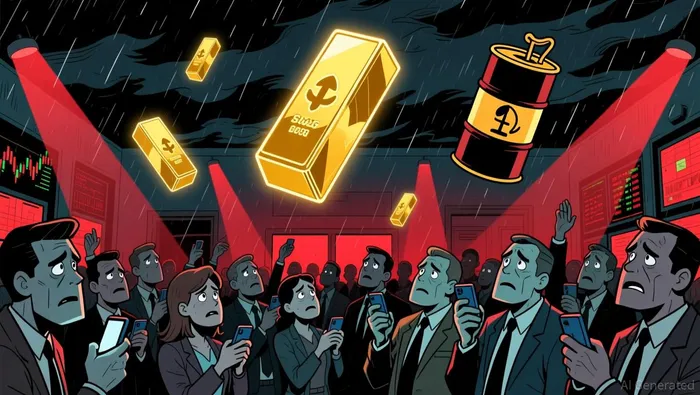
That being the case, I rate a passive 100% S&P 500 allocation as a "Sell" for defensive-minded investors at current levels, and I favor shifting toward gold, energy dividend producers, and U.S. mega-cap value as the structural hedge against the convergence of stretched valuations and geopolitical inflation.