

June 9 is really about mining and staking deferral, not a full tax overhaul
The real prize on Tuesday's June 9 hearing is not broad crypto-tax reform. It is a narrow mining-and-staking deferral rule that would let taxpayers delay counting newly created tokens as income until they're sold. A smaller companion idea is the Senate draft with a $300 de minimis exemption; that may reduce administrative noise, but it is not the main cash-flow fix at stake here.
The mechanism is straightforward. Under the draft, deferred mining or staking rewards would later be treated as ordinary income on disposition, rather than being taxed when the tokens first land in a wallet. That matters because the current backdrop already requires recognition at receipt: the Tax Court recently held staking rewards were includible in gross income under section 61. Deferral does not erase the tax. It pushes it away from the moment holders are most likely to be cash-strapped.
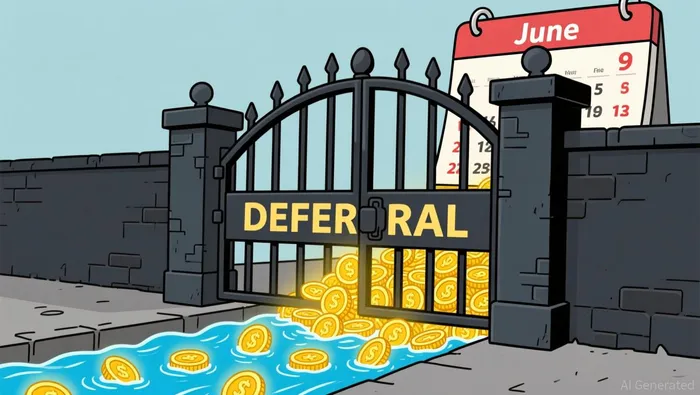
The live debate is narrow. Supporters see relief from phantom-income pressure; critics argue crypto could get a significant advantage over nearly every other way Americans save because dividends and bank interest are taxable when received. If Tuesday keeps the discussion focused on timing rather than ideology, that is where the usable win will show up.
The other five drafts matter, but they solve different problems
Ways and Means is testing a modular path
Tuesday looks less like a grand bargain than a routing decision. Ways and Means has split the effort into standalone proposals so individual measures can advance even if the full package stalls. That matters because the market does not need regime change to move; it needs the highest-impact relief valve first.
The top-tier bill remains the deferral draft. Under the current discussion draft, taxpayers could delay counting newly created tokens as income until they're sold. That provision has the clearest cash-flow impact for miners and validators, which is why it is most likely to drive valuation discussions. The other five bills are not trivial, but they address different problems.
PARITY and the companion drafts target compliance friction
The PARITY Act is the clearest example. Its main promise is to reduce reporting burdens on routine payment activity, including stablecoin activity. That is a real burden reduction for merchants and users, but it is mainly an administrative fix. It does not create the same kind of liquidity relief that deferral does.
The same logic applies to the remaining drafts. The broader package also touches issues around small crypto payments, wash-sale rules, and donating cryptocurrencies. Those matter for compliance, especially for smaller holders and charities, but they are not, on their own, the kind of change that justifies a class-wide rerating.
Splitting the package helps passage, but it also fragments relief
That modular approach can help lawmakers build support around narrow wins instead of forcing one controversial omnibus vote. The trade-off is that relief may arrive in pieces rather than as one clean overhaul.
There is also a real brake on the package. Democrats raised concerns that mining companies could game deferred taxation of mined digital assets. That is the key watchpoint for the next few weeks: if those concerns are not narrowed, even the highest-impact bill can stall.
What would make these drafts matter for investors
The next move is tactical, not theoretical. With the committee set to discuss the drafts at next week's June 9 hearing after circulating standalone proposals, investors should stop waiting for a clean headline and start watching the legislative routing.
The main upside signals
The first signal is whether the deferral bill can move on its own cash-flow logic, not whether the whole package looks politically neat. The prize is still the ability to delay counting newly created tokens as income until they're sold. If lawmakers defend that mechanism, the market can price real hold-cost relief. If they force it into a larger compromise, the benefit becomes less clear.
A second signal is whether the committee keeps the package in separate lanes. The current structure lets members advance standalone proposals, which is exactly how a narrow win can avoid omnibus drag.
What would break the thesis
That matters because the baseline is still unfavorable to crypto taxpayers. The Tax Court recently reaffirmed that staking rewards are includible in income when received. So the opportunity is real, but it is time-sensitive.
The real question is not whether crypto tax reform sounds compelling in theory. It is whether Congress can deliver one narrow change that alters when cash leaves the wallet.