

- DEX volumes fell to $6.047 billion in May 2026, reflecting a sharp 76% decline from early 2025 trading activity.
- Aerodrome Finance maintained its position as a dominant market leader despite the broader sector contraction .
- Institutional investors are reducing risk exposure, with Bitcoin and Ethereum ETFs recording significant net outflows recently.
- The April PCE inflation data at 3.8% reduced expectations for rate cuts.
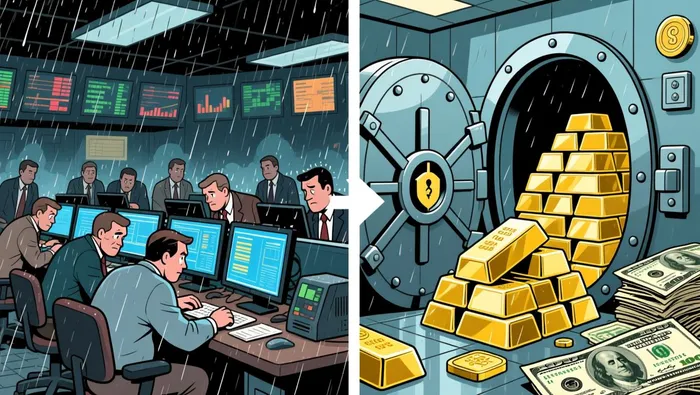
The decentralized exchange (DEX) sector is experiencing a profound liquidity contraction, with total trading volumes plummeting to $6.047 billion by May 28, 2026 . According to DeFiLlama data, this figure represents a massive 76% decrease from the robust levels seen in early 2025 . The downward trajectory has been consistent since the market crash in October 2025, with weekly volumes now averaging around $40 billion . This decline is part of a broader shift in investor sentiment, as capital moves toward stablecoins and traditional safe-haven assets .
Despite the severe downturn, specific protocols continue to capture significant market share. Uniswap leads the sector with $1.428 billion in volume, followed by PancakeSwap at $805.97 million . Aerodrome Finance holds the third position with $798.11 million in trading volume . The persistence of these leaders suggests that while overall activity is down, liquidity is consolidating within established platforms .
How Is Macro Data Impacting Crypto Liquidity?
Macroeconomic factors are playing a critical role in dampening crypto market liquidity. The April PCE inflation data came in at 3.8% year-over-year, the highest level since May 2023 . This data point pushed expectations for Federal Reserve rate cuts to under 1.1%, significantly dampening investor sentiment . The stronger-than-expected inflation figures have led to a rise in the 10-year US Treasury yield to 4.58% .
Institutional capital has demonstrated a clear shift toward defensive positioning. Bitcoin ETFs recorded net outflows of approximately $996 million, while Ethereum ETFs saw outflows of $255 million . This reversal indicates that investors are engaging in profit-taking and risk aversion amidst macroeconomic uncertainty . Despite these short-term outflows, overall Assets Under Management for both ETFs remain near historical highs .
On-chain data reveals a contraction in leveraged demand across the ecosystem. The Liquid Staking Token (LST) sector saw TVL pullbacks across both Ethereum and Solana networks . High-beta assets declined more sharply, while lending activity on Aave mainnet continued to contract . Conversely, capital migrated toward new chain incentives on platforms like Plasma and MegaETH .
What Is the Current Technical Setup for Major Assets?
Bitcoin itself traded flat around $73,196, showing weakening sell pressure . Technical indicators suggest a hidden bullish divergence on the daily chart, pointing to potential quiet buyer accumulation . Key support lies at $71,721, the 0.618 Fibonacci level, with resistance at $73,832 . A significant structural shift occurred with CME Group launching 24/7 Bitcoin futures and options trading . This move eliminates the long-standing CME gap caused by weekend market closures .
In the altcoin sector, Worldcoin led large-cap declines, falling 11% due to profit-taking . The token is currently testing critical moving averages, specifically the 50-day EMA at $0.2823 . The price action presents a binary setup, with support at $0.2742 and resistance at $0.3185 . A daily close below support could expose the asset to further declines toward $0.2256 .
Derivatives markets are also entering a deleveraging phase. BTC open interest is declining, and funding rates have turned negative . This reflects a market pricing in higher downside risk and volatility . The 10-year US Treasury yield rising to 4.58% adds pressure to risk assets .
Gold has emerged as the primary safe-haven asset during this period. Trading volumes in gold-linked perpetual swaps frequently exceeded $300 million daily . This shift highlights the growing preference for traditional stores of value over digital assets .
The reduction in DEX activity indicates a broader shift in investor behavior . Capital is moving away from volatile exposure toward stablecoins and compliant assets . This contraction does not necessarily signal the end of the DeFi sector . Historical data suggests that the industry has previously recovered from similar downturns .
The dominance of Uniswap, PancakeSwap, and Aerodrome Finance underscores the resilience of top-tier protocols . While overall volumes are down, these platforms continue to facilitate the majority of decentralized trading . The shift toward an asset-light model in other sectors, such as hospitality, parallels the crypto market's focus on efficiency. Hyatt Hotels, for example, is expanding through franchising to reduce capital expenditure . Similarly, crypto protocols are focusing on capital efficiency to survive liquidity droughts .
The derivatives market deleveraging suggests that traders are becoming more cautious . Negative funding rates indicate that long positions are paying shorts to hold their positions . This dynamic typically precedes a period of consolidation .
The launch of 24/7 CME futures trading alters market mechanics . It eliminates the weekend gaps that previously allowed for price discovery adjustments . This structural change may increase volatility during traditional weekend hours .
Investors are closely watching how these macro trends will unfold . The combination of sticky inflation and geopolitical tensions creates a challenging environment . The Strait of Hormuz tensions have added to the uncertainty .
The persistence of Aerodrome Finance in the top three DEX rankings is notable . It demonstrates that user activity remains concentrated despite the volume drop . The sector's historical recovery patterns provide some optimism . However, the current liquidity contraction remains a significant risk .