

AGL Energy's current financial setup provides a clear near-term floor. The company has narrowed its FY26 underlying EBITDA guidance to a range of $2,060 million to $2,180 million, lifting the lower end by about 5%. This confidence stems directly from operational execution, with generation fleet availability reaching 83.2% for the nine months to 31 March 2026. That reliability is translating into tangible financial results, allowing AGL to guide toward the top of its prior profit range. The capital return from its strategic portfolio reshaping is also material, with the company expecting approximately $750 million in proceeds from the sale of its Tilt Renewables stake.
Yet this solid operational base exists against a backdrop of powerful macroeconomic and structural forces that will define the company's long-term value. The market is already pricing in the transition risks, as evidenced by the 14% decline in AGL shares over the past year, a stark underperformance against a rising broader market. This divergence signals investor concern that today's cash flows may not fully capture the earnings trajectory of a power sector being reshaped by decarbonization and shifting demand patterns.
The company's own strategy acknowledges this shift. Its focus on flexible assets like batteries and gas peakers is a direct response to a market where strong and rising electricity demand from data centers and electrification is creating new peaks, but where the underlying power market economics are becoming more volatile. AGL is betting on its ability to capture these demand tailwinds with a modernized portfolio. The bottom line is that AGL's immediate financial resilience is clear, but its future returns will hinge on navigating the longer-term cycle of energy transition and inflation dynamics, where today's operational strength is just the starting point.
The Structural Market Shift: Supply, Demand, and Price Cycles
The Australian power market is undergoing a fundamental reconfiguration, driven by a powerful new demand-supply dynamic that will set the price environment for years. The most striking feature is the surge in electricity consumption, which hit a record 25 gigawatts in the first quarter of 2026. This growth was fueled by data center expansion and extreme weather, yet it was tempered by a historic rise in distributed solar. This interplay highlights a critical structural shift: demand is rising, but its profile is changing as renewables become a larger part of the grid's supply.
That shift is accelerating rapidly on the supply side. Traditional fossil fuel generation is being pushed out. Gas generation fell to its lowest quarterly level since 1999, while coal also declined. This is not a gradual transition but a swift displacement, creating a vacuum that new technologies are rushing to fill. The pipeline for new capacity is immense, with 67.3 gigawatts of projects progressing through the NEM connection process. This represents a 33% increase in just one year and signals significant future supply pressure, even as demand is expected to rise by 28% by 2035.
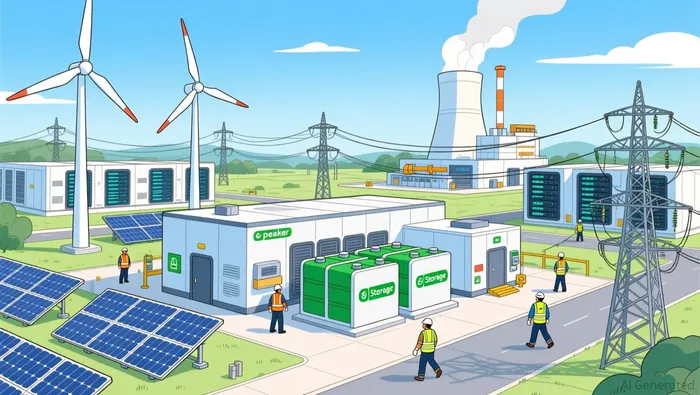
Within this pipeline, batteries are maintaining a commanding lead. They now account for nearly half the total capacity, with standalone battery capacity in the pipeline increasing from 20.5 GW to 33.2 GW over the past year. This growth is not just about future potential; it is already materializing. In 2025 alone, 11 energy storage projects were commissioned, a volume that matches the total from the previous eight years combined. This rapid deployment is already altering market mechanics, with batteries absorbing excess renewable energy during the day and shifting it to meet evening peaks, which helps moderate prices.
The bottom line is a market in flux. Record demand is being met by a surge in renewables and storage, which is keeping average wholesale prices lower than they might otherwise be. Yet this new structure introduces volatility. The market is learning to price around the intermittent nature of wind and solar, and the value of flexible assets like batteries and gas peakers is rising. For AGL, this means operating in a price environment that is fundamentally different from the past-a market where the long-term trend is set by decarbonization, but where short-term swings will be dictated by weather, solar output, and the pace of battery deployment.
Strategic Positioning and Financial Impact
AGL's strategic pivot is a direct response to the market's new dynamics, aiming to build new earnings streams from flexible assets and new demand centers. The company is commissioning key flexible generation, including the first 250MW of the Liddell Battery, with the full 500MW set for completion this financial year. More significantly, it has made a final investment decision on the 220MW K2 gas peaker project in Western Australia, expanding its portfolio of assets designed to capture peak demand from data centers and other industrial loads. This focus on flexibility is central to its plan to deliver more resilient earnings in a volatile market.
A major pillar of this strategy is its push into the data center sector. The company reports that its Perth Energy business is a key growth driver, with expanded generation capacity and strong demand from large industrial customers expected to underpin future earnings diversification. This is a tangible move to lock in long-term, stable revenue from a high-growth, high-power-use customer. However, this growth path is encountering regulatory headwinds. The Australian Energy Market Commission (AEMC) has introduced significantly more onerous obligations for data center connections, making the process more complex and costly. While this could slow project timelines and increase costs for developers, it also creates new revenue opportunities for AGL as a grid operator and service provider navigating these new rules.
The financial impact of this strategic shift is intertwined with broader inflation trends. Rising electricity prices are a key driver of services inflation, with the business pass-through occurring 4–6 months after the initial increase. This delayed effect means that AGL's wholesale power revenues, which are already sensitive to demand peaks, could see a secondary boost from higher input costs being passed through to the economy. This creates a potential tailwind for its retail and customer markets businesses, helping to offset volatility in its generation segment.
The bottom line is that AGL is actively reshaping its earnings profile. Its investments in batteries and gas peakers are designed to capture the value of new demand, while its data center focus aims for diversification. Yet the strategy operates within a tightening regulatory and inflationary environment. Success will depend on the company's ability to execute its projects efficiently, navigate the new connection rules, and leverage its flexible assets to generate returns as the market cycles through periods of high demand and supply transition.
Valuation, Catalysts, and Macro Risks
The investment case for AGL Energy now hinges on navigating a complex interplay of near-term catalysts and persistent macro risks. The company's strategic bets on flexibility and new demand are the primary drivers, but their success is contingent on a macroeconomic backdrop that remains uncertain.
The most immediate catalysts are operational milestones. The completion of the full 500MW Liddell Battery and the finalization of the 220MW K2 gas peaker project are critical for delivering the new earnings streams the strategy promises. These assets are designed to capture value from the record data center demand and extreme weather events that are already shaping the market. Their timely commissioning will be a key test of execution and a signal to investors that AGL can translate its strategic vision into financial reality.
Yet the primary long-term risk is structural: the persistent trend of lower average wholesale prices driven by the rapid deployment of renewables and storage. While batteries are moderating price spikes, the overall effect is to keep the market's price floor lower than in the fossil-fuel era. This creates a fundamental tension. AGL's operational strength and flexible assets can help it navigate volatility, but they may not be enough to offset margin compression if the underlying price environment continues to trend down. The company's ability to generate robust returns will depend on its portfolio's specific value capture, not just overall market conditions.
This risk is compounded by the broader inflation and interest rate cycle. Rising electricity prices are a key input to services inflation, with the business pass-through occurring 4–6 months after the initial increase. This delayed effect means that AGL's wholesale revenues could see a secondary boost, but it also means the company is exposed to a longer inflationary tail. The Reserve Bank of Australia's cash rate may also peak later and higher, potentially reaching 4