

Allbirds is making a radical break from its roots. The company announced it is pivoting to artificial intelligence, rebranding as NewBird AI and targeting the booming market for specialized compute infrastructure. The immediate market reaction was explosive, with shares surging over 300% on the news. This isn't a minor rebrand; it's a full strategic reset, backed by a $50 million funding deal to acquire high-performance GPUs and build a GPU-as-a-service platform.
The move is a stark contrast to the company's recent financial reality. Just months ago, Allbirds reported a third-quarter net loss of $20.3 million and saw revenue plunge 23.3% year-over-year. The brand had already shuttered its U.S. retail stores, selling its core footwear assets for a fraction of its former value. In that light, the pivot looks like a high-stakes gamble to escape a failing consumer business.
The company frames the bet as a response to a clear market gap. It cites unprecedented structural demand for specialized, high-performance compute that current supply-both spot markets and major cloud providers-is struggling to meet. The stated rationale is to provide long-term, reliable access to AI hardware for customers facing capacity strain. It's a calculated attempt to ride a powerful secular trend, but the sheer scale of the company's existing distress makes the risk of failure exceptionally high.
Assessing the TAM and the Execution Chasm
The target market is undeniably vast. The AI compute infrastructure sector represents a massive, secular growth opportunity, driven by the insatiable demand for specialized hardware to train and run large language models. Allbirds frames its pivot as a direct response to this unprecedented structural demand that current supply chains struggle to meet. The Total Addressable Market here is enormous, with projections for the global AI hardware market alone reaching hundreds of billions of dollars in the coming years. For a growth investor, the sheer size of this TAM is the primary allure of the bet.
Yet the path to capturing even a sliver of it is fraught with barriers. The market is dominated by entrenched hyperscalers like Amazon Web Services and Microsoft Azure, which have built massive, integrated cloud platforms with unparalleled scale and pricing power. NewBird AI's proposed GPU-as-a-Service (GPUaaS) business model is capital-intensive by design. The company plans to acquire high-performance, low-latency AI compute hardware and provide access via long-term leases. This model requires not just upfront capital for GPUs, but also ongoing investment in power, cooling, data center space, and sophisticated software to manage the fleet-a complex operational burden.
The fundamental execution risk is the company's complete lack of relevant expertise. Allbirds has no track record in hardware procurement, data center operations, or cloud infrastructure management. As an AI infrastructure expert noted, running physical AI infrastructure "requires access to GPUs in a constrained market, long-term power agreements, advanced cooling strategies, and a credible operating model." The company's $50 million funding round is a start, but it's a fraction of what's needed to build a meaningful, scalable infrastructure footprint against giants with decades of experience and deep pockets. The chasm between the massive TAM and NewBird AI's ability to execute is the central tension of this investment thesis.
Financial Impact, Capital Needs, and the Mission Trade-Off
The immediate financial picture underscores the sheer scale of the challenge. The company's initial $50 million funding deal is a critical first step, but it is a tiny fraction of what is needed to build a competitive GPU fleet. The plan to acquire high-performance, low-latency AI compute hardware and provide access via long-term leases is a capital-intensive model from day one. That $50 million will buy some GPUs, but not enough to establish a meaningful, scalable infrastructure footprint against the entrenched hyperscalers. The real question is where the next billions come from.
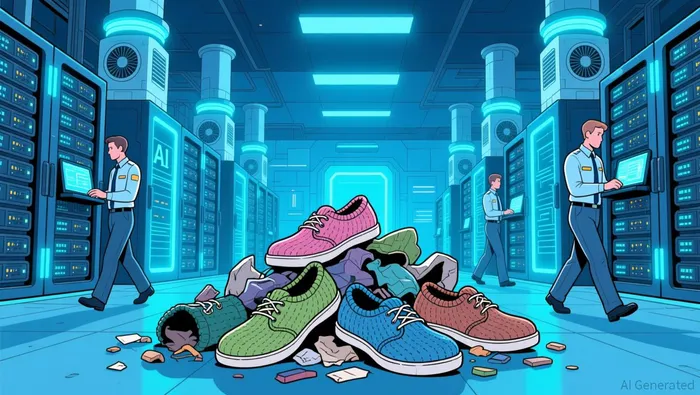
This raises serious concerns about financial fragility. As of September 2025, the company had only $23.7 million of cash and cash equivalents on hand, even before the recent pivot announcement. The $50 million deal is expected to close in the second quarter of 2026, which means the company will have to bridge a significant cash gap for months. Its existing $50 million revolving credit facility had $12.3 million in outstanding borrowings at quarter-end. With a recent third-quarter net loss of $20.3 million, the runway to fund the next phase of growth is extremely tight. The company is betting its future on a capital raise that is just beginning to close, while its existing cash is being depleted.
The pivot also represents a stark and likely permanent trade-off on its founding mission. Allbirds was established as a public benefit corporation (PBC) and earned its B Corporation (B Corp) certification in 2016, with a core identity built around reversing climate change through better business. Its sustainability reports detailed ambitious goals like cutting its carbon footprint in half by 2025 and reducing it to near zero by 2030. The new focus on AI hardware, a sector known for its massive energy consumption and carbon footprint, stands in sharp contrast to that legacy. The company's own sustainability documentation emphasized the fashion industry's role in climate change, while its new business aims to provide the compute power driving that same crisis. This isn't just a change in products; it's a fundamental shift in purpose that risks alienating its original customer base and stakeholders who valued its environmental commitment.
Catalysts, Risks, and What to Watch
The growth thesis for NewBird AI now hinges on a narrow set of near-term milestones. The primary catalyst is the successful close of the $50 million funding deal in the second quarter of 2026. This capital is the essential fuel to acquire the high-performance GPU hardware that forms the core of the new business. Without a clean close and the deployment of these funds, the entire pivot stalls before it begins.
The next critical step is the acquisition of a meaningful GPU fleet. The company's plan to provide long-term lease access to AI compute capacity requires building a substantial hardware base. The $50 million will buy some GPUs, but investors must watch for evidence that this initial capital is being used to secure a fleet large enough to serve real customer demand. The absence of a credible hardware footprint will quickly invalidate the GPU-as-a-Service model.
Beyond the hardware, the software platform is the other half of the execution equation. Investors should monitor progress on developing the management and orchestration software needed to operate a GPU fleet efficiently. This is a non-trivial engineering task that requires expertise the company lacks. Any public updates or milestones on platform development will be a key signal of operational capability.
The primary risks are formidable. First, competition from established cloud providers is intense. Hyperscalers like AWS and Azure have built integrated, scalable platforms with immense pricing power and deep customer relationships. NewBird AI's niche focus on long-term, dedicated access is a potential differentiator, but it must prove it can offer a compelling value proposition against these giants. Second, the cost of capital for GPU acquisition remains high. The constrained market for these chips means securing them at a reasonable price is a major operational hurdle. Third, and perhaps most immediate, is the risk of a valuation collapse. The stock's explosive rally appears driven more by speculative momentum than validated execution, as an AI expert noted. If the company fails to meet the early milestones of hardware deployment and customer acquisition, the market could rapidly reassess the narrative, causing a sharp reversion to pre-pivot levels.
What investors should watch for in the coming quarters is concrete evidence of traction. The first tangible sign will be announcements of long-term lease contracts signed with customers. Progress on the software platform development will be another key indicator. Most critically, any future capital raises beyond the initial $50 million will reveal whether the market believes in the story enough to fund its ambitious build-out. The path from a $50 million funding round to a competitive AI infrastructure player is a long and expensive one. The next few quarters will show whether NewBird AI can navigate it.