

Middle East demand is doing most of the early America First export story
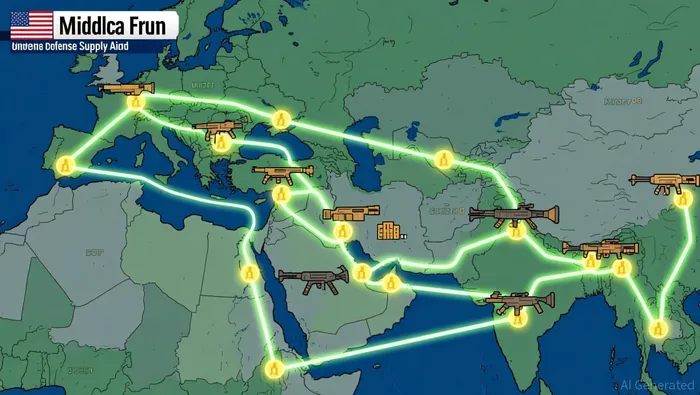
The headline is the slogan, but the numbers tell the real story. In the first quarter, the government approved over $45 billion in potential FMS, and 81 percent-more than $36.6 billion-was directed to Middle Eastern allies. That makes the region, not rhetoric, the central driver of the early America First defense-sales push.
Why the policy change matters now
That timing matters because the rules of the game just changed. On February 6, 2026, the administration introduced the America First Arms Transfer Strategy, which ties arms transfers more explicitly to U.S. industrial and economic goals alongside foreign policy objectives. That gives defense exporters a more overtly pro-sales framework, but it does not close the gap between approvals and actual deliveries.
Middle East demand is powerful, but it is not durable by itself
A sales surge tied closely to one region is useful, but it is not the same as long-term insulation from competition. Competition has intensified sharply, with South Korea, Turkey, and Brazil closing the gap on U.S. exporters. The real question is whether Washington can turn a regional spike into broader, more durable demand before rivals take more of the market.
The Israel aid debate is really about control, transparency, and alliance signaling
The bigger issue is not just the headline value of the deals. It is who controls the money, how visible the process remains, and whether allies still see the U.S. as a predictable partner.
Israel shows how deeper support can become less transparent
Israel is the clearest test case. Washington has been providing $3.3 billion per year in FMF grants to Israel, plus $500 million per year for missile-defense cooperation. The proposal from Jerusalem is not simply to receive less support; it is to change the structure of that support by shifting funds from State Department-administered aid into Pentagon procurement, industrial partnerships, and sustainment channels. The documented risk is that this would reduce public oversight and make the relationship less transparent.
That matters for investors because visibility is not just a Washington housekeeping issue. Annual aid debates create public checkpoints around capability needs, usage, and accountability. If more money moves through the acquisition system, the relationship may become more embedded, but the signal quality for investors could weaken, with fewer obvious public milestones and more reliance on execution inside a less visible process.
America First changes the bargaining position
This is where the new strategy becomes more than a slogan. The policy says arms transfers should be used to expand strategically relevant industrial production capacity and to make the defense-sales enterprise more efficient across agencies. In practice, that shifts bargaining power toward the Pentagon, industrial partnerships, and sustainment channels.
If more business moves into those channels, U.S. firms may retain tighter control over where systems go and how they are maintained. That can help companies with durable product ecosystems and maintenance networks. But it also raises the importance of delivery. When aid becomes a longer industrial relationship rather than a visible transfer, bottlenecks matter more.
The historical record argues for a steadier, not explosive, read-through
This is not a blank check for immediate U.S. equipment orders. Only about 25 percent of FMF grant money has historically been available for offshore procurement, which limits how much of any Israel deal redesign can be pulled directly into near-term American hardware sales. A more cautious read is that revenue growth could be steadier, not suddenly explosive.
Trust still matters if allies start questioning the process
The trust issue matters too. Allies may welcome deeper cooperation, but if they view the process as less transparent and more transactional, they may look elsewhere. Competition is already intensified sharply from South Korea, Turkey, and Brazil. If Washington trades some alliance trust for more control, investors may get a better narrative without getting better order quality.
What investors should watch after the February 2026 policy shift
Demand is real. The issue now is timing versus pricing. After the February 6, 2026 policy shift, investors are already inclined to view the export story more positively. The better move is not to chase every defense name with an export narrative, but to watch whether Washington actually makes the sales process work better in practice.
Process milestones matter as much as the announcements
The near-term test is straightforward: can the government deliver usable process upgrades on schedule? The administration has set 90 days for enhanced end-use monitoring criteria and 120 days for the prioritized platforms catalog. Those are practical checks on whether the policy is producing results or just rebranding the status quo.
The cleaner trade is priority platforms and execution
The cleaner setup is to focus on companies that could appear on that priority platform list and benefit if major requests move faster from approval to backlog. The strategy is explicitly aimed at streamlining arms transfer processes and using sales to expand strategically relevant industrial production capacity. If red tape is actually reduced and priority systems are produced faster, the strongest product franchises should benefit most.
What would confirm the bull case
If the equipment remains operationally attractive, allies continue to trust the ecosystem, and Washington keeps the process moving, the story can still strengthen.
What would break the setup
If process promises slip, deliveries lag, or allies lose confidence because the arrangement looks less transparent and more transactional, the premium valuation may not hold. A good narrative does not survive for long if better alternatives keep showing up.