

American Uranium has secured the immediate funding needed to advance its flagship Lo Herma project. The company has firm commitments to raise A$2.64 million at A$0.12 per share, issuing 22 million new shares. This capital is a direct follow-through on a key technical milestone: the project's interim Mineral Resource upgrade to 9.45 million lbs eU₃O₈, which included a 50% increase in grade to 720 ppm. The funds will finance critical work, including permitted infill and expansion drilling, hydrogeological studies, and metallurgical programs, all ahead of the planned Q3 2026 Scoping Study.
The raise was supported by both new and existing investors, including Frontier Nuclear and Minerals, which maintained its 9.92% stake by participating. The company has also announced plans to launch a non-renounceable rights entitlement offer for eligible shareholders on the same terms, aiming to raise up to approximately A$2.58 million before costs. This two-part strategy-first a placement to institutional backers, then a rights issue for the broader shareholder base-aims to maximize participation and secure the full capital stack for the next phase.
Yet the success of this financing is secondary to a more fundamental question. The capital is being raised to fund technical work, but the project's ultimate viability hinges on the uranium market.
The resource upgrade is a positive engineering step, but it does not change the underlying supply-demand balance that will determine whether prices can sustain the investment required to bring Lo Herma to production. For now, the company has the cash to keep drilling; the market must provide the price to justify it.
The Supply-Demand Equation
The market backdrop for American Uranium's financing is one of structural tightness. The uranium market is in a clear deficit, with spot prices climbing above $100 per pound in January 2026. This rally, which saw prices surge roughly 25% that month, is driven by a confluence of factors: strong policy support, years of under-contracting by utilities, and a concentrated, underinvested supply base. The move signals a shift in investor focus back to the upstream supply chain, as fundamentals improve and the commodity's strategic status is cemented.
This isn't a fleeting trend. Durable medium-term demand is anchored by the global expansion of nuclear capacity. The World Nuclear Association projects that nuclear capacity will grow to 438 gigawatts by 2030. This expansion creates predictable, long-term fuel requirements that underpin a structural demand growth story, providing a stable floor for uranium prices over the coming decade.
Yet supply is struggling to keep pace. The intensifying constraints are evident in the operational challenges facing major producers. Kazakhstan's Kazatomprom reduced its 2025 guidance, while Canada's Cameco lowered McArthur River production forecasts. These setbacks, coupled with policy-driven supply cuts like the U.S. import ban, highlight a supply base that is both geopolitically concentrated and slow to respond to price signals. The result is a market where physical uranium is becoming scarcer, amplifying the price rally.
For a junior explorer like American Uranium, this supply-demand equation is the critical variable. The company's Lo Herma project is a development-stage play, and its viability depends entirely on whether this structural deficit can be sustained. The current environment of rising prices and policy tailwinds provides a favorable backdrop for securing capital to advance technical work. However, the ultimate test will be whether the market can maintain these elevated levels through the years of construction and permitting ahead. The deficit is real, but the path from a resource estimate to a producing mine remains a long and uncertain one.
Project Progress vs. Market Fundamentals
American Uranium's technical progress is a necessary step, but it is not yet sufficient to drive material value. The company has achieved a positive engineering milestone with the interim Mineral Resource upgrade to 9.45 million lbs eU₃O₈, which includes a significant grade improvement. This work is funded by the recent capital raise and will support the next phase of drilling and studies. However, the project remains firmly in the exploration and development phase, far from the production stage where cash flow is generated. The value of this resource upgrade is entirely contingent on the uranium market's ability to sustain prices high enough to justify the multi-year, capital-intensive journey ahead.
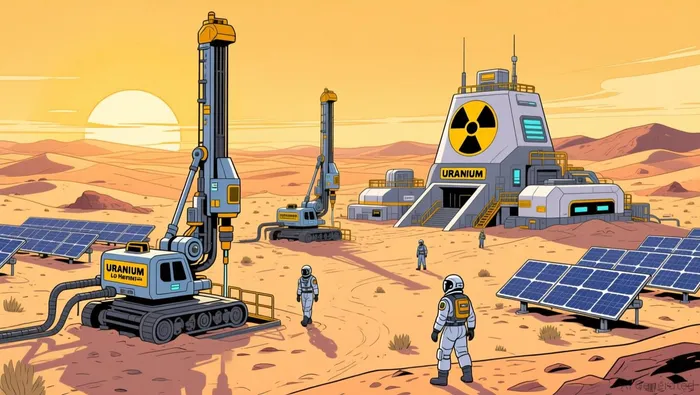
The broader market provides a favorable backdrop. The uranium supply-demand balance is structurally tight, with spot prices climbing above $100 per pound in January 2026. This rally is driven by durable medium-term demand from global nuclear expansion and intensifying supply constraints. The market's shift back to the upstream supply chain is clear in the sharp equity performance of miners and juniors. For a development-stage project like Lo Herma, this environment makes securing capital to advance technical work easier.
Yet, a note of caution is emerging. While equity prices have surged, the underlying physical market for uranium has shown relatively quiet spot and term price action in recent periods. Some analysts point to a disconnect between strong stock performance and more muted movement in the actual commodity. This suggests the rally may be driven more by speculative positioning and policy optimism than by immediate, tangible supply shortages. For American Uranium, this creates a period of uncertainty. The company has the capital to keep drilling, but the market must provide the sustained price momentum to validate its resource and eventually move it toward a bankable project.
The bottom line is that technical milestones are a prerequisite for value, but they are not a guarantee. American Uranium's resource upgrade is a solid step forward, but its ultimate worth depends on whether the current market tailwinds can hold through the long development timeline. The sector's strength is evident, but the gap between that strength and the quiet physical price action is a red flag that investors must watch.
Catalysts and Risks for the Thesis
The path from a funded resource upgrade to a realized project value is long and depends on a few clear catalysts and persistent risks. The most immediate forward-looking event is the planned Q3 2026 Scoping Study for Lo Herma. This study will synthesize the data from the recent drilling and technical work, providing a clearer picture of the project's potential economics, capital requirements, and timeline. A positive scoping study is the essential next step to de-risk the project and attract the significant financing needed for a full feasibility study and eventual construction.
The primary risk to this thesis is market price volatility. The recent rally above $100 per pound is encouraging, but it must be sustained. For a development-stage project like Lo Herma, a sustained price above this threshold is critical to justify the multi-year, capital-intensive journey ahead. The disconnect noted earlier between strong equity performance and relatively quiet physical price action underscores this vulnerability. If prices retreat, the economic case for advancing new projects weakens, potentially stalling development and pressuring junior explorers.
On the other side of the ledger, structural policy support provides a durable tailwind. The inclusion of uranium on the U.S. List of Critical Minerals is a strategic signal that reinforces the commodity's importance to national energy security. This policy shift, combined with long-term nuclear capacity targets, helps anchor demand and supports a more favorable investment climate for the entire sector. It adds a layer of stability that can help buffer the market against short-term volatility.
The bottom line is a balance between a clear technical catalyst and a volatile market. American Uranium has secured the capital to reach the Q3 2026 Scoping Study. The project's fate now hinges on whether the uranium market can maintain its current momentum through that milestone and beyond.