

The market has settled on a comfortable narrative for Analog Devices: the industrial analog destocking cycle is over, AI demand is filling the pipeline, and the recovery is broad-based. The evidence appears to support it. ADI reported record fiscal Q2 2026 revenue of $3.62 billion - up 37% year-over-year - with gross margins expanding to 73% and net income jumping 106%. Industrial segment revenue grew 56% year-over-year.
The problem is that the story the market is telling itself about why those numbers are rising is not the story the numbers are actually telling.
The Two Markets Inside One Company
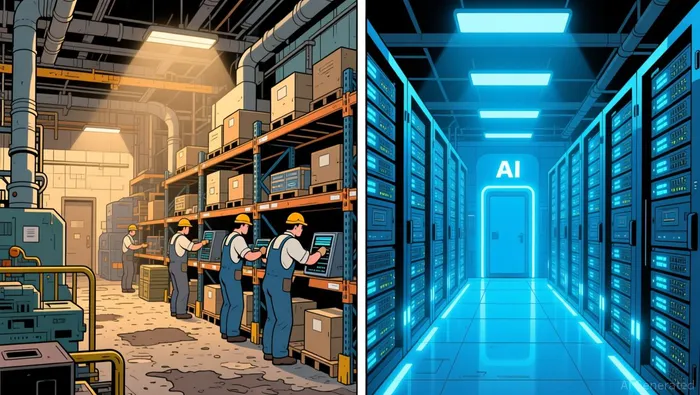
Analog Devices' fiscal Q2 results reveal a company that has structurally split into two demand profiles operating under the same roof. The industrial segment represented 50% of total revenue, up 56% year-over-year. The communications segment - which includes data center, internet, and wireless network customers - grew between 79% and 90% year-over-year, depending on which disclosure you read. But communications comprised only 15% of total revenue.
This is the distinction that matters. The market is pricing ADI as an AI beneficiary because the headline growth rate is accelerating. But more than two-thirds of Analog Devices' revenue comes from segments that are not growing at AI rates. They are growing at industrial normalization rates. The industrial segment's 56% recovery reflects the end of the 2024–2025 inventory correction cycle, not a step change in structural demand. Customers who spent 18 months reducing analog chip inventories are now restocking. That is not the same thing as new end-market growth.
The communications segment's hyper-growth is real - driven by AI data center power management, signal conditioning, and mixed-signal content per server - but at 15% of revenue, it is the tail, not the body. Even if communications doubles again, it moves total revenue by a fraction of a percentage point more than the industrial segment's normalization does.
What the Margin Expansion Tells You
The 73% non-GAAP gross margin in Q2, up from 64.7% in Q1, deserves attention. That 830-basis-point swing in a single quarter is not a product mix shift. It is the mechanical result of running existing fabs and assembly operations at higher utilization while fixed costs remain spread over more units. In semiconductor manufacturing, this is called operating leverage - the mathematical benefit of filling idle capacity - and it appears in every cycle recovery.
The implication is structural: the margin recovery is real but not unique to ADI's execution. Any analog manufacturer running the same fabrication nodes and the same packaging lines will see similar leverage as utilization rises. The margin trajectory supports the thesis that supply-side utilization is the primary driver of Q2's earnings acceleration - not a competitive moat widening.
Why the Stock Fell on a Record Quarter
ADI shares dropped approximately 4% after reporting record revenue, beating every estimate, and guiding to $3.9 billion in Q3 with $3.30 in adjusted EPS. Analysts attributed the decline to profit-taking after the stock's extended run-up.
That explanation is incomplete. The market had already priced industrial recovery into the stock months ago - the shares had been climbing since late 2025 as booking trends improved. The post-earnings selloff signals that investors are not buying the normalization story at current levels. They want to see the AI tail grow into a larger share of revenue before they will accept a re-rated valuation.
This is a supply-demand dynamic in the stock itself. The institutional buyers who drove the recovery trade are now asking: when does the industrial segment stop growing at 56% year-over-year because the base effects fade? The answer is soon. Year-over-year growth from a destocked base is mathematically unsustainable once inventories return to normal. Sequential growth is the real metric, and industrial grew 20% sequentially in Q2 - strong, but not exponential.
The Forward Question
ADI's Q3 guidance of approximately $3.9 billion implies roughly 8% sequential growth from Q2's record. That trajectory is disciplined but not explosive. The company has not signaled an acceleration curve - it has signaled a normalization curve that happens to have an AI tailwind attached.
The global analog semiconductor market was estimated at approximately $91.4 billion in 2025, up from $85.2 billion in 2024. Those are recovery numbers, not expansion numbers. The industrial analog submarket is returning to baseline, not exceeding it.
Investor Takeaway
The key issue is not whether Analog Devices' Q2 industrial revenue exceeded analyst expectations - it did, by a wide margin. The question is what happens when the inventory rebasing cycle completes and industrial segment growth normalizes from 56% year-over-year to the mid-teens or low 20s that characterize a healthy but non-cyclical analog market.
If the communications segment grows from 15% to 25% or 30% of revenue over the next two years, the AI re-rating becomes justified. If it stays near its current weight, ADI trades as a cyclical industrial recovery story with a margin profile that will compress as utilization peaks and the easy operating leverage fades. The market needs to decide which company it is actually holding.
The structural signal to watch is not the next quarterly revenue print. It is the sequential growth rate in the industrial segment once year-over-year base effects disappear. That rate will determine whether the recovery is structural or cyclical. Until then, the market is pricing a narrative, not a trajectory.