

Market dynamics have shifted as heightened volatility, triggered by a $1 million bearish position from a crypto influencer, has prompted traders to reassess risk exposure. This event has led to increased volatility clustering around major meme and mid-cap tokens, affecting investor confidence across the sector. Consequently, liquidity is rotating toward early-stage opportunities with defined tokenomics, such as the APEMARS presale, which offers structured entry mechanisms.
ApeCoin continues to function as a hybrid token bridging meme culture with structured NFT ecosystems. Its value proposition remains distinct from pure meme coins as it facilitates community-driven digital platforms and metaverse-related developments. The token derives relevance from NFT market cycles, ecosystem updates, and community governance decisions rather than simple speculation.
While established assets like ApeCoin show mixed performances, the market sentiment is gradually shifting toward early entry opportunities that offer high expected returns amidst uncertainty. Technical analysis indicates a neutral sentiment for ApeCoin, with RSI and MACD suggesting a hold. The token trades below its 60-day and 200-day moving averages, with immediate resistance at $0.134 and strong support at $0.0815.
How Is Capital Rotating Amidst Rising Market Volatility?
Market tension has increased following the $1 million bearish position by crypto influencer Dr. Profit, causing volatility clustering around meme tokens. This environment has prompted traders to move capital toward early-stage presales like APEMARS, which utilize structured burn strategies to create scarcity. The rotation is driven by tightening liquidity, making assets with defined tokenomics more attractive than those reliant on pure hype.
Investor focus is shifting toward early-stage opportunities where scarcity of entry time defines the investment thesis. Assets like APEMARS are gaining attention due to their structured presale mechanisms and burn strategies designed to create scarcity. This shift represents a broader trend where attention windows define opportunity more than token supply in the evolving meme coin cycle.
The current meme coin cycle prioritizes timing precision over long-term accumulation, with capital rotating rapidly between established assets and newer structured projects. While Dogecoin and Bonk remain in the spotlight, newer entrants like APEMARS differentiate themselves through staged presales and bonus incentives. This structure creates a scenario where missing the entry window matters more than missing supply for investors.
What Role Does ApeCoin Play In The Hybrid Ecosystem?
ApeCoin serves as both a governance and utility token within a major NFT ecosystem. Holders can participate in the decentralized governance framework, voting on how the ApeCoin DAO Ecosystem Fund is utilized. This structure positions ApeCoin as a bridge between cultural narratives and functional digital asset ecosystems.
The token enables governance participation, allowing holders to influence community decisions and strengthen their involvement within the broader digital ecosystem. By evolving into a structured ecosystem with real engagement, ApeCoin demonstrates how meme-based tokens can expand their role in decentralized communities. It offers investors exposure to a hybrid model that combines community engagement with structural utility.
Apecoin occupies a hybrid position in the crypto industry by connecting meme culture with NFT ecosystems. This combination of memes and utility helps the token remain relevant beyond typical hype cycles. The asset provides stability compared to purely speculative tokens while maintaining its connection to Web3 utility.
Why Are Investors Prioritizing Structured Presales Over Established Tokens?
In the 2026 meme coin sector, value is increasingly derived from timing precision rather than token supply alone. APEMARS capitalizes on this by operating in Stage 17: FINAL LOCK, with a confirmed listing price of $0.0055 against a current price of $0.00025438. The project employs a scarcity equals timing model where opportunity compresses as stages progress.
The model establishes a transparent pricing gap, projecting an approximate 2,062% ROI from the current stage to the listing target. The system incorporates bonus mechanisms, such as the MARS150 code, which amplifies early allocation sizes. This structure aims to reward progression rather than timing luck, positioning the asset as a structured alternative in the 2026 crypto landscape.
While established tokens like ApeCoin show mixed performances, the market sentiment is gradually shifting toward early entry opportunities that offer defined tokenomics. APEMARS is currently priced at $0.00025438 in Stage 17, with a projected listing price of $0.0055. Its structured presale mechanism and burn strategy are designed to create scarcity, enhancing market appeal amidst tightening liquidity.
The narrative suggests that for investors, early positioning in this structured ecosystem offers higher potential ROI compared to established assets that have already moved through their initial cycles. APEMARS differentiates itself through a scarcity equals timing model featuring staged presales and bonus incentives that amplify entry efficiency. This focus on timing precision reflects the broader market evolution into a timing-driven ecosystem.
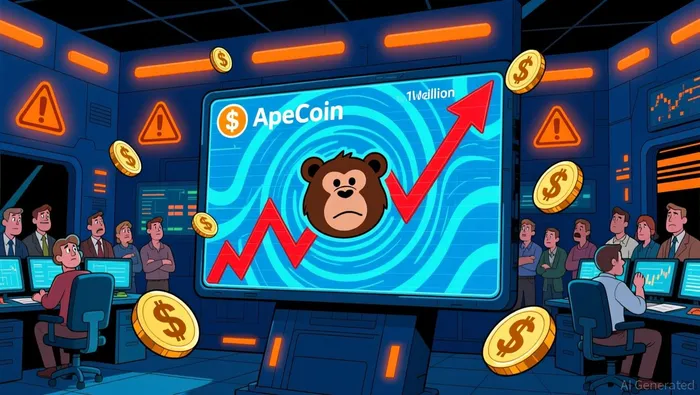
While ApeCoin serves as a structured ecosystem asset integrated across NFTs and gaming, providing stability compared to purely speculative tokens, the high expected returns of APEMARS are capturing investor interest. The market is evolving into a timing-driven ecosystem where attention windows define opportunity more than token supply. This shift underscores the growing preference for assets with clear progression models over those reliant on single-event speculation.