

Apple's 4% drop reflects timing risk, not a verdict on the AI strategy
A 4% move in a company worth about $4.267 trillion is not noise. Apple closed yesterday at 301.54, and today it has traded between 287.78 and 300.72 on 69.9 million shares, well above the 45.8 million average volume. That suggests investors are repricing the timing and risk around Apple's AI rollout, not dismissing the strategy outright.
Apple is also the worst performer in the Dow so far Tuesday, dragging the index down more than 57 points after falling around 4%. For a stock of this size, that kind of move can affect broad allocations and reinforce the idea that Apple AI is still viewed as a source of volatility rather than a settled growth driver.
The more useful framing is a timing repricing. Bulls can point to raised price targets and the argument that Apple's AI push could support a larger upgrade cycle. Bears focus on slow launch timing, limited initial availability, and concerns that the rollout looks incremental rather than transformative. On this day, the market leaned toward the bear case.
What WWDC showed-and why investors still hesitated
Apple did present a credible product step forward. It unveiled a rebuilt Siri overhaul featuring a standalone app, screen context, web-backed knowledge, and memory across conversations. That is a meaningful improvement over the period that left Siri as the awkward gap in Apple's story for two years. But the selloff suggests investors want more than a better assistant on stage; they want evidence the upgrade can translate into stronger usage and monetization.
Why Siri matters to Apple's broader ecosystem
Siri matters because it sits at the center of Apple's relationship with users across iPhone, Mac, iPad, Wearables, Home and Accessories and its services ecosystem. If Siri becomes a useful daily interface, it can deepen ecosystem engagement. If it disappoints, investors are likely to question more than one product category.
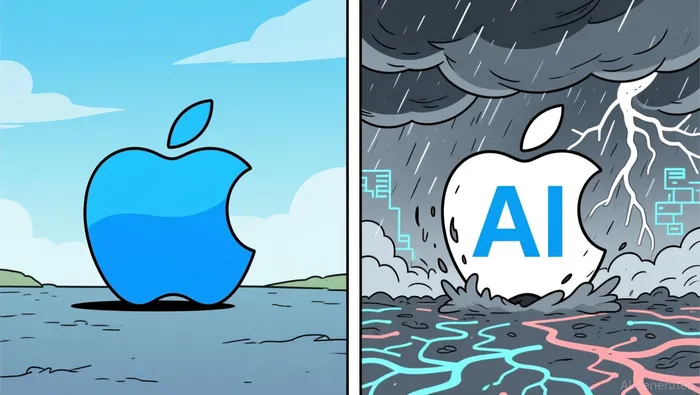
That is why the Reuters setup mattered. Investors wanted to see whether Apple could close the gap with rivals while preserving user trust and privacy. Reuters also noted analysts' expectation that Apple would leverage tools across its 2.5 billion devices. But that scale becomes a moat only if Siri earns regular use.
Why the reveal was not enough for an instant rerating
The bear case is still straightforward: Apple faces questions around slow launch timing, limited initial availability, and a rollout that many investors see as behind faster competitors. WWDC improved the narrative, but it did not yet provide the behavioral proof or monetization path needed for a clear rerating.