

Tata's Hosur plant allegation is an early test for Apple's India supply chain
A pollution regulator has alleged that wastewater discharged from a Tata components factory for Apple's iPhone contaminated groundwater used by nearby farms, and it has warned of a forced shutdown unless Tata provides a satisfactory explanation. That makes this more than a local environmental dispute: it is an early test of how resilient Apple's India shift looks when compliance comes under scrutiny.
Tata Electronics is central to Apple's effort to diversify iPhone production beyond China, and the plant under investigation makes back panels and other iPhone components in Hosur. The Tamil Nadu Pollution Control Board said Tata had not taken corrective action on instructions from a previous letter dated December 23, 2025. The signal here is not that Apple's India build is broken, but that the network is now large enough to attract closer regulatory and market scrutiny.
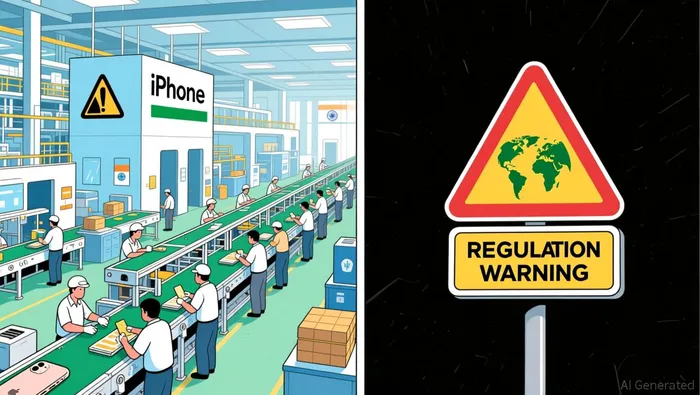
Is this a fixable site-level failure or a sign of faster growth than operating control?
The key question is whether this is a localized environmental lapse that can be cleaned up, or evidence that Tata's rapid expansion is outrunning day-to-day operating discipline.
Why this still looks contained
On the more forgiving view, this appears to be a site-level process failure rather than proof that Tata cannot run Apple-grade manufacturing. The allegation centers on wastewater discharged from a Tata components factory in Hosur, and the board's concern appears tied to local water movement and weak follow-through on earlier corrective instructions. Serious as that is, it does not yet look like a company-wide breakdown.
Tata is also pushing back. It says an independent analysis through an accredited laboratory found it in full compliance with regulatory norms. That does not settle the regulator's concern, but it does matter for investors: if the problem is localized water management and slow remediation, it may be fixable without rewriting the broader India plan.
Why skeptics still have a case
The cautionary view is that rapid scaling can turn small lapses into systemic concerns. Tata Electronics now has about 75,000 employees, up from around 15,000 in 2023, with a large share concentrated at the Hosur facility. Fast hiring and multi-site expansion can raise pressure on supervision, training, and housekeeping.
Tata is also adding capability quickly. It has moved on the acquisition of Justech Precision's India unit for close to $100 million. That shows strategic intent, but it also raises the standard: when a business scales this fast, compliance cannot be treated as a minor side issue.
The watchpoint: follow-through on the regulator's earlier notice
For now, the evidence still points more toward an isolated problem than a broken model, but only just. The important signal is what happens next. Investors should watch whether Tata delivers a credible response to the earlier December 23, 2025 notice and whether the regulator moves toward satisfaction rather than enforcement.
If corrective action is clean and confined, this episode should fade. If similar complaints emerge at other sites, or the same water-management failures recur, the market is more likely to treat this as a deeper operating weakness.
Why the investor impact is more about trust and future valuation than near-term earnings
One important constraint is that Tata Electronics is still unlisted, so the immediate market reaction will be less direct than it would be for a listed supplier.
For Apple investors, this is mainly a reputational and policy watch
For now, this looks more like a reputational and policy issue than a direct hit to earnings. There is no Tata Electronics stock to sell on the headline. What can shift is confidence in India as a durable build base and the future valuation narrative if Tata ever does go public. That is why the follow-through matters before any shipment disruption becomes visible.
The mechanism is straightforward. Apple is trying to build highly localized partners in India, and this dispute is arriving while the plant is already under regulatory heat. If the response looks sloppy, the bigger damage is to trust in local manufacturing discipline, not necessarily to this quarter's iPhone volume.
Tata's wider ecosystem still argues for a measured response
This is not a reason to write off Tata. Its broader footprint continues to expand, with partnerships announced over the past year involving ASML, Qualcomm, ROHM, and Intel. That suggests this is no longer a one-factory experiment.
Investors are also watching Tata Electronics as a potential future IPO candidate, with public discussion around its growth profile, including a reported 3-year CAGR of 3,173%. So the positioning framework is simple: do not overreact to the headline, but do not underestimate the importance of a clean resolution.
Bull case, bear case, and what would break the thesis
- Bull case: Tata responds clearly, the regulator is satisfied, and production continues without disruption. The episode then looks like a bad patch rather than a broken story.
- Bear case: The response is weak, the dispute drags on, and Apple treats India more cautiously as a localized supply-chain base. That would weaken sentiment around both Apple's India build and Tata Electronics' future IPO narrative.
- Thesis breaker: The problem spreads beyond one site, regulators move from warnings to action, or Apple's stance toward Tata turns noticeably cooler.
For now, the right approach is simple: own the Apple story, monitor the Tata execution story, and judge this episode by what happens next rather than by the headline alone.