

Apple enters WWDC with something unusual: a stock-market setup that has historically worked, but an AI story that still needs proof. Investors are not just waiting for another software demo. They are waiting to see whether Apple can finally turn Siri from a delayed promise into the center of its next platform cycle.
Apple Heads Into WWDC With Siri, Gemini And A Familiar Stock Setup
Apple’s 2026 WWDC is shaping up less like a routine developer event and more like a credibility test.
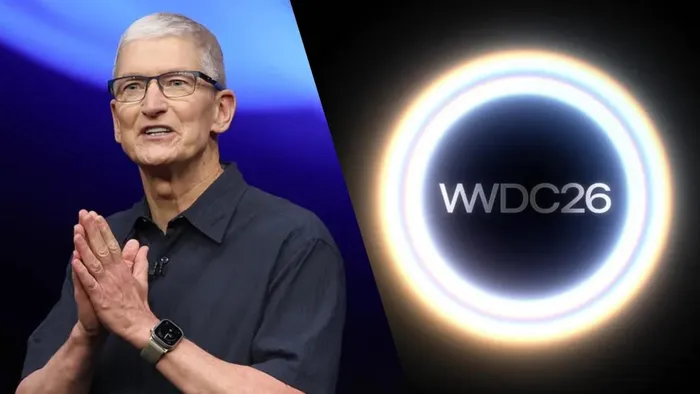
The company is expected to use this year’s conference, opening June 8 in Cupertino, to show whether it can finally deliver on the AI promises it began making in 2024. The most important item is Siri. According to previews citing JPMorgan analyst Samik Chatterjee, the core focus is a “material overhaul” of Siri, while Apple’s WWDC agenda unusually includes “AI advancements,” suggesting more confidence than the vague timelines investors have seen before.
The rumored Siri overhaul is not just a better voice assistant. The expectation is that Siri could become a standalone app, support multi-turn conversations, and behave more like ChatGPT or Gemini. A new “Search or Ask” entry point could live inside Dynamic Island, while Siri may also replace Spotlight as the iPhone’s global search layer. If that happens, Siri would move from a side feature to a system-level AI gateway.
That is the real investment point. Apple does not need to win the model race outright. It needs to control the user interface through which 2.5 billion active devices interact with AI.
Siri Is The Center Of The AI Catch-Up Trade
The most important architecture shift may be under the hood. Apple previously framed its AI stack around its own models, with ChatGPT as the main outside option. This year’s rumors point to a more open routing structure, where users could choose between multiple models, much like choosing a default search engine.
Gemini may become a deeper foundation layer for Siri, while ChatGPT becomes one option among others rather than the only external partner. That would be a major strategic concession, but also a practical one. Apple may be late in frontier models, but it still owns the device, operating system, privacy layer and distribution.
The question is whether that is enough.
The bullish case is straightforward: Apple can turn “good enough AI” into mass-market AI by embedding it into daily iPhone, iPad and Mac workflows. Potential upgrades include cross-app multi-step commands, screen awareness, visual intelligence through the camera, AI photo editing, smarter Safari features and deeper personal-context understanding.
The bearish case is just as clear: Apple has already delayed personalized Siri once, and investor patience is thinner. If WWDC shows another polished interface without real AI execution, the market may treat it as another year of catch-up.
The Product Cycle Gives Apple Another Tailwind
WWDC is not only about software. It also sets expectations for the fall product cycle.
This year, the hardware story may be more interesting than usual. The market is watching for signs around a foldable iPhone, a touch-screen MacBook, and iOS 27 features designed for new form factors. A foldable iPhone would be Apple’s first real new iPhone shape in years, and iOS 27 could include dual-column app layouts, iPad-like multitasking and new sidebar designs for that device.
The iPhone 18 lineup may also shift the upgrade mix. Reports suggest the standard iPhone 18 may not arrive until the first quarter of 2027, while Pro, Pro Max and foldable models could come earlier. That staggered launch would naturally push demand toward higher-end models.
Pricing is the risk. Memory costs remain a pressure point, and Apple may raise iPhone 18 pricing by about $50 to protect margins. That is not huge in isolation, but it matters if consumers are already stretched or if the foldable model carries a premium price.
Still, the market often gives Apple the benefit of the doubt during this part of the calendar. Over the past decade, from 2016 to 2025, Apple shares have usually outperformed the S&P 500 from early June to mid-September, with average excess returns of roughly 11%. The logic is simple: WWDC starts the product-expectation cycle, and the fall iPhone event completes it.
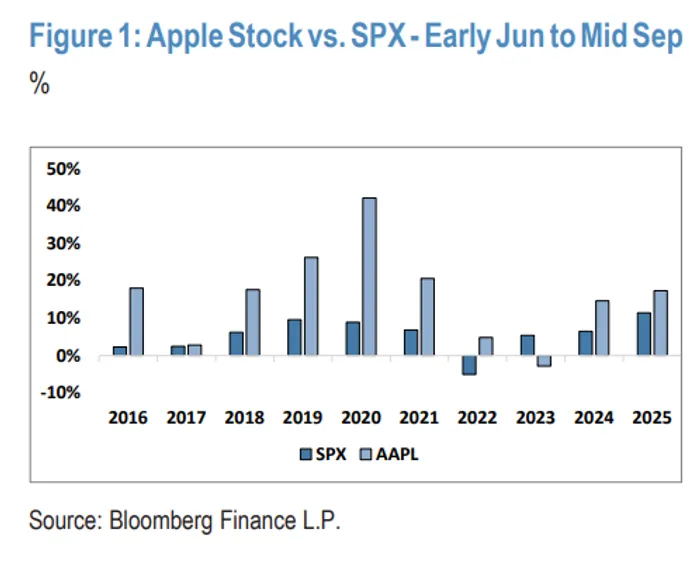
This year, that seasonal setup has more fuel: a Siri rebuild, possible Gemini integration, foldable iPhone expectations and touch-screen Mac speculation. But it also has more execution risk.
What Investors Need To Watch
The key question is not whether Apple announces AI features. It almost certainly will. The question is whether those features look ready, useful and central to the user experience.
Three signals matter most.
First, Siri needs to look like a real interface shift, not another assistant demo. If Apple can show Siri handling search, conversation, personal context and cross-app actions, the market may begin to price Apple as an AI distribution winner rather than an AI laggard.
Second, model strategy matters. Gemini integration would show pragmatism, but it also highlights Apple’s weakness in core model capability. Investors will want to see whether Apple can turn external models into a platform advantage without looking dependent.
Third, the fall product story needs to feel connected. AI features, foldable hardware, touch-friendly Mac interfaces and iPhone pricing all need to support one theme: Apple is using AI to extend its ecosystem, not merely adding features to defend it.
The upside case is that WWDC restarts the Apple AI trade and reinforces a historically favorable stock window into September. The downside case is that expectations have moved ahead of execution again.
Apple does not need to win WWDC with spectacle. It needs to show that Siri is finally becoming useful enough to matter.
That is the bar. And this time, investors may not reward another promise.