

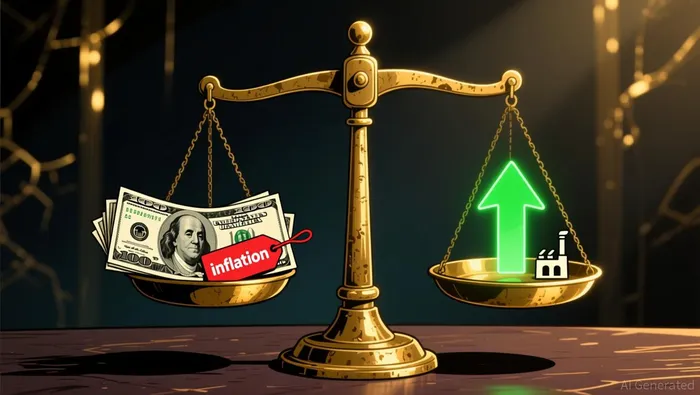
The macroeconomic landscape for the Fed is now defined by a stark conflict. On one side, inflation has sharply reversed its recent decline. The March Consumer Price Index rose 3.3% year-over-year, with a 0.9% month-over-month jump that was the largest in over a year. This acceleration was driven by a 10.9% surge in energy prices, led by a 21.2% spike in gasoline. On the other side, economic momentum is strengthening. The advance estimate for first-quarter 2026 GDP showed the economy expanding at a 2.0% annualized rate, a clear acceleration from the 0.5% pace in Q4 2025.
This creates the central tension for policymakers. The CPI print signals a disinflation reversal, with the core index also ticking up. Yet the GDP data points to a durable economic expansion, with growth driven by investment, exports, and consumer spending. The Fed's dual mandate now faces a direct trade-off: aggressive action to cool inflation risks derailing the emerging growth momentum, while inaction risks cementing higher price pressures.
The setup is one of conflicting signals. The March CPI is a clear inflation shock, but the Q1 GDP report is a sign of economic resilience. The Fed must now weigh which signal to prioritize as it approaches its next decision.
The Catalyst: April CPI Release on May 12
The market's immediate focus shifts to the May 12, 2026 release of the April Consumer Price Index. This data is the critical test for whether the sharp March inflation surge was a one-off spike or the start of a new trend. The key monitor will be gasoline prices, which drove the March energy jump. A reversal in the 21.2% gasoline surge would signal cooling, while sustained strength would confirm the energy shock is persistent.
The direct impact on the Fed's policy path is immediate. A strong April print, particularly if energy prices remain elevated, would reinforce the central bank's view that inflation is not yet under control. This would likely push back the timeline for any rate cuts, as the Fed would need more evidence of a durable disinflation trend. Conversely, a significant drop in gasoline and broader energy costs could provide the "transitory shock" narrative the Fed has cited, supporting the case for a more dovish stance.
The setup creates a binary outcome for market expectations. The April CPI will either validate the March data as an isolated event, keeping the Fed on a cautious wait-and-see path, or it will confirm a broader inflationary uptick, forcing a reassessment of the 2026 rate cut calendar. The release date itself, May 12, is the first concrete date for this test.
The Communication: Fed Speeches Throughout May
The Fed's messaging strategy in May is a deliberate exercise in controlled ambiguity. Key officials are scheduled to speak, including Governor Michael S. Barr, Governor Christopher J. Waller, and Vice Chair for Supervision Michelle W. Bowman. Their speeches, set against the backdrop of the upcoming April CPI release, are designed to reinforce a consistent theme: the central bank is navigating a period of great uncertainty and will remain data-dependent.
This emphasis on uncertainty is a direct response to the conflicting signals from March. While the CPI print showed a sharp inflation reversal, the GDP data pointed to resilient growth. The Fed's recent rhetoric, as seen in a speech last month, has framed the economy as being in a state of "motion," where global risks and domestic data shifts require patience. The goal is to manage market expectations by avoiding premature commitments, which is critical ahead of the next FOMC meeting.
The tone of these speeches will be the primary channel for shaping the policy path. By stressing that the outlook depends on incoming data, officials are effectively buying time. This approach allows them to assess the April CPI's impact on inflation expectations and the labor market's strength before any decision. The risk is that prolonged ambiguity can increase market volatility, but for now, it aligns with the Fed's need to wait for clearer signals before moving toward a rate cut.