

US consumer inflation accelerated in April, with both headline and core CPI coming in above market expectations.
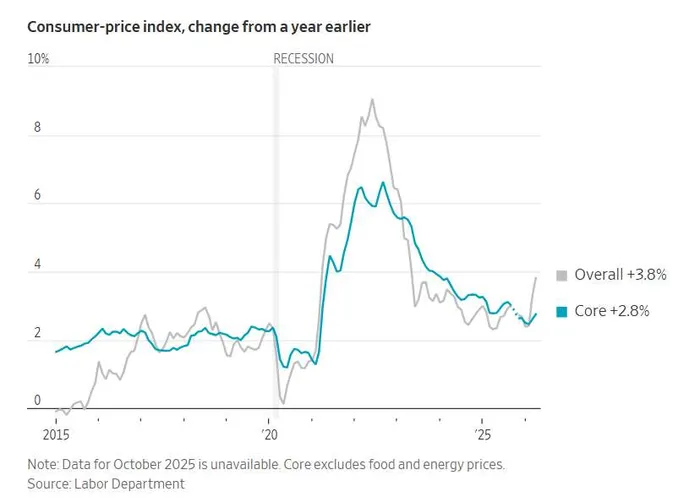
Headline CPI rose 3.8% year-over-year, above the consensus estimate of 3.7% and marking the largest annual increase since September 2023. On a monthly basis, CPI increased 0.6%, in line with expectations.
Core CPI, which excludes food and energy, climbed 2.8% year-over-year, exceeding expectations for 2.7%. Monthly core inflation rose 0.4%, also hotter than the expected 0.3%.
Despite the stronger-than-expected inflation print, market reaction was relatively muted. Nasdaq futures fell around 1%, though the decline was driven primarily by weakness in semiconductor stocks rather than the inflation data itself.
Real Wages Turn Negative for the First Time in Three Years
One notable detail was that average hourly earnings rose 3.6% year-over-year, while CPI increased 3.8%.
This marks the first time in three years that wage growth has lagged inflation, signaling a decline in real purchasing power for American workers.
Energy Remains the Main Inflation Driver
Energy prices continued to be the dominant source of inflation pressure, accounting for nearly half of April’s monthly CPI increase.
Gasoline prices surged more than 5%, while airline fares climbed 2.8% month-over-month.
Food inflation also accelerated sharply. Grocery prices rose 0.7%, the fastest monthly increase in four years, with meat, dairy, fruits, and vegetables all posting notable gains.
Analysts warned that higher fertilizer and transportation costs could continue feeding into food prices in coming months.
Housing Inflation Distorted by Statistical Adjustments
The shelter index rose 3.3%, though analysts noted this was partly due to a technical adjustment.
Because of the US government shutdown last October, the Bureau of Labor Statistics was forced to use a forward-estimation method that artificially suppressed the previous month’s reading. April’s report effectively reflected two months of price changes combined.
Hotel prices increased 2.8%, marking the fastest pace since 2024.
Goods Inflation Shows Mixed Signals
New vehicle prices declined 0.2% month-over-month, while used cars and trucks were flat. On a yearly basis, new car prices rose 0.2%, whereas used vehicle prices fell 2.7%. Motor vehicle insurance increased only 0.1%.
Household furnishings declined 0.5% during the month, including a 0.3% drop in furniture and bedding and a 0.4% decline in household appliances.
Meanwhile, video and audio products rose 0.3%, apparel increased 0.6%, and computer equipment climbed 0.9%, suggesting no clear trend across consumer goods categories.
One unusual data point was a 3% monthly decline in college textbook prices, the largest drop on record, reflecting the ongoing transition toward digital and paperless education materials.
Analysts: Oil Shock Could Keep Inflation Elevated
Analysts argued that even under the most optimistic scenario, oil prices are likely to remain elevated for months ahead.
Even if the Strait of Hormuz fully reopens, shipping normalization would likely occur only gradually. Higher energy costs are expected to continue flowing through to fertilizer prices, food inflation, and broader transportation expenses that companies may eventually pass on to consumers.
Chris Anstey said the report was broadly in line with expectations, with investor concerns still centered on uncertainty created by elevated oil prices. He described the data as slightly dovish overall, noting that the US two-year Treasury yield slipped from 3.99% to 3.97% following the release.
Enda Curran noted that inflation relief in sectors such as healthcare, communications, and new vehicles could provide some breathing room for consumers and businesses. However, he emphasized that price increases remained broad-based across furniture, apparel, education, personal care, and airline tickets, while energy costs stood out as the largest concern.
Curran added that the report would likely reinforce expectations that the Federal Reserve will remain on hold and gradually abandon any remaining easing bias.
Stephen Brown warned investors not to underestimate rising food and energy costs, arguing that they could eventually push consumer inflation expectations higher and become a growing concern for the Federal Reserve.