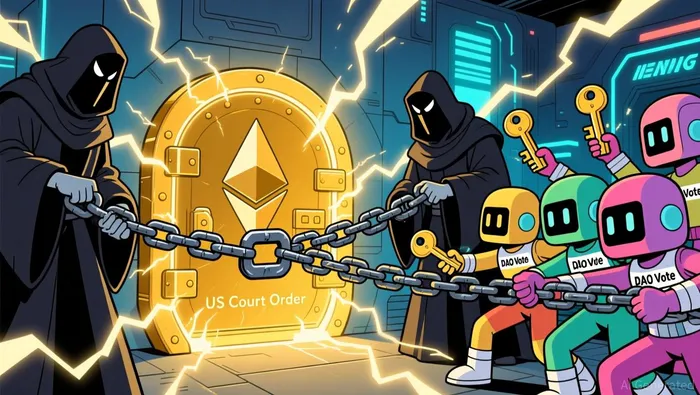
A 90%+ vote has cleared the path to release 30,765 ETH worth roughly $71 million from the Kelp DAO exploit. This is the core financial move in a coordinated "DeFi United" recovery effort, aiming to plug a massive hole in the restaked Ether (rsETH) system. The funds, frozen by Arbitrum's Security Council last month, are slated for a multi-sig wallet controlled by major DeFi players to directly aid victims.
Yet a major legal risk now hangs over the transfer. A restraining notice filed in a U.S. federal court seeks to seize these assets as property of North Korea, citing online attribution of the hack to the Lazarus Group. This creates a direct conflict between the on-chain governance vote and a potential U.S. court order.
The immediate implication is a liquidity injection for the recovery effort, but the legal cloud makes execution a high-stakes gamble. As one expert noted, moving the funds after being served could be deemed contempt of court, creating a practical barrier that the vote alone cannot overcome.
The Flow Mechanics and Ecosystem Impact
The 30,765 ETH vote represents a major capital flow, accounting for roughly a quarter of the total stolen in the Kelp DAO exploit. This makes the Arbitrum DAO the largest single contributor to the DeFi United recovery fund, channeling a critical liquidity injection directly to protocols like Aave and EtherFi to restore rsETH backing and close bad debt.
The vote's structure includes indemnification protections, a clear signal of the unusual legal risk the DAO is taking by facilitating the transfer. This mechanism is designed to shield individual voters from liability, but it does not cover contempt of court charges, highlighting the precarious legal path ahead.
The bottom line is a high-stakes test of on-chain governance versus off-chain legal authority. The flow of capital is approved by token holders, but its execution is now legally contested, creating a volatile setup where the recovery effort's momentum depends on a court's decision.
Catalysts and Risks: The Path Forward
The immediate next step is a mandatory eight-day wait. Because the vote was structured as a Constitutional AIP, the transfer cannot occur for at least eight days, providing the U.S. court with a window to intervene. This delay is the first major catalyst, turning the on-chain vote into a race against a potential court order.
The funds will be held in a 3-of-4 Gnosis Safe, a multi-sig wallet controlled by representatives from the recovery coalition. This structure ensures that the funds will be used exclusively for the rsETH recovery effort, with strict usage rules. The custody setup is designed for transparency and security, but it also concentrates the legal risk in a small group of identifiable individuals.
The primary risk is now a court order blocking the transfer. A restraining notice filed in the Southern District of New York seeks to seize the assets as property of North Korea. If the court upholds this, it would halt the recovery flow and test the DAO's legal exposure. The indemnification protections in the proposal do not cover contempt of court charges, making execution a high-stakes gamble for the coalition members.