

For income investors, Ares Capital is a classic case of the safety trade. The fund has paid a dividend for 17 years running, a streak that has cemented its reputation. It trades at a mere 1% discount to its book value, a premium that stands in stark contrast to the 20% discounts typical for its publicly traded credit fund peers. This combination-consistent payouts and a price near the underlying asset value-makes it a favorite. The setup is simple: a steady income stream backed by a seemingly solid net worth.
Yet the fund's portfolio composition raises a red flag. While other top-rated business development companies (BDCs) lean heavily into senior secured loans, Ares is different. At the end of March, 60% of its portfolio was in first-lien loans, but a significant 29% were various kinds of equity. That's a major deviation from the norm, where first-lien loans typically make up 80% of a BDC's holdings. The fund's strategy is to co-invest in equity alongside its loans, a move it says is selective and aimed at capturing upside. But it also means the fund's risk profile is more akin to a hybrid lender and a private equity investor than a pure debt lender.
The central question this sets up is whether the safety is real or illusory. The dividend record is impressive, but the path to funding it has grown more complex. The fund has increasingly relied on noncash interest payments, known as PIK, to build its earnings. In 2025, noncash PIK interest and dividends were nearly $490 million, or 34%, of Ares' net investment income. This shift from cash to IOUs is the core of the tension. It's a smart tactic to win business in a competitive market, but it changes the game for dividend coverage. The fund has managed to pay its dividends for years, but it has often done so with money from loan repayments and investment gains, not just the cash it collects. That's a setup that works as long as the underlying loans perform and the equity stakes hold their value. If the lending environment turns, that cushion could vanish.
The IOU Problem: Cash Flow vs. Booked Income
The real test of any lender isn't its accounting profit, but whether it can actually collect cash. Here, Ares Capital shows a clear disconnect. A decade ago, only 8% of its income came from noncash interest payments, known as PIK. By 2025, that share had ballooned to nearly $490 million, or 34%, of its net investment income. In other words, a third of what the fund books as earnings isn't cash in hand-it's an IOU from a borrower.
This isn't just a technicality. It changes the game for dividend payments. For most of the past ten years, the cash collected from interest and dividends hasn't covered the fund's payouts. The difference has been made up by money from loan repayments, investment gains, and capital inflows. That's a recipe for strain. The fund's strategy of letting borrowers pay with IOUs helps win business, but it means the fund must find cash from other sources to keep the dividend flowing.
The recent quarter laid this strain bare. To cover its March-quarter dividend, Ares had to sell four equity positions. That's a tell. It shows the fund's core cash-generating engine-interest collected from loans-isn't sufficient on its own. It had to liquidate assets to meet its obligation. This is the "smell test" issue. The fund's health now depends on the value of its equity stakes and the success of its co-investment strategy. Those assets can fall sharply in a downturn, unlike a first-lien loan that gets paid first. When the lending environment deteriorates, the cushion of IOUs and equity may vanish, leaving the dividend vulnerable.
The Broader Private Credit Landscape: A Tense Environment
Ares Capital isn't navigating a calm sea. It's in the middle of a storm sweeping the entire private credit industry. Over the past year, the sector has been in a correction, marked by surging redemption requests, strategic fund closures, and a notable uptick in corporate bankruptcies. This is a market under strain, where the high interest rates of the "higher-for-longer" era are finally catching up with borrowers. The result is a record default rate of 9.2% in 2025, with high-profile failures like Fat Brands and Twin Hospitality highlighting the vulnerability of corporate debt loads.
The environment is defined by a "liquidity mirage." Many funds, designed for limited quarterly withdrawals, are now overwhelmed by investor exit requests. In the first quarter of 2026, major players like BlackRock and Morgan Stanley had to enforce strict redemption caps because investor redemptions far outpaced their ability to provide cash. Some funds have gone further, with Blue Owl Capital permanently freezing redemptions on its main fund. This isn't just about a few bad loans; it's a systemic stress test on the entire model of semi-liquid private credit.
Against this backdrop, the outlook is a mixed bag. Some analysts see a path forward in a shallow rate cut environment that could spur a credit quality recovery. But that same scenario also carries the risk of a sudden stress cycle if cuts are too slow or too deep. The industry is at a crossroads: a period of normalization where yields are still elevated but the easy money from rapid expansion is gone.
This is where Ares's strategy gets interesting. Its heavy tilt toward equity co-investments and its reliance on PIK interest payments make it more exposed to this volatile corporate loan segment. By contrast, a pure-play asset-backed finance (ABF) lender-like the one some see as a safer niche-would naturally deleverage. ABF loans are secured by tangible collateral like equipment leases or auto loans, which tend to be more stable during downturns. Ares's approach, while aiming for higher returns, means it's taking on more of the refinancing risk that plagues the broader corporate loan market. In a tense environment, that's a bet on the equity upside that could easily go south if the credit cycle turns.
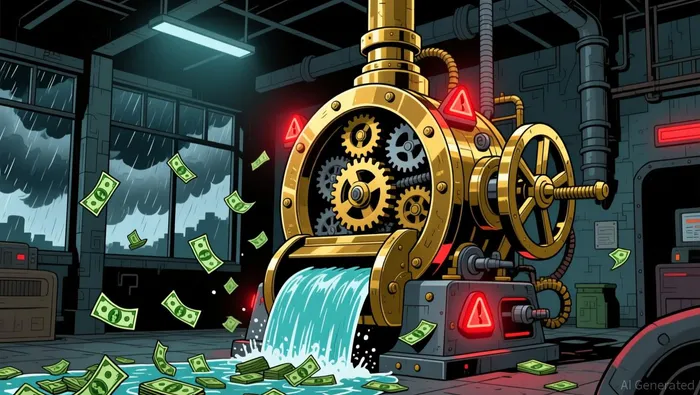
Catalysts and Watchpoints: What Could Break the Machine
The safety of Ares Capital's dividend hinges on a few clear, observable signals. The fund's strategy of using IOUs and equity stakes to fund payouts is a bet on continued performance. The setup works only if the underlying loans hold up and the equity portfolio keeps its value. Watch these specific metrics to see if that bet is paying off.
First, monitor the composition of future dividends. The recent quarter's need to sell equity to cover the payout is a red flag. If this becomes a recurring pattern-relying on asset sales or noncash income to fund the dividend-the safety of the payout is compromised. The fund's own statement that its past five years of dividends were "fully covered" by cash collected and investment gains is a strong point, but it's a recent history. The trend over the last decade, where cash income hasn't covered payouts, shows the system is already under strain. The key watchpoint is whether the fund can return to a model where cash from interest and dividends alone covers the dividend, without needing to sell assets or rely on PIK.
Second, track the performance of its 29% equity portfolio. The fund's 10-year average IRR is strong, but that's a long-term average. Recent market shocks and a tense lending environment could pressure valuations quickly. The fund's selective co-investment strategy is its differentiator, but it's also its vulnerability. If the value of these equity stakes falls, it directly undermines the cushion that helps cover the dividend. This is where the "kick the tires" test matters most. The fund's reputation for quality borrowers is built on a track record, but a downturn could test that thesis.
The overarching risk catalyst is a deterioration in the lending environment. The broader private credit sector is already under stress, with a record default rate and a liquidity mirage. Ares's heavy tilt toward corporate loans and PIK interest payments makes it more exposed than a pure-play asset-backed lender. If the credit cycle turns, the value of those IOUs could evaporate, and the ability to refinance debt for borrowers could vanish. This would directly challenge the fund's ability to generate the cash needed for its dividend. As banks themselves are warning, the risk is building in private credit and the structures that connect it to private equity. Ares Capital is right in the middle of that risk.
The bottom line is that the dividend machine is running, but it's running on a more complex fuel mix. The fund has managed to keep the engine running for years, but the watchpoints are now clearer. If the equity portfolio falters, if the need to sell assets to pay the dividend becomes regular, or if the lending environment deteriorates, the safety trade could unravel. For now, the fund remains a favorite, but the setup demands closer observation.