

On June 4, Asana unveiled the operating system for human-agent teams: a new suite built around Agentic Work Management, featuring AI Teammates, a product called Dash, vertical apps, and cross-system execution capability acquired from StackAI a week earlier.
The press release language is engineered to evoke the kind of platform gravity that investors reward. Operating system. That is the word. It is not as good as it looks.
What actually shipped
Strip away the keynote packaging and the product bundle breaks into components most of which already existed. AI Teammates - the collaborative agents embedded in Asana projects - launched in March 2026. AI Studio, the no-code AI workflow builder, has been available since late 2025. MCP (Model Context Protocol) connectors, the standard interface for letting AI systems access external tools and data, were announced months ago. Three vertical apps for specific departments round out the suite.
The genuinely new items: Dash, a conversational AI interface described as the new front door for managing human and agent work, and the StackAI acquisition. That deal, closed May 28 for $75 million, adds no-code agent orchestration across enterprise systems like Salesforce and Oracle. StackAI gives Asana something it has not had before: the ability to make its agents act outside the Asana walled garden.
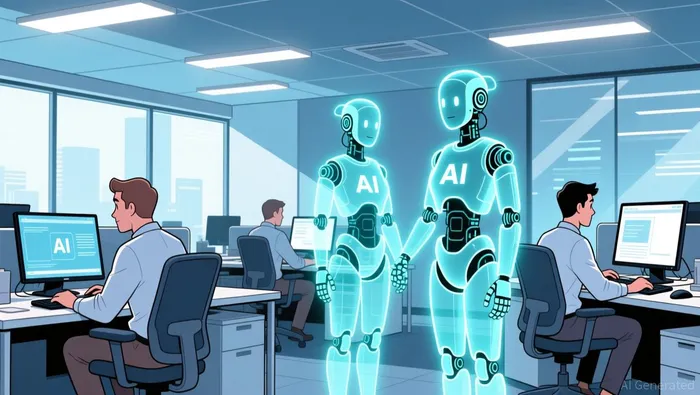
That is a capability gap closed. But it is not an operating system. It is a task tracker that learned to talk to other task trackers.
The arithmetic nobody wants to discuss
The real question investors should be asking is not whether Asana can build agent coordination - it is whether AI agents are a growth engine for Asana or an existential threat to it.
Here is why. Asana is a seat-based business. Revenue comes from counting how many humans sit at a keyboard and pay per month for a workspace. The entire pricing architecture assumes one seat equals one human equals one annual recurring revenue unit.
Now the company is selling products that let AI agents do the work those seats were hired to do. If an AI agent can coordinate a sprint, triage support tickets, and update project timelines without human intervention, the math inverts. Fewer humans need to touch the work. Fewer humans need a seat. The product Asana is building to justify a rebrand is cannibalizing the unit economics of its own pricing model.
Asana management knows this. Fortune reported last week that Asana has fallen victim to deep market anxiety regarding the future of seat-based SaaS models in an era of agentic AI. The company is betting that organizations will need more coordination overhead when agents enter the workflow, not less. That is an optimistic assumption that would need customer behavior data to validate - data Asana has not published.
The numbers tell the slower story
Asana's financial trajectory provides no evidence that the market is responding to the AI pivot. Fiscal year 2026 revenue grew 9% year-over-year to $790.8 million. Single-digit growth. Q1 FY27 - the most recent quarter - showed a dollar-based net retention rate of 96%. Net retention below 100% means the company is losing more revenue from churn and downgrades than it is gaining from existing customers' expansion. That has been the pattern for multiple quarters.
GAAP net loss in Q4 FY26 was $32.2 million. Asana has pivoted to profitability talk, but the GAAP number remains deeply negative and the free cash flow runway has been thin.
The stock, trading around $8, reflects a market that has long since stopped rewarding the growth narrative. The analyst consensus is Hold, with a median price target of $8 - meaning Wall Street sees no directional case one way or the other.
The competitive frame nobody is using
Microsoft is already bundling Copilot agents into Teams, Outlook, and the broader Office 365 suite - most of which enterprises already pay for. Microsoft's AI agents can read emails, draft project plans, and update task boards across a stack that costs the customer one enterprise license. Monday.com and ClickUp are already adding AI teammates at price points that undercut Asana.
For an enterprise to adopt Asana's agent platform means evaluating a new vendor for a capability that existing vendors are baking in for free. The acquisition strategy of buying agent capabilities for $75 million at a time is not sustainable unless it drives a disproportionate return in retention and expansion. The 96% NRR suggests it has not yet.
What would change the thesis
The cross-currents here are clear:
- Asana has closed a real capability gap with StackAI. Cross-system execution matters. If their agents can genuinely coordinate work across Salesforce, Oracle, and ERP systems through a single interface, that is a differentiated wedge that Microsoft Copilot does not own yet.
- The seat-based model is structurally threatened by the very agents Asana is selling. The company needs a usage-based or outcome-based pricing model to align with agentic work - and it does not have one.
- NRR below 100% is a lagging indicator of competitive pressure. It may widen as Copilot agents mature and as Microsoft bundles deeper.
- Revenue growth at 9% is insufficient to offset dilution, acquisition amortization, and the R&D spend required to keep building agent infrastructure.
Directionally, the structural risk dominates. A company that is building products to reduce the number of human work-hours needed per project should not be priced on the assumption that those work-hours will continue to translate into one seat, one subscription, one revenue unit. Something has to give: either the pricing model changes, or the product stops being agentic enough to actually do the work. Asana cannot credibly claim both.
Until management articulates how agent-driven work maps to revenue - not in keynote language but in a per-outcome pricing framework - the operating system narrative is propaganda dressed as strategy. The investor implication is straightforward: the stock is not cheap because the market has missed an upside case. It is cheap because the market has correctly assessed that Asana is trying to grow its way out of a business model that its own products are dismantling.