

What more do investors need to panic about?
The Westpac-Melbourne Institute consumer sentiment index fell 12.5% in April 2026 to 80.1 - well below the 100-line that separates optimism from pessimism. The ANZ-Roy Morgan gauge sits 20.3 points lower than a year ago. Headlines call it gloomy. The market treats it like a recession warning.
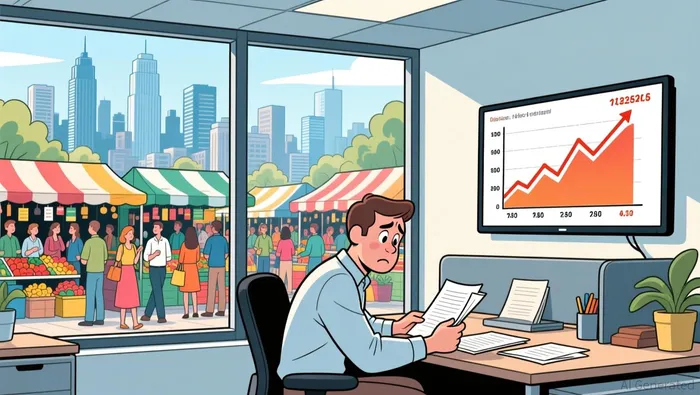
But sentiment data tells you how people feel, not what they're actually doing. And here's the disconnection: the Australian consumer is still spending. Retail sales across every major state posted double-digit year-over-year gains in early 2026. Unemployment is steady at 4.3%. Wages are holding. This isn't a consumer collapse - it's a mood swing.
The real tension is between the RBA's hawkish response and the data that doesn't support a recession case. The Reserve Bank hiked the cash rate to 4.35% on May 5, its third straight 25-basis-point increase. Its May Statement on Monetary Policy downgraded growth forecasts while lifting inflation expectations. The RBA assumes rates could reach 4.70% by year-end.
Why? Goods inflation jumped to 5.5% in the 12 months to March 2026, driven by fuel and supply chain pressures. Total CPI hit 4.6% annually - the highest since September 2023. The RBA sees a trap: inflation is accelerating just as the consumer's finances start to show strain. The bank would rather err on the side of tightening now than watch prices run again.
That trade-off is getting uglier, as the ABC put it bluntly on May 5: the RBA "risks a recession but feels there's nothing else it can do."
This is exactly the setup where sentiment creates mispricing. When everyone reads the same doom narrative, the stocks getting punished for consumer exposure aren't being priced on their actual earnings - they're being priced on what investors think will happen next.
Enter Wesfarmers (ASX: WES).
The conglomerate behind Kmart, Target, Bunnings, and Officeworks has been hammered. The stock is down roughly 11% over the past month and 14% year-to-date. It dropped sharply in February after its half-year results showed softer momentum in key retail units.
But look at what the company actually did in that half-year: it raised its interim dividend by 7.4% to $1.02 per share. That's not what a company does when the consumer is breaking. That's what a company does when cash flow is intact and management expects to keep growing.
Wesfarmers trades at a trailing P/E of 26.5x - below its own 10-year median of roughly 29.6x. For a diversified consumer staples and industrial play with market-leading positions in hardware and off-price retail, trading below its own historical valuation range while raising dividends is the definition of a fear discount.
Analysts have an average price target of $80 for the stock - roughly 10% upside from current levels, according to Simply Wall St. That consensus hasn't shifted to the recession camp.
The moat question is the one that matters. Bunnings holds dominant share in Australian hardware and home improvement - a category where scale, logistics, and supplier relationships create real barriers. Kmart and Target's off-price grocery-adjacent positioning actually becomes more attractive when inflation is high and consumers trade down. That's not a vulnerability to consumer stress - it's a tailwind.
I'm not saying the RBA won't slow growth. Credit costs at the big four banks are rising - National Australia Bank's loan impairment charges jumped 14% to AU$833 million in the half-year, and Morningstar forecasts the sector-wide impairment bill could reach $1.2 billion. The consumer is feeling the pinch from higher rates and higher prices. That's real.
But the question isn't whether the consumer is stressed. The question is whether the market's pricing a consumer collapse into stocks that are still executing. Wesfarmers raised its dividend. Its retail units are still the category leaders. Its valuation compressed below its own historical median despite none of these fundamentals breaking.
The contrarian alarm fires when the market's fear outpaces the actual deterioration. Right now, Australia's sentiment data is flashing red while the spending data stays in the yellow zone. That gap is where the opportunity sits.
What to do.
Wesfarmers is a buy here - not because I'm calling the RBA's bluff, but because the stock is being punished for a scenario the numbers don't support yet. The company's diversified model (hardware, off-price retail, chemicals, industrial) gives it more ballast than pure-play consumer names. The valuation gap relative to its own history is the entry anchor.
I wouldn't chase a single-position bet. The RBA could hike again, and if unemployment starts climbing past 4.5%, the consumer story changes fast. I'd reassess if Wesfarmers' next dividend guidance cuts or if Bunnings same-store sales turn negative - those would signal the moat is actually under stress, not just the mood.
Until then, the sentiment gloom is doing the RBA's tightening work for free, pricing fear into a stock that's still raising dividends and holding market share. Don't let that disconnection go to waste.
I'm upgrading WES to Buy. Add on weakness, not on rallies. The setup is attractive now - it could get better if the market keeps conflating how people feel with what they're actually buying.