

An Australian pharmacy company with an A$24 billion market capitalization is in talks to buy a British drugstore chain priced at roughly $10 billion (£7.5 billion). That is not a bolt-on acquisition. It is a deal worth about 40–60% of Sigma Healthcare's own stock-market value, announced the day after the company spent most of 2025 closing its merger with Chemist Warehouse.
Sigma's shares fell more than 4% to A$2.79 on the news. The market did not hear "bold expansion play." It heard "what are you going to do now."
The odd thing is not that Sigma's stock went down on acquisition talk. The odd thing is what this deal structure suggests about the actual buyer, the actual seller, and what neither is admitting.
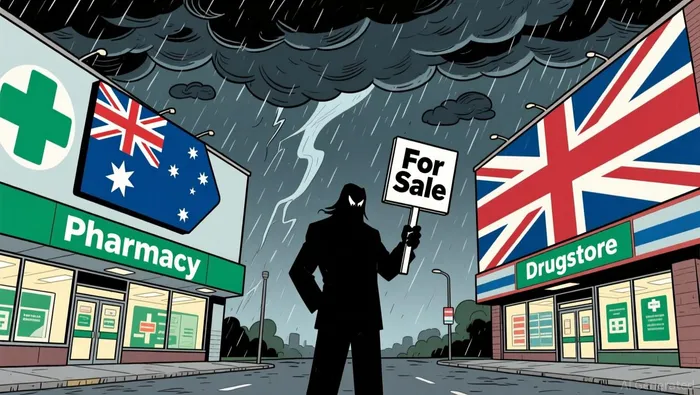
Here is the plumbing first.
Sycamore Partners, a US private equity firm, bought Walgreens Boots Alliance for $10 billion last year and closed the deal in August 2025. Sycamore immediately carved out the Boots UK division as a standalone private company. By April 2026, Sycamore was reportedly preparing a London IPO for Boots - a 2027 float that would have given the firm a multi-billion-dollar exit on a holding of roughly 13 months.
Now Sycamore is ditching the IPO plan and selling the whole thing in a private transaction. The price: £7.5 billion. The interested parties: the Weston family - the billionaire family behind Marks & Spencer - and Sigma Healthcare of Australia.
Preliminary talks started before Easter, Reuters reported. Sigma confirmed on Friday evening that it had been in "preliminary discussions" about the sale process. No offer. No agreement. Just the kind of early conversation that is legally designed to be deniable.
This is not a story about Sigma's ambition. This is a story about a private equity fund that needs an exit and is shopping the asset to whoever will write the largest check with the least due-diligence drama.
Sycamore bought WBA for $10 billion, separated Boots, and now wants £7.5 billion for Boots alone. Depending on currency and what exactly gets included in the sale bucket, that is either a tidy paper gain for the fund or a scramble to lock in whatever the market will bear before the IPO window closes or the macro picture sours further. Either way, the incentive is the same: sell fast, sell private, and avoid the disclosure and timing risk of a public listing.
An IPO forces a company to publish its numbers, answer regulatory questions, and accept a price set by the open market at an unpredictable moment. A private sale to a strategic buyer or a family office is cleaner for the seller: one counterparty, one price, one set of reps and warranties, and the deal closes on the seller's timeline, not the market's.
Sigma Healthcare's presence in the bidding pool makes narrative sense for Sycamore's financial advisers. A strategic buyer - an actual pharmacy operator with a real business to integrate into - creates competition. It signals genuine demand. It gives Sycamore leverage against cash bidders who would otherwise drive the price down.
But whether Sigma can actually close a deal of this size is a separate question from whether Sigma is useful in a bidding process.
Sigma Healthcare generates roughly A$15.5 billion in revenue and had a market capitalization near A$24 billion before Friday's move. Its most recent major transaction - the A$8.8 billion merger with Chemist Warehouse, completed in February 2025 - already doubled the company's Australian footprint and left it integrating two large pharmacy operations.
Acquiring Boots for $10 billion on top of that is an entirely different category of undertaking. The financing would almost certainly require a mix of debt, equity raises, and potentially asset sales or joint-structure arrangements that would dilute existing shareholders. Sigma's balance sheet capacity to support a cross-border acquisition of this scale - while running a domestic integration - is not something the reporting addresses, and for good reason. The talks are preliminary.
That is precisely why the stock went down. A 4% decline is not a panic. It is the market saying: we hear you, but we see the balance sheet, and the math looks uncomfortable.
The Weston family adds another wrinkle. They are the kind of buyer that does not need to justify a purchase to a board, publish integration plans, or answer to quarterly earnings calls. If the Westons end up as the lead buyer - or as a co-buyer that absorbs the downside risk - Sigma's role might turn out to have been exactly what it appeared to be: a credible strategic participant in a process that raises the asking price for everyone.
That is not a bad role to play. It is just not the role that moves the stock.
The simplest model is this: Sycamore has an asset it bought for $10 billion and needs to exit. It wanted an IPO for maximum price discovery but is now accepting a private sale at a slight discount for speed and certainty. Sigma is in the room because its presence as a strategic bidder makes the process look competitive. Whether Sigma ends up buying anything, buying part of anything, or walking away with nothing is not the question. The question is whether Sycamore's urgency is pricing the deal at a level where a strategic buyer can actually afford it.
Sigma shareholders got to vote on the Chemist Warehouse merger in January 2025 and approved it. They did not get to vote on a $10 billion cross-border acquisition of a British drugstore chain that doesn't exist yet and may never materialize. That asymmetry - between what the market has priced Sigma to deliver and what the company might be signaling it can attempt - is what the 4% drop is really about.
The structure of this process - PE seller needing exit, strategic bidder adding credibility, family cash offering certainty - is old finance in a clean wrapper. The only thing new is the pharmacy chain at the center of it.