

The timber trade between Austria and Qatar is a small but telling flow. In 2024, Austria exported wood and wood products to Qatar worth $6.12 million. On the scale of Austria's vast timber sector, this is a minor segment. The country's solid wood board exports alone reached €238 million last year, making the Qatar trade a niche piece of a much larger export machine.
That machine is built on exports. The Austrian timber industry operates with a 70% export quota, meaning three out of every four units produced are destined for foreign markets. This deep reliance on international sales makes the sector inherently sensitive to any disruption in its trade routes. The current challenges in the Red Sea are not just a logistical hiccup; they are a direct threat to this fragile, export-dependent flow, however small its individual volume.
The Tortuous Route: Detours and Alternatives
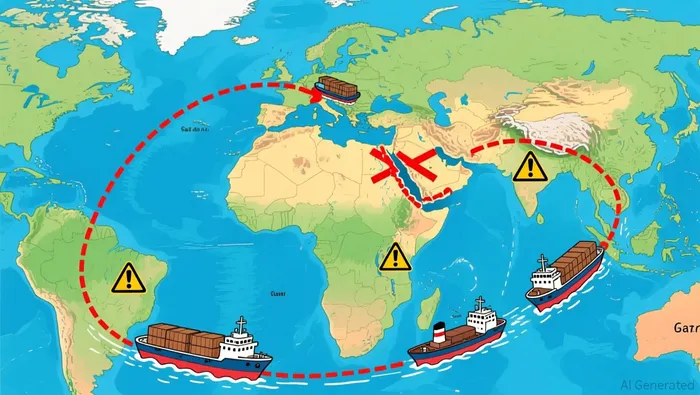
The standard sea route from Austria to Qatar is already a long haul, taking 37 days 16 hours for a container to travel the 11,263 nautical miles from La Spezia to Hamad. This journey is now facing a major disruption. Due to ongoing security concerns and significant disruptions in the Red Sea, vessels must take the much longer, circumnavigating route around the Cape of Good Hope. This detour can add up to two weeks to the transit time, turning a month-long voyage into a month and a half of uncertainty.
The situation is compounded by the fact that traffic through the Strait of Hormuz is currently almost completely closed. This effectively stops or severely limits sea transport to the entire region, making the standard maritime corridor to Qatar impassable. For a niche trade like Austria's timber exports, this creates a critical chokepoint.
In response, some shippers are exploring extreme detours, such as routing cargo via the West Coast of the United States, like Los Angeles. This is a costly and time-consuming workaround. Other potential corridors, like the North-South Transport Corridor, remain largely theoretical for this specific flow. Overland routes are not a viable alternative for this sea-based trade.
The bottom line is that the primary maritime path is blocked, and the only available alternatives are prohibitively long and expensive. This forces a painful choice: delay shipments indefinitely, reroute to other markets, or absorb the massive cost of a circuitous journey. For a small, export-dependent trade, these are not sustainable options.
Financial and Market Impact
The logistical chokepoint translates directly into severe financial pressure. For a single container, the cost of sea freight from Austria to Qatar already ranges from £3,142 to £8,014. With the standard maritime route blocked, any alternative-whether a detour around Africa or a circuitous land-sea journey-will dramatically increase these costs. The primary risk is not just the higher price tag, but the fundamental unreliability of the supply chain. Shippers face a stark choice: pay a premium for a delayed delivery or risk losing the order entirely.
Air freight offers speed but at a crippling cost. It can move a container in just 1-3 days, but the price is roughly five times higher than sea freight. For a niche timber export, this is an unsustainable option for regular shipments. The practical solution for many will be to absorb the massive cost of a longer, more circuitous sea route, which could add weeks to the journey and inflate freight bills significantly.
Beyond the immediate cost, there is a longer-term market access problem. Establishing a new trade relationship in Qatar, even after the conflict resolves, is not instantaneous. According to post-conflict trade intelligence, the timeline to establish such a trade typically involves initial contact (1-2 months) followed by regulatory compliance (2-4 months). This means a supplier could be sidelined for up to six months while navigating paperwork and approvals. For a small, export-dependent trade like Austria's timber flow, this delay is a major vulnerability. It forces a choice between high expense now or long delays and lost market share later.
Catalysts and What to Watch
The outlook for the Austria-Qatar timber trade hinges on a few critical variables that will determine whether the current chokepoint eases or deepens. The most immediate pressure point is the stability of the maritime corridors themselves. The Strait of Hormuz is currently almost completely closed, and the Suez Canal remains a key, though not yet blocked, node. Any restoration of safe, reliable passage through these chokepoints would be the single biggest factor in shortening the already tortuous sea transit times. For now, the detour around Africa adds weeks, but a return to normalcy could cut that delay in half. The stability of these waterways is the first forward-looking guardrail.
At the same time, the viability of air freight-a potential fast lane for high-value timber shipments-has been severely compromised. Air cargo capacity to the Middle East has shrunk by more than 50% on an annual basis. This collapse in capacity, driven by the conflict and the grounding of passenger aircraft that carry cargo in their bellies, directly undermines a key alternative. It means the option to move goods quickly by air is not just expensive, but also scarce and unreliable. This reduction in air capacity is a second major constraint that could worsen the trade's outlook.
Looking further ahead, the potential development of alternative overland corridors offers a long-term, non-maritime option. The UAE has joined the Development Road Project, an ambitious 17-billion-dollar plan to build a 1,200-kilometer overland trade route connecting the Arabian Peninsula to Turkey and Europe. While this project is years from completion, its existence signals a strategic shift toward diversifying trade routes. For the Austria-Qatar flow, a future land corridor could eventually provide a stable, non-maritime alternative, bypassing both the Red Sea and the Suez entirely. This represents a third, longer-term guardrail that could reshape the trade's fundamentals if realized.
The bottom line is that the trade's immediate fate is tied to the reopening of sea lanes. The collapse in air capacity makes that a more urgent need. In the longer view, the success of projects like the Development Road will determine whether such niche trades can build more resilient, diversified supply chains. For now, the path forward remains narrow and expensive.