

The recent price action in Aware (: AWRE) presents a classic study in the difference between technical structure and immediate market conviction. Why is AWRE stock moving today? The stock has posted a notable pre-market gain of +10.22%, trading near $1.4769, yet this move is occurring against a backdrop of significantly diminished participation. While the broader market environment is supportive, the specific setup in AWRE requires a cautious approach. The chart shows a healthy uptrend, but the fuel behind this latest rally is thin, creating a scenario where traders must distinguish between a genuine reversal and a liquidity-driven spike.
What is the current technical setup and why does it matter?
At first glance, the structural picture for AWRE looks encouraging. The stock is trading well above its 20-day and 50-day moving averages, maintaining a sequence of higher lows that defines a clear uptrend. The 20-day moving average sits at $1.35, providing a dynamic floor for price action, while the 50-day line at $1.30 offers a secondary safety net. This alignment suggests that the underlying trend remains intact despite recent volatility.
However, the immediate context introduces a layer of complexity. The pre-market price action shows a bounce from recent lows, but the volume metrics tell a different story. Relative volume is languishing at just 0.65 times the 20-day average, and the volume Z-score is negative at -0.53. In practice, this means that the current price movement is not being supported by broad institutional participation or significant retail interest. For a micro-cap stock like AWRE, volume is the primary indicator of liquidity and price stability. Without it, price moves can be erratic and prone to sharp reversals once regular trading hours begin and larger players enter the arena.
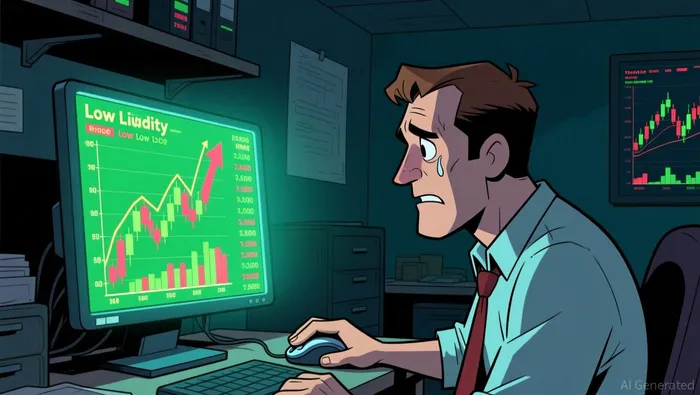
The Relative Strength Index (RSI) sits at 55, indicating neutral momentum that is neither overbought nor oversold. This neutrality allows for upside potential, but it also means there is no immediate momentum driver pushing the stock higher. The average true range (ATR) of $0.11 highlights significant intraday volatility, reinforcing the need for precise entry and exit strategies.
How should traders approach the trade idea from here?
Given the conflicting signals of a strong technical trend and weak volume participation, the most credible trade idea is a conditional pullback entry rather than a breakout chase. The setup relies on the premise that the uptrend will hold, but the entry must be protected by volume confirmation.
The ideal scenario involves the stock consolidating around the $1.40 level or pulling back to test the $1.35 support zone. If price holds above the 20-day moving average and begins to attract volume, traders might consider a long position with a target near the 20-day high of $1.65. This level acts as a critical ceiling; a move above $1.65 on high volume would signal a breakout and open the path toward $2.00.
Conversely, the bear case is rooted in the lack of volume. The primary scenario, which carries a 43% probability, is a failure or false breakout. If the stock fails to sustain the pre-market gains and volume remains weak, the price is likely to drift back down toward the $1.35 support or lower. The risk is that the current pre-market rise is a "dead cat bounce" or a liquidity trap, common in low-float stocks where thin order books can amplify price moves without fundamental backing.
A short-term trade structure might look like this: enter long only if the stock holds above $1.40 with increasing volume relative to the opening hour. The invalidation level is $1.30. If the price closes below the 50-day moving average, the uptrend structure is broken, and the thesis is no longer valid. A stop-loss should be placed just below $1.30 to protect against a rapid breakdown.
What should investors watch next over the next 1-2 sessions?
The next 24 hours are critical for determining whether the technical trend can overcome the volume deficit. Several key factors will dictate the path forward.
First, monitor the volume profile during the first hour of regular trading. A relative volume reading above 1.5x the average would provide the necessary confirmation to support a breakout attempt toward $1.65. If volume remains below average, expect the stock to consolidate or retrace. Second, watch the Nasdaq futures. As a small-cap equity, AWRE is highly correlated with broader tech sentiment. Strength in the Nasdaq could provide the tailwind needed to lift AWRE, while weakness could exacerbate the lack of internal momentum.
Crucially, be aware of the risk of a scenario switch. If the stock breaks below $1.35 on high volume, the support structure fails, and the bias shifts to downside risk. On the flip side, a decisive close above $1.65 on high volume would invalidate the failure scenario and confirm a continuation of the uptrend.
Ultimately, the setup is fragile. The technicals are bullish, but the market participation is absent. Traders should proceed with caution, prioritizing capital preservation over chasing a move that lacks conviction. By focusing on volume confirmation and respecting the key moving averages, investors can navigate the uncertainty while managing the inherent risks of micro-cap volatility. Understanding these AWRE support and resistance levels will be essential for making informed decisions in this volatile environment.