

Project Prometheus is not raising capital to survive. It is raising capital to build.
The numbers tell the story: $10 billion in fresh funding at a $38 billion post-money valuation. This follows a $6.2 billion launch round last year-meaning the capital base nearly doubled in under twelve months. For context, Bezos' $224 billion personal bank account makes this funding round a fraction of his available wealth, signaling this is a core bet, not a side experiment.
What distinguishes this from a typical AI startup raise is who is writing the checks. JPMorgan and BlackRock are among the investors-institutional validators that treat this as an infrastructure layer play, not a speculative AI wager. These are not venture capitalists chasing moonshots; they are allocators of capital at scale who understand what it means to build platforms that other businesses run on.
The funding targets a specific technological S-curve: physical AI for industrial processes. Unlike chatbots and digital assistants, Prometheus is building systems that interact with manufacturing, aerospace engineering, and semiconductor production-real-world domains where AI must understand physics, not just text. This is the compute infrastructure for the next wave of automation.
With one of the best-financed early-stage startups globally, Prometheus is positioning itself at the base of the physical AI adoption curve. The question is not whether this capital will be spent-it is whether the infrastructure being built will become the rails that physical AI runs on.
The S-Curve Thesis: Why Physical AI Is the Next Paradigm Shift
The $10 billion raise isn't just capital-it's a positioning statement. Project Prometheus is targeting the next S-curve in computing, and the evidence is in its focus areas: manufacturing, aerospace engineering, and semiconductor production. These aren't random verticals. They represent the most complex, physics-rich environments where AI has yet to achieve systematic impact.
The digital AI wave-LLMs, chatbots, content generation-was the first platform shift. Prometheus is betting the second wave belongs to systems that understand the physical world. Aerospace and automobiles demand more than pattern recognition; they require causal reasoning about materials, forces, and thermodynamics. Semiconductor production adds another layer of complexity-nanometer-scale precision in environments where human intervention is impossible.
This is the infrastructure layer play. Just as cloud computing became the rails for digital transformation, physical AI will become the rails for industrial transformation. The companies that build the models, simulation environments, and compute frameworks for these domains will sit at the base of the next exponential adoption curve.
What makes this a paradigm shift rather than an incremental improvement? The scale of the opportunity. One of the best-financed early-stage startups globally is not building a product for these industries-it is building the compute infrastructure that these industries will run on. That distinction matters. It means Prometheus is not competing for market share in aerospace or semiconductors. It is becoming the platform upon which those industries' AI capabilities are built.
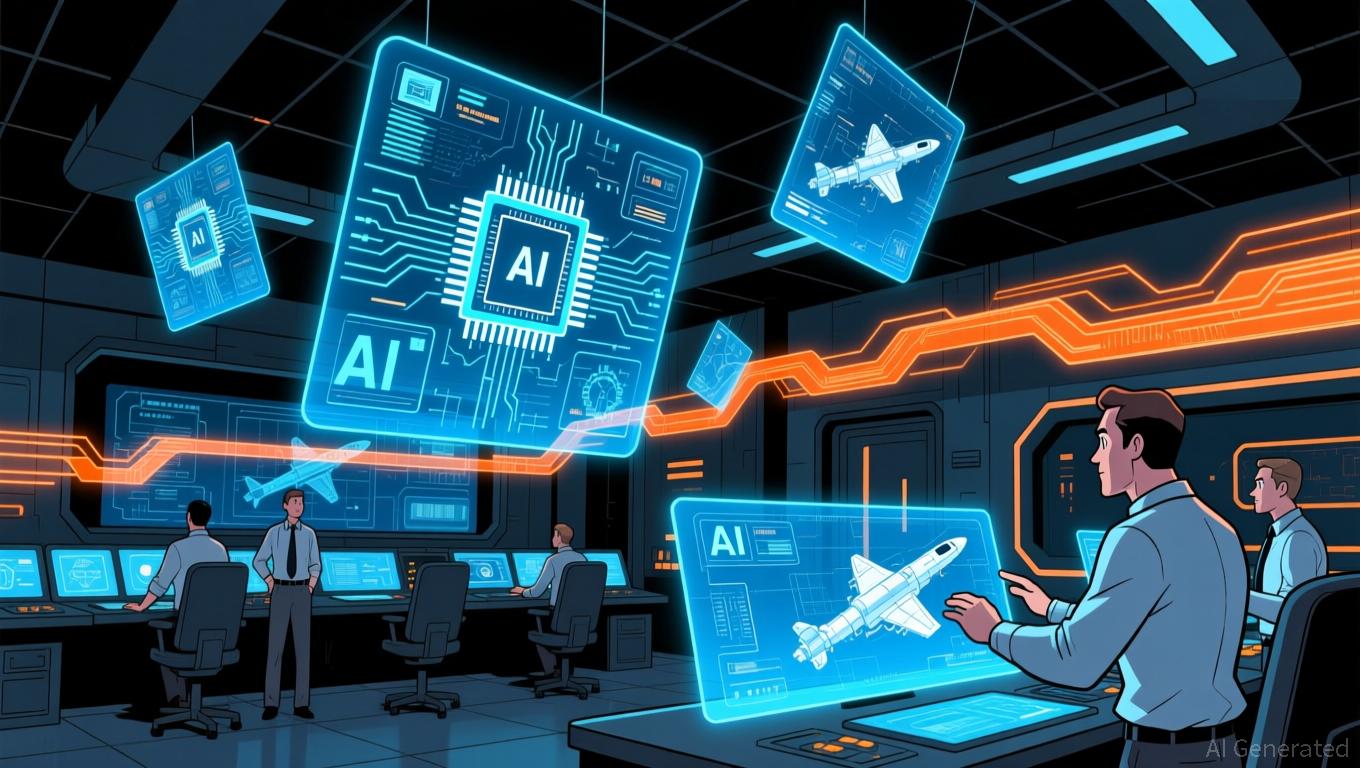
The S-curve thesis is simple: digital AI solved reasoning about text and code. Physical AI solves reasoning about matter and energy. The companies that crack that problem first will define the next computing platform. Prometheus is placing itself at the base of that curve-with capital, talent, and a clear focus on the industries where physical reasoning matters most.
Competitive Positioning: The New Arms Race in AI Infrastructure
Project Prometheus is not entering an empty field. It is stepping into a crowded arena dominated by the deepest pockets and brightest minds in AI.
The competitive landscape is stark. OpenAI, Google DeepMind, xAI, and Anthropic all have head starts in model development and maintain extensive talent benches. Yet Prometheus is making strategic moves to close that gap. The startup recently hired xAI co-founder Kyle Kozic-a direct recruitment from a competitor founded by Elon Musk. This isn't just a hire; it's a signal that Prometheus is willing to invest heavily in the talent layer that underpins compute infrastructure.
But talent acquisition alone doesn't define positioning. The real strategic differentiation lies in focus.
Google DeepMind pursues general AI-broad capabilities across domains. Tesla Optimus targets robotics and embodied agents. Prometheus is carving a narrower, more specific wedge: industrial manufacturing, aerospace engineering, and semiconductor production. These are physics-rich environments where AI must reason about materials, forces, and thermodynamics-not just text or code. This is the infrastructure layer for physical AI, not the application layer.
That distinction creates a defensible position. While the giants compete for general-purpose model supremacy, Prometheus is building specialized compute frameworks for industries where mistakes cost millions and human intervention is impossible. Semiconductor production at nanometer scales. Aerospace engineering where material failure is catastrophic. These are not problems solvable by scaling language models alone.
The competitive tension is real, though. Periodic Labs, founded by William Fedus-former OpenAI VP of research-represents another well-funded competitor in the physical AI space. Fedus brought deep post-training expertise to his venture, and he's not the only one chasing this S-curve.
What gives Prometheus an edge is the capital and the Bezos brand. One of the best-financed early-stage startups globally can outlast competitors in a capital-intensive build. JPMorgan and BlackRock as investors signals institutional confidence in the infrastructure play. But the question remains: can focused industrial AI beat general AI at its own game?
The answer lies in the S-curve. General AI is still climbing its adoption curve. Physical AI for industrial processes is at the base-early, but with exponential potential. Prometheus is betting that the rails it builds today will become the foundation tomorrow's industrial automation runs on. The competitive race isn't just about models. It's about who defines the platform.
Catalysts & Risks: What Moves the Thesis
The $10 billion raise gives Project Prometheus runway, but it doesn't guarantee success. The thesis will be tested over the next 12-18 months-and the market will watch specific milestones to determine whether this becomes a foundational platform or joins the AI graveyard.
What to Watch: The Catalysts
The first signal will come from technical publications. Prometheus needs to demonstrate, through model releases or peer-reviewed papers, that its systems can reason about physical worlds-not just simulate them. Physical AI designed to interact with real-world industrial processes means the models must understand materials, forces, and thermodynamics in ways current LLMs cannot. When the company publishes benchmarks showing causal reasoning about matter and energy, that's the first proof point that the S-curve is being climbed.
The second signal is industrial partnerships. Aerospace and automobiles are the target verticals, but partnerships must move beyond pilots to production deployments. Watch for announcements of integrated AI systems in semiconductor fabrication lines or aerospace engineering workflows-environments where human intervention is limited and AI decisions have real-world consequences. These partnerships validate the infrastructure play: they show Prometheus is becoming the rails, not just a tool on them.
The Risk Landscape
The space is nascent, and commercialization timelines extend further than typical AI applications. Physical AI must pass rigorous safety and reliability thresholds before industries like aerospace and semiconductor production will deploy it systematically. This isn't a software update-it's a fundamental reimagining of how machines interact with matter. The timeline from demonstration to scaled adoption could stretch years, not quarters.
Competition is intensifying. Tesla Optimus, Boston Dynamics, and Amazon's robotics initiatives are all pursuing embodied AI with substantial capital and engineering depth. Tesla, in particular, brings manufacturing scale and a vertically integrated approach that could accelerate deployment. Periodic Labs, founded by former OpenAI VP William Fedus, represents another well-funded competitor chasing the same S-curve.
The competitive tension is compounded by the fact that OpenAI, Google DeepMind, xAI, and Anthropic all have head starts in model development and talent acquisition. Prometheus hired xAI co-founder Kyle Kozic as a signal of its talent strategy, but the arms race for specialized AI researchers is intensifying across the entire physical AI space.
The Investment Implication
For investors, the 12-18 month window is about validation, not returns. The capital raise at $38 billion valuation provides buffer, but the thesis hinges on execution in physics-rich domains where mistakes are costly. The question isn't whether physical AI matters-the S-curve is clear. The question is whether Prometheus builds the infrastructure layer that industries run on, or whether competitors capture that position first.
Watch the technical papers. Watch the industrial deployments. The market will reward the first mover who demonstrates real physical-world reasoning at scale-but the race is far from over.