

When the news says Big Tech is about to spend $700 billion on AI this year, the instinct is to look for the stock that catches the wave. Goldman Sachs puts the 2026 number at $765 billion in annual AI capex, rising to $1.6 trillion by 2031. The numbers are staggering. But if you're trying to fund a retirement, the question isn't which stock goes up the most. It's which companies in this supply chain actually write you a check every quarter and keep doing it even if the AI thesis stumbles.
The answer is a small set of names most listicles skip entirely.
Here's the plumbing. A modern 100-megawatt AI data center costs $3.4 billion to $5.5 billion to build. About 70 percent of that goes on servers and graphics processors - Nvidia, in practice. The remaining 30 percent flows to the physical infrastructure: the buildings, the cooling, the power connections, the real estate. Those last three letters - the pipes and walls - are where the income investor wants to be. Not because they'll outperform Nvidia on a total-return basis. Because they pay you to wait.
Let's look at who actually produces the income.
Data center REITs sit at the top of this layer. Digital Realty, one of the largest colocation operators in the world, delivered core FFO of $7.29 per share over the trailing twelve months through Q4 2025. FFO - funds from operations, the REIT equivalent of earnings that adds back depreciation - is what management uses to evaluate whether the dividend is safe. DLR's AFFO payout ratio... sits at 64 to 72 percent. That leaves a cushion. Equinix, the other giant in the space, is guiding to roughly 10 percent revenue growth in 2026, driven by hyperscale leasing demand. Its dividend yield hovers near 1.9 percent, well covered by earnings.
Neither yields enough to carry a portfolio on its own. But that's not the point. The point is coverage. These are long-term leases with hyperscalers who have already committed the money. If the AI revenue thesis delays for a year, DLR and EQIX still collect rent. That's the structural difference between owning a chipmaker and owning the facility the chipmaker's customer rents.
Now move downstream to power. Data centers are voracious electricity consumers. The grid can't scale as fast as the build-out, which is exactly why Dominion Energy - a regulated utility serving Virginia, the epicenter of East Coast data center expansion - is seeking a merger with NextEra. Dominion executives have said publicly that data center demand is a growth driver for their territory. The quarterly dividend recently rose to $0.6232 per share, consistent with management's roughly 10 percent annual dividend growth target. That puts the forward yield around 4.2 percent. Duke Energy, serving the Southeast corridor, shows similar dynamics with a 3.4 percent yield and strong capital spending growth fueled by data center demand alongside EV charging and industrial load.
Here's why this matters in a way the $700 billion headline doesn't tell you: regulated utilities earn a government-approved return on their infrastructure investment. They build the substation, connect the data center, and collect a regulated rate of return for decades. The payout is funded by ratepayer bills, not by whether AI chatbots become profitable. That is the kind of cash-flow architecture an income investor wants - a stream that survives because it's legally embedded, not because a product roadmap stays on track.
Now the risks, because they're real.
Data center REITs are highly leveraged. DLR trades at a market cap of roughly $66 billion after running up on the AI tailwind. If hyperscaler leasing demand slows, or if new supply outpaces tenant absorption, rent growth stalls and the coverage ratio narrows fast. A few analysts have already flagged that data center REITs don't generate as much free cash flow growth as their multiples imply - you're paying a premium for a story that assumes the leasing pipeline holds. And at a 70 percent AFFO payout ratio, there's not enormous room for the dividend to grow if construction spending keeps eating cash.
Utilities carry their own structural tension. Dominion's merger with NextEra would create a behemoth that regulators may scrutinize carefully. The higher yield - 4.2 percent versus Duke's 3.4 percent - compensates for Dominion's slower dividend growth and the merger execution risk. If regulators cap allowed returns or delay rate case approvals, the growth story compresses.
But here's the counterpoint that matters: even if the AI build-out slows, data center leases are long-term contracts. Utility rate bases are sticky once built. Neither depends on AI being the next internet for the dividend to hold. What they depend on is capital discipline, and both sectors have been tested enough to know the difference between growth and overreach.
So what should the income investor actually do?
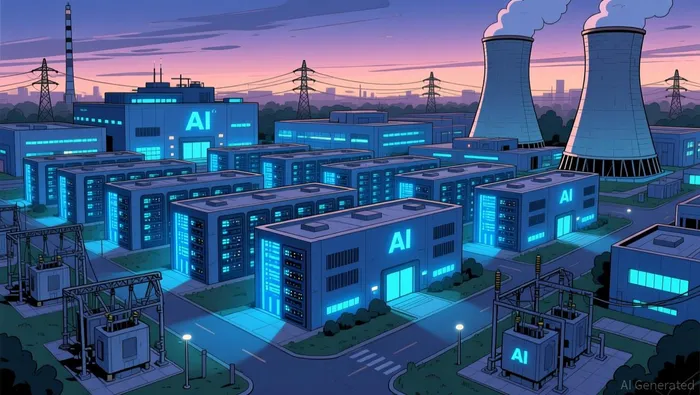
If you're building a portfolio that funds life through cash flow, not through selling principal, these names belong in the infrastructure sleeve. DLR and EQIX give you exposure to the leasing layer of AI capex - real rent, real coverage, modest yields. Dominion and Duke give you the power layer - regulated returns, growing dividends, higher single-digit yield potential. None of them will make you rich on price appreciation. All of them pay you to be patient while the $765 billion flows through their doors.
The $700 billion number is impressive. Just remember: most of it pays Nvidia and its customers. The part that pays you is the 30 percent that goes to walls, pipes, and power. Focus there, and you collect income regardless of whether the AI revolution arrives on schedule or takes another decade.
We're ignoring the noise and collecting the rent.