

Binance inflows and resistance are lining up at the same time
Binance's average BTC deposits jumped from 378 BTC on May 16 to 1,190 BTC by May 25, and Bitcoin just failed again at $76,000 on Thursday. That combination matters. It does not prove a medium-term trend has broken, but it does point to near-term overhead supply arriving where the rally needs space to run.
Why the timing matters
This is no longer a one-day anomaly. Binance has seen net positive Bitcoin deposits for nearly 10 consecutive days, and hourly exchange inflows recently spiked to 11,000 BTC near resistance. That is above the March 2026 spike of 9,000 BTC that preceded a short-term correction. The message is straightforward: supply is building near a key price barrier, and the next few sessions should show whether buyers can absorb it.
Why the $76,000-$76,800 zone is the real battleground
The inflow spike matters more because of where Bitcoin is trading. The evidence does not support a dramatic narrative yet, but it does show that sellers have a meaningful opportunity if price keeps stalling here.
Why this price band matters
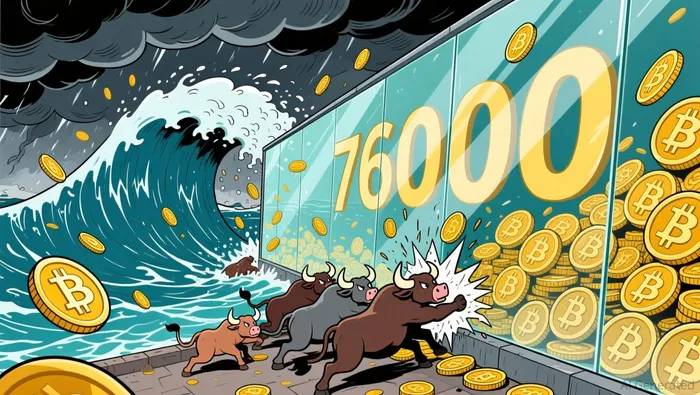
$76,800 marks the traders' on-chain realized price, and that same band capped Bitcoin's ascent in January 2026 before a 35% drop. That makes the $76,000-$76,800 area more than a round number. It is a zone where frustrated holders may be more willing to sell, especially if fresh coins are also showing up on exchanges.
When price reaches that level while exchange deposits are rising, the most supported interpretation is profit-taking into strength. The recent 11,000 BTC hourly inflow spike arrived as Bitcoin neared $76,000, above the March 2026 spike of 9,000 BTC that preceded a short-term correction. In other words, supply is arriving where sellers are most likely to find buyers.
Why the timing is tighter now
Binance's deposit trend has been persistent, not random, and its BTC reserves rebounded to around 632,000 BTC over the past month. That does not guarantee selling, but it does mean more coins are sitting on one of the market's most liquid venues.
The cautious read is that large holders are helping drive the flow. The data fit the pattern of large investors significantly influencing movements, and large deposits have become a much bigger share of exchange inflows. That does not prove a crash is coming, but it does raise the odds of seller pressure if price cannot break higher.
Where the bull case still survives
More coins on Binance is not the same as a broken trend. Bulls can still argue that not every transfer is immediate selling pressure. What the market needs now is absorption: price has to prove it can clear resistance while exchange balances stay elevated.
If Bitcoin cannot clear $76,000-$76,800 quickly, the setup looks more like distribution. If it does, the same inflow spike will likely be read as a shakeout rather than a trend break.
What would confirm a sell signal - and what would invalidate it
The warning is already visible. What matters now is confirmation.
Bearish confirmation
Bitcoin has already shown resistance at $76,000 on Thursday. Another failed push into that area would strengthen the bearish case. If price slips back toward the mid-$74,000s and then loses the low from that rejection, the market would be signaling that buyers are not absorbing supply.
In that scenario, the earlier 11,000 BTC hourly exchange inflow spike and Binance's nearly 10 consecutive days of net positive Bitcoin deposits would look less like a shakeout and more like distribution into strength.
The practical point is simple: in the next few sessions, confirmation matters more than theory. A clean break through resistance weakens the sell signal. Another rejection keeps it alive.