

The title of that headline is a masterclass in misdirection. "Bitcoin Could Be 50% Undervalued" - as if Bitcoin is something you can actually value.
You can't value something that produces nothing. No cash flows. No dividends. No earnings. No pricing power. No balance sheet to check. No customers to lose. Bitcoin is a speculative bet on future demand, dressed up as a valuation thesis. And the model that supposedly proves it's undervalued - the stock-to-flow model popularized by analyst PlanB - doesn't measure value at all. It measures scarcity. Scarcity without cash generation is not an investment framework. It's a hope.
Mistake #1: Confusing scarcity with value
The stock-to-flow model takes the total existing supply of Bitcoin and divides it by the new supply created each year. The idea is that as Bitcoin becomes harder to produce, its price must rise. It's the same logic people once applied to precious metals.
Here's the problem: gold has a 4,000-year track record as a store of value. It has no yield, no cash flow, and no pricing power either - it just happens that central banks and panicked investors have bought it for millennia. Bitcoin has less than 20 years of trading history, no institutional mandate, and no mechanism that forces anyone to hold it. A scarcity model that once struggled to predict gold prices is being used to justify a $500,000 Bitcoin price target. PlanB himself suggested that figure in March 2026. Bitcoin was trading around $61,000 to $63,000 this past week.
That gap between $61,000 and $500,000 is where the "50% undervalued" claim comes from. Or rather, where it could come from depending on which version of the model you run. The point isn't to debate the math. The point is that the entire exercise assumes digital scarcity creates investment value. It doesn't. Scarcity only creates value when something produces cash flows that compound over time. Otherwise, you're betting on a greater fool.
Mistake #2: Using a non-yielding asset to hedge an inflation problem
Here's the macro context this headline conveniently ignores. US consumer price inflation hit 4.2% year-over-year in May 2026 - the highest reading since April 2023, up from 3.8% in April. Energy prices alone jumped 3.88% month-over-month in the April-to-May period. This is not a world where inflation is returning to some magical 2% target. This is the exact regime shift where your asset allocation choices actually matter.
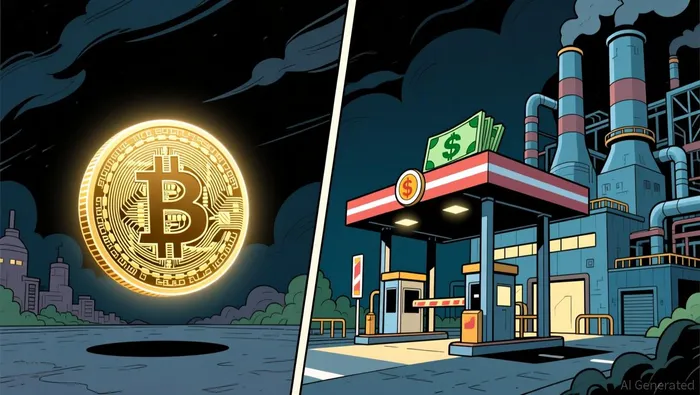
I believe inflation is likely to remain more persistent than the market wants to admit. The structural forces - deglobalization, energy transition costs, demographics, fiscal dominance - don't disappear because a central banker wishes them away. When inflation runs above traditional targets for an extended period, the question isn't whether some digital token might appreciate. The question is: what produces cash flows that can grow faster than inflation?
Bitcoin answers neither question. It produces nothing. Its "value" depends entirely on whether someone else is willing to pay more for it later. From an income and risk/reward point of view, that is not an inflation hedge. That is a speculation.
Mistake #3: Ignoring the assets that actually work in this regime
While the crypto crowd debates stock-to-flow models, there are companies in the real economy doing exactly what an inflation-resistant portfolio requires. They have pricing power - the ability to raise prices without losing customers. They have balance sheets with low debt-to-equity ratios and investment-grade credit. They produce cash flows that grow through cycles. And they pay dividends that compound over decades.
Energy companies. Industrial operators. Defense contractors. Logistics providers. These are the businesses the economy cannot function without. They are not glamorous. They are not the next AI disruption. They are TOLL stocks - companies that operate like toll roads on essential economic activity. You don't need them to be the biggest winner. You need them to be durable.
Mistake #4: Thinking you need a dramatic market call to act
I don't need the stock market to fall 20% for this setup to make sense. I don't need Bitcoin to crash or surge. The argument is structural: if inflation persists above 2%, equities with pricing power and growing dividends will outperform static-income assets and non-yielding speculation over any multi-year horizon.
The equity yield curve - the relationship between dividend yield and dividend growth - still has a sweet spot. Moderate yields with strong growth, bought when the broader market is distracted by narratives about digital gold or AI disruption. That is where the long-term compounding happens.
The better question
The question isn't whether Bitcoin is undervalued. The question is whether you're building a portfolio that generates growing income through a structurally inflationary regime, or whether you're adding speculative bets that require you to hope someone else pays more.
I don't think investors are being paid to chase the highest current yield or to bet on digital scarcity. The better setup is a concentrated position in companies that can turn modest yields into decades of dividend growth without depending on a single macro outcome. Companies that raise prices. Companies that survive recessions. Companies that compound.
Bitcoin may rally. It may not. Neither outcome changes the fact that it produces nothing, pays nothing, and gives you nothing to analyze beyond sentiment and supply. From a dividend growth perspective, the opportunity isn't in undervalued speculation. It's in undervalued cash flows - companies with pricing power, balance-sheet strength, and payout durability that the market is ignoring because they aren't trending on financial Twitter.