

The market is positioned for a violent reversal. A 46-day streak of negative perpetual futures funding rates shows persistent short positioning, with the seven-day moving average now in the bottom 3% of readings since 2020. This extreme overcrowding creates a classic squeeze setup. Historically, such extended negative funding regimes have preceded sharp upside moves, as the market's built-in short bias must be unwound.
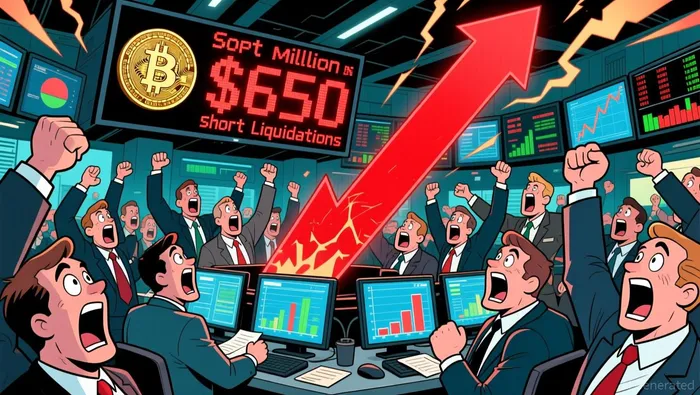
This crowded trade was ignited by macro data. The March PPI printing below expectations triggered a broad risk-on rally, but the derivative market reacted with ferocity. In a single hour, over $100 million in leveraged positions were wiped out, with total liquidations breaching $650 million. The damage was concentrated on the short side, which absorbed an estimated $514.94 million in losses.
The bottom line is a market caught between a rock and a hard place. The sheer volume of short liquidations confirms the squeeze is real and powerful. For the breakout to be durable, the price must now hold above key psychological and technical levels, like the $70,000 threshold that has repeatedly acted as a support.
The Catalyst: Macro-Driven Breakout
The breakout was triggered by a specific macro shock. On April 14, Bitcoin surged past $76,000 on the back of US March PPI data that came in below expectations. The headline PPI rose 4% year-over-year, missing the 4.7% forecast, while the monthly print of +0.5% also lagged the 1.1% estimate. This easing inflation print sparked a broad risk-on rally, with the crypto market adding about $110 billion in 24 hours.
The derivative market reacted with ferocity. The sudden bullish momentum ignited a massive short squeeze. In a single hour, over $100 million in leveraged positions were wiped out, with total liquidations breaching $650 million. The damage was concentrated on the short side, which absorbed an estimated $514.94 million in losses. This cascade of liquidations was the immediate catalyst that pushed price through the key resistance.
Yet the breakout was fragile. After briefly topping the $76,000 level, Bitcoin reversed course, slipping back below $74,000. The price action shows the market is still struggling to sustain a true breakout above this psychological barrier. The macro catalyst provided the spark, but the crowded short trade created the explosive reaction that defined the move.
The Flow: Liquidity and Counterparty Risk
The sheer scale of the liquidations reveals the system's fragility. In a single hour, over $100 million in leveraged positions were wiped out, pushing total market liquidations above $650 million. The damage was overwhelmingly concentrated on the short side, which absorbed an estimated $514.94 million in losses. This isn't just a price move; it's a massive, instantaneous transfer of capital from one group of traders to another, highlighting the extreme counterparty risk embedded in the centralized exchange derivatives market.
The concentration of this risk is critical. The squeeze was driven entirely by leveraged flows within CEX derivatives, not by on-chain accumulation or fundamental shifts. The market's liquidity is now a function of these concentrated, high-leverage bets. When a macro catalyst like the PPI print hits, it triggers a cascade of forced selling from shorts, which in turn fuels the rally that liquidates more shorts. This creates a feedback loop that can amplify price moves far beyond what underlying asset demand would justify.
The implication is clear: recent price action is a story of flow, not fundamentals. The $110 billion market cap gain in 24 hours was a derivatives-driven phenomenon. For the breakout to be sustainable, this leveraged momentum must now be absorbed by broader, more stable capital-whether from ETF inflows or on-chain accumulation. Until then, the market remains vulnerable to a reversal if the next catalyst fails to support the new price level.