

The headline says Bitcoin held near $77,000 as Brent crude tumbled below $99 on news of a possible U.S.-Iran deal. That framing implies Bitcoin did something admirable - stood firm while the rest of the market panicked. But it didn't.
Bitcoin fell just as hard as oil when the crisis hit. It just recovered first, and now the recovery is being retroactively described as resilience.
The sequence the headline erases
On February 28, the United States and Israel launched coordinated strikes against Iran - nearly 900 in the first 12 hours. The Strait of Hormuz, which carries roughly a fifth of the world's oil supply, came under threat. Brent crude surged past $112 a barrel.
Bitcoin's reaction wasn't heroic. It crashed from roughly $78,000 to about $63,000 - a drop of around 20 percent. That was the same direction as equities and risk assets, and the same speed. A piece published by Investing.com at the time noted Bitcoin had done something similar in April 2024, when Iran struck Israel: down roughly 7 percent overnight. In both cases, the safe-haven narrative arrived before the price data and survived long enough after it to keep circulating.
Then came the recovery. Trump paused further strikes in mid-May. Iran sent a peace proposal through Pakistan. By this week, both sides were working toward what the Iranian foreign ministry called a 14-point "framework agreement", with the central provision being that the Strait of Hormuz would reopen to commercial shipping. Oil priced that risk off, dropping back below $100.
Bitcoin climbed back to the $76,000-$77,000 range it's trading in now. And the headline was born.
Narrative versus mechanism
Here's the distinction that matters: Bitcoin didn't hold during the crisis. It tracked risk-off, then tracked risk-on, as the geopolitical tension moved. That's not the behavior of a safe haven. That's the behavior of a risk asset whose investors happened to be slightly less locked into the sell-off than some other pockets of the market.
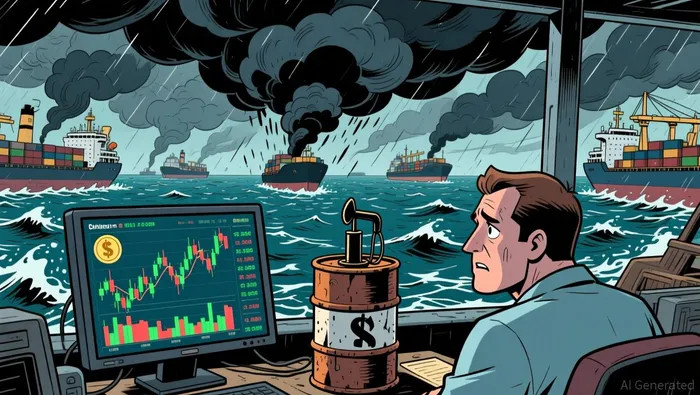
Gold tells the story more cleanly. When the strikes hit, gold also spiked - supply-chain shock, flight to tangible assets, central bank buying. It has stayed elevated. Bitcoin's path was sharper in both directions: harder drop, faster rebound. Volatility is sometimes misread as independence.
I think the reason this confusion keeps recycling is that the safe-haven argument does feel right in theory. Bitcoin's network is permissionless, unseizable, and censorship-resistant. In a world where actual banks freeze accounts, suspend cross-border flows, or get pulled into sanctions enforcement, there's a genuine structural case for why someone under geopolitical stress might want access to a network that no government can close. I've written about that dynamic before, particularly looking at how this plays out in frontier markets and sanctioned economies.
But structural theory and intraday price behavior are different things. The question isn't whether Bitcoin could serve as a safe haven in the right kind of crisis. The question is whether the crises that have actually happened so far were the right kind.
The kind of crisis that matters
What Bitcoin failed to hedge against in February was a conventional war initiated by the United States and its allies. That's a shock that moves global liquidity, not a shock that specifically threatens financial repression or account seizure. When the Fed's balance sheet, margin requirements, and global risk appetite move in unison, almost everything liquid goes in the same direction first, and Bitcoin is no exception.
The safe-haven test that might actually confirm the thesis is different. It's prolonged sanctions enforcement that squeezes dollar access, or domestic financial repression during inflation, or a jurisdiction that blocks outbound transfers while leaving crypto rails open. Those are slower, more localized, and messier to headline. They don't show up as a clean price chart on TradingView. They show up as transaction patterns, stablecoin flows, and on-chain data from specific corridors.
To be honest, I'm more interested in whether Bitcoin's role is evolving in the right direction than in whether it passed this particular intraday test. The Strait of Hormuz is a supply-choke story for oil and a liquidity-sentiment story for Bitcoin. The fact that those two assets are being compared in the same headline tells me the market hasn't yet figured out which mechanism is driving what.
What the Iran deal changes - and what it doesn't
If the framework agreement holds and the Strait reopens, the oil risk premium that has sat in prices since February largely evaporates. Brent could trend lower. JP Morgan's pre-war model had it averaging around $60 this year - not that it'll fall that far, but the ceiling comes down fast once the supply story resolves.
For Bitcoin, the Iran deal removes a background stressor, but it doesn't change the structural argument one way or the other. What it does do is quietly falsify the version of the narrative that says Bitcoin proved itself. The data says something less dramatic and, I think, more useful: Bitcoin recovered because the panic subsided. That's not a safe-haven credential. It's a reminder that until we see the kind of crisis where Bitcoin's unique properties are specifically what investors need - not just liquidity, but access - the safe-haven label remains a story the market tells itself between corrections.
The deal with Iran may well hold. If it does, we'll have months without the most visible geopolitical risk premium in the market. That's a useful laboratory. The question is whether we'll pay attention to what Bitcoin actually does in the absence of noise, or whether we'll just wait for the next headline to recycle the same framing.