

Bitcoin climbed past $65,000 after Trump announced the U.S.-Iran Hormuz deal on June 14. Oil fell. Stocks rose. The headlines read like a stress test Bitcoin passed.
The problem is that Bitcoin failed the same stress test just two months ago. On April 13, when Trump ordered the Strait of Hormuz blockade - the worst possible geopolitical shock for a 'safe asset' - Bitcoin surged to $72,000 instead.
It went up when war looked imminent. It went up when war looked over. The pattern suggests the narrative is wrong.
Here's what actually happened. Around June 7, a hot jobs report wiped out $1.5 billion in long positions - leveraged bets that Bitcoin would keep climbing. Open interest was near a two-week high. The market was long and crowded. Then it wasn't. Bitcoin dropped to the $61,000 range. By June 11, it was at $62,860. By June 14, it hit a high of $65,421.
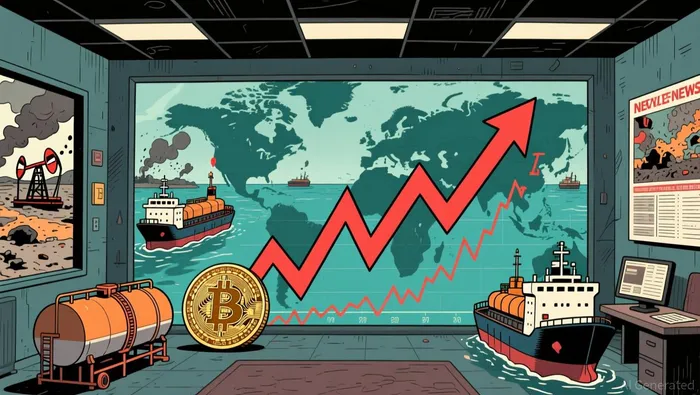
That is what an oversold bounce looks like. Not a geopolitical hedge.
The Hormuz deal arrived at the right time to serve as the headline. Markets had been braced for months. Iran had closed the strait starting in March, threatening oil tankers. Oil prices spiked. The S&P 500 had been riding a wave of deal hopes since late May. When Trump finally declared it done, every asset that had been under pressure got to smile. Bitcoin was no exception.
But it was also no exception in April. When the blockade order hit, Bitcoin jumped 6% in 24 hours to above $71,000. People called it a flight to digital gold. It was just a bounce off $60,000 support.
The way to test whether Bitcoin hedges geopolitical risk is not to find one headline where it rose. It's to ask whether it does so consistently, regardless of which way geopolitics moves. The answer so far is no. It rises when the market is relief-rallying and it rises when the market is shocked - because it tends to be oversold in both cases. The April surge came after a drawdown from $126,000 in October 2025. The June rally came after a $1.5 billion liquidation.
I suspect the real mechanism is simpler than anyone wants to admit. Bitcoin is a highly traded, emotionally leveraged asset. When something dramatic happens - any dramatic thing - people who were forced out get to come back. People who were on the sidelines get to jump in. The direction of the news doesn't matter much. The magnitude does.
There's a counterargument, of course. You could say Bitcoin is behaving exactly as a risk-off asset should - when geopolitical tension eases, money flows into everything that isn't the thing that caused the stress. But if that's the logic, then Bitcoin's April surge on the blockade announcement doesn't fit. A risk-off asset should have sold off when war looked worse, not rallied.
What should you test going forward? The next time geopolitics moves sharply - either way - check what happened to Bitcoin two weeks before. If it was just liquidated, compressed, or dumped by institutional flows, the next move is probably mean reversion masquerading as conviction. The headline will give you a story. The liquidation data will tell you what actually happened.