

The story of Bitcoin is a classic tale of unintended consequences. It was born from a movement explicitly designed to challenge state-backed money. The cypherpunk movement, with its core belief that privacy is necessary for an open society, sought to empower individuals against centralized authority through cryptography. Its pioneers, like David Chaum and Eric Hughes, laid the intellectual groundwork for a digital currency that could operate outside the control of governments and banks. Bitcoin, created by Satoshi Nakamoto, is the most famous product of this ethos-a decentralized, trustless system built on code, not decree.
Yet, in the two decades since its inception, Bitcoin's technological legacy has inadvertently reinforced the very system it aimed to undermine. The dollar's current macroeconomic dominance is not a weakness but a structural strength, and Bitcoin's rise has helped solidify it. When global financial stress hits, the dollar remains the ultimate safe-haven asset. This isn't a vote of confidence in U.S. fiscal policy, but a reflection of its unmatched liquidity and deep, liquid markets. The dollar's strength is now directly linked to elevated real interest rates, a key driver of its appeal. As the U.S. Federal Reserve maintains a restrictive stance, the dollar's yield advantage attracts capital seeking a return, even in a risk-off environment.
This dynamic creates a paradox. The cypherpunk dream of a decentralized, apolitical currency has not replaced the dollar; instead, it has helped define the conditions under which the dollar thrives. Bitcoin, as a speculative asset, often moves in tandem with risk appetite and macroeconomic trends. Its volatility and status as a digital commodity mean it can act as a proxy for broader market sentiment. When investors flee to safety, they often sell risky assets like Bitcoin to buy dollars. In this way, the very technology that promised to free money from state control has become a part of the cycle that props up the dollar's dominance. The dollar's resilience, fueled by its role in a high-rate world, is the backdrop against which Bitcoin's own price action unfolds.
The Strategic Reorientation: Bitcoin as a Dollar Ally
For investors seeking to evaluate the potential interplay between Bitcoin and the dollar in this high-rate, risk-sensitive environment, could offer a useful framework to test the macroeconomic narrative of Bitcoin as a dollar ally. The narrative around Bitcoin has undergone a profound shift, moving from a tool to undermine the dollar toward one that could bolster it. This pivot crystallized at the July 2024 Bitcoin conference in Nashville, where political figures unveiled plans to use Bitcoin as a strategic asset for U.S. economic strength. The core argument is straightforward: a U.S. Strategic National Bitcoin Stockpile could enhance the dollar's credibility as a reserve currency by adding a scarce, high-quality digital asset to the nation's financial arsenal.
The proposals presented that summer came in three sizes, but shared a common goal. Former President Donald Trump's plan would use the 210,000 Bitcoins already seized by law enforcement as the foundation. Senator Cynthia Lummis's more formalized "BITCOIN Act of 2024" called for a Bitcoin Strategic Reserve of one million coins purchased over five years. The most ambitious, from Robert F. Kennedy, Jr., would build on that base, aiming for a Treasury holding worth more than its gold reserves. The stated purpose for these initiatives is explicit: to "strengthen the position of the United States dollar in the global financial system."
This strategic reorientation is a direct response to renewed macroeconomic and geopolitical pressures. Concerns over tariffs and the potential for a global trade war have reignited fears of currency debasement and a loss of dollar dominance. In this context, Bitcoin is being reframed not as a competitor, but as a hedge against the very risks that threaten the dollar's status. The logic is that by officially adopting Bitcoin, the U.S. signals its commitment to a modern, innovative monetary framework, potentially reinforcing the dollar's appeal in a high-rate, risk-sensitive world.
Yet, this shift highlights a key tension. While the dollar's strength is currently tied to real interest rates and its role as a safe haven, the idea of a Bitcoin stockpile introduces a new layer of complexity. It acknowledges Bitcoin's unique properties as a scarce, non-sovereign asset while attempting to harness them for statecraft. The success of this strategy will depend on whether the market views a government-held Bitcoin reserve as a credible store of value that complements, rather than competes with, the dollar's established functions. For now, the political momentum suggests a new chapter: Bitcoin as a dollar ally, not a replacement.
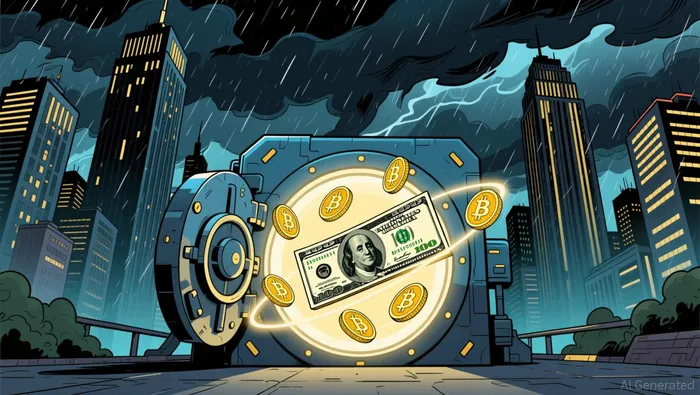
The Macro Cycle Implications: Bitcoin's Role in Commodity and Dollar Dynamics
The strategic shift to view Bitcoin as a dollar ally has clear macroeconomic consequences. Its role is not as a replacement for the dollar, but as a new kind of speculative hedge within the existing cycle. In a world of elevated real interest rates and a strong dollar, Bitcoin acts as a digital alternative to traditional safe-havens like gold. Investors seeking to hedge against currency debasement or geopolitical risk now have a new asset class to deploy. This dynamic can influence gold prices and dollar demand, as capital flows between these perceived stores of value. When dollar strength is under pressure, Bitcoin's appeal as a non-sovereign asset may rise, potentially drawing funds away from gold and providing a different channel for risk-off capital.
Yet, this role is constrained by a critical structural reality: Bitcoin's ownership is highly concentrated. A new report highlights that 30% of all Bitcoin in the world is now held by just 216 centralized entities. This includes major corporations, exchanges, and financial institutions. This hoarding limits Bitcoin's appeal as a true decentralized alternative to state-backed money. It also creates a vulnerability; if these large holders decide to sell en masse, it could trigger sharp price declines and undermine the very stability the asset is meant to provide. For Bitcoin to function as a strategic reserve asset, this concentration would need to be addressed, but for now, it facilitates institutional integration while diluting the cypherpunk ideal.
The broader macro backdrop will ultimately determine Bitcoin's path. In a high-rate, dollar-strong environment, its role as a speculative hedge is likely to persist. The dollar's yield advantage and liquidity will continue to attract capital, and Bitcoin can serve as a volatile, high-risk component of that portfolio. However, if the cycle shifts-say, due to a sustained decline in real rates or a loss of confidence in dollar dominance-Bitcoin's appeal could change. The strategic stockpile proposals gain relevance in such a scenario, potentially evolving from political rhetoric into a tangible tool for monetary policy. For now, the evidence suggests Bitcoin is firmly embedded in the current macro cycle, reinforcing the dollar's strength while remaining a speculative asset, not a reserve currency.
Catalysts and Risks: Validating the Dollar-Enhancing Thesis
The thesis that Bitcoin reinforces the dollar's macro cycle is not a given; it hinges on a series of specific developments. The path forward is defined by three key areas: policy adoption, regulatory stability, and the endurance of the current macro environment. Each presents a potential catalyst for validation or a risk of undermining the entire narrative.
First, the most direct catalyst for validating the dollar-enhancing role is formal U.S. policy adoption. The proposals for a Strategic National Bitcoin Stockpile are the clearest signal of this shift. A concrete legislative step, like the BITCOIN Act of 2024 gaining traction, would transform the idea from political rhetoric into institutional acceptance. This would signal to global markets that the U.S. views Bitcoin not as a threat, but as a strategic asset that complements the dollar's status. It would enhance the dollar's credibility by associating it with a new, scarce digital asset, potentially attracting capital seeking a modern hedge. The political momentum from events like the July 2024 conference shows this narrative is gaining traction.
The primary risk, however, is a major regulatory crackdown or a loss of political momentum. The current strategic reorientation is fragile, resting on a specific political alignment. A reversal in policy, driven by concerns over volatility, illicit finance, or a shift in political power, could isolate Bitcoin and reverse the narrative. As one analysis notes, Bitcoin's use for transactions on a global scale is impossible due to inherent risks, a point regulators could emphasize. Such a crackdown would undermine the credibility of the dollar-ally thesis, framing Bitcoin as a dangerous outlier rather than a strategic reserve.
Finally, the entire thesis is dependent on the sustainability of the current macro cycle. Bitcoin's role as a speculative hedge is intrinsically linked to elevated real interest rates and a strong dollar. If the Federal Reserve pivots to a more dovish stance, lowering rates and weakening the dollar's yield advantage, Bitcoin's appeal as a digital alternative to gold and a proxy for risk appetite could diminish. The asset's price action would likely decouple from the dollar's strength, exposing the fragility of the current dynamic. The market's view of Bitcoin as a speculative investment used to hedge against currency means its value is tied to the macro backdrop that defines the dollar's dominance.
The central paradox remains: a technology born to challenge state money is being used to fortify it. The validation of this paradox depends on policy moving from proposal to practice, regulation not stifling innovation, and the high-rate, dollar-strong cycle continuing. Any shift in these conditions risks unraveling the strategic alliance and returning Bitcoin to its roots as a volatile, decentralized asset-no longer a dollar ally, but a potential competitor in a different cycle.