

The primary on-chain signal is clear: Bitcoin's supply on exchanges has tightened to a structural low. The total held on centralized platforms now stands at 2.679 million BTC, the lowest level since December 2017 and matching the 2019 levels last seen before the last major bull cycle. This decline is not a recent anomaly but a multi-year trend, accelerated by post-FTX withdrawals and the institutional shift toward custody solutions like spot Bitcoin ETFs and digital asset treasuries.
The immediate price context, however, is being driven by a powerful, concentrated flow. Bitcoin recently breached $80,000 for the first time since late January, a move propelled by nine consecutive days of net ETF inflows totaling approximately $2.7 billion over three weeks. This institutional buying pressure is the dominant catalyst right now, creating a short-term rally that is testing the tight supply signal.
The setup is one of conflicting forces. On one hand, the record-low exchange reserves are a classic bullish supply-side indicator. On the other, the price action is being dictated by a surge of new capital flowing into regulated products, not necessarily by a scarcity-driven sell-off from exchanges. This creates a dynamic where the structural supply tightening supports a higher floor, while the ETF inflows provide the immediate fuel for upward moves.
The Counter-Push: ETF Inflows vs. Derivatives Open Interest
The dominant flow driving the recent rally is the massive institutional buying power in spot ETFs. A nine-day streak of net inflows totaled approximately $2.7 billion over three weeks, with cumulative net assets now surpassing $100 billion. This concentrated capital is creating a disciplined floor, as seen in the recent outflow of nearly 20,000 BTC into ETFs in late April. The scale of this participation frames the move as a structural shift, not a fleeting spike.
This spot buying is being amplified by leveraged positioning in derivatives markets. Total Bitcoin open interest has climbed back toward $30 billion, a recovery from the lows seen earlier in the year. The buildup of leveraged longs on exchanges like Binance and CME adds a layer of volatility that can accelerate price moves through key resistance levels, as it did when Bitcoin breached $80,000.
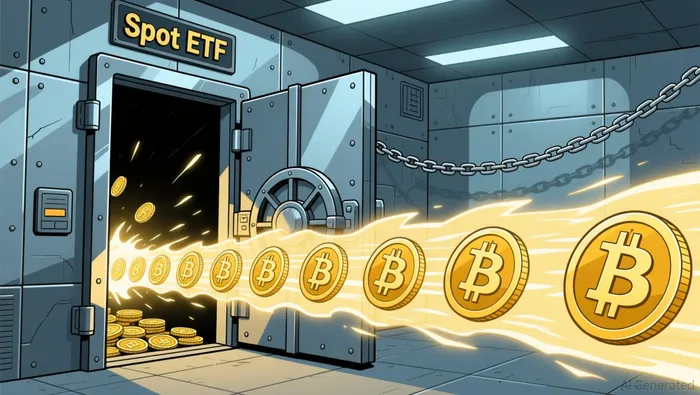
Yet this powerful bullish flow faces a counter-push from the underlying spot market. Despite the ETF inflows, there is a persistent net outflow of Bitcoin from centralized exchanges, as shown by the negative 24-hour outflow of $43.62 million in the latest data. This indicates ongoing selling pressure from holders, likely including long-term investors and potentially some leveraged traders unwinding positions. The market is thus caught between a powerful institutional buying engine and a steady stream of selling from the broader holder base.
Catalysts and Risks: What Moves the Price Next
The immediate catalyst is the continuation of institutional buying, now backed by new filings. The recent drop in the odds of Bitcoin hitting $80,000-from 44% to 33.5%-signals traders are waiting for clearer signals. This hesitation follows a series of institutional moves, including Goldman Sachs's ETF filing and Schwab's direct Bitcoin trading launch, which point to a broader capital base of $25 trillion in combined AUM chasing a shrinking supply.
A key risk is that the tight supply could fuel higher volatility. With exchange reserves at 2.679 million BTC, the lowest since 2017, the market has less buffer to absorb selling pressure. This setup is particularly vulnerable around major options expiries near current price levels, where large open interest positions can trigger sharp, directional moves as they are unwound.
The market's current odds reflect a wait-and-see stance. The 5-point spike at $80,000 earlier this month was a short-term reaction to news, but the price settled back. This suggests that while institutional interest is building, the flow of capital into ETFs and treasuries needs to accelerate to overcome the persistent net outflow from exchanges and drive a sustained breakout.