

The news that Boeing is hiring around 100 to 140 factory workers a week is a clear, leading indicator. This pace is the highest since 2024, and it's not just about filling retirements. It's about building capacity for a production ramp-up. The union leader who shared this figure noted the hiring supports not just the new 737 MAX line, but also logistics, tooling, and storage. In other words, the company is laying down the physical and human infrastructure to make more planes.
This hiring surge happens against a backdrop of significant headwinds. Boeing is still in the middle of a seven-week strike in the Pacific Northwest and is actively bringing on permanent nonunion workers to replace striking union members in St. Louis. At the same time, the entire industry faces a looming crisis of its own making: a severe shortage of skilled workers. The average age of a certified aircraft mechanic in the U.S. is 54, with 40% over 60, and the industry is projected to be short 25,000 technicians by 2028. Boeing's aggressive hiring is a direct response to this pinch, trying to staff up before the talent pool shrinks further.
The real test, however, is whether this hiring signal translates into sustainable success. The underlying demand is there. Boeing's 2025 delivery total of 600 aircraft was its highest since 2018, a tangible sign of recovery. But the company's history is littered with costly mistakes that turned production gains into financial and reputational disasters. The key question for investors is not whether Boeing is hiring, but whether it can manage this expansion without repeating past errors in quality control and project management. The hiring is a positive bet on demand, but its payoff depends entirely on execution.
The Quality and Production Reality Check
The hiring surge is a bet on demand, but the real story is in the factory floor and the profit line. For all the optimism, the operational and financial health behind the ramp-up raises serious questions about sustainability.
The most critical finding is a quality warning sign. A May 2024 employee survey revealed that only 47% of Boeing workers said production schedule pressures didn't cause them to lower standards. That's a clear majority saying the pressure to build fast is compromising quality. This isn't just anecdotal. The same Senate investigation found 23 examples where employees failed to follow processes or lacked proficiency, and highlighted a systemic issue where workers often inspect their own work. The recent door plug incident on an Alaska Airlines MAX is a tangible, high-profile result of this pressure. If the core product's integrity is being challenged, the long-term brand and safety reputation are at risk.
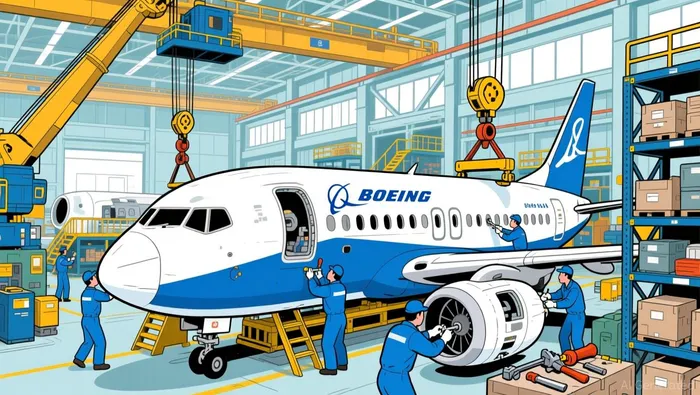
Then there's the production gap. Despite outselling Airbus on new orders last year, Boeing delivered fewer planes. The company handed over 600 aircraft for the year, while Airbus delivered 793. That's a 193-plane shortfall. This disconnect between orders and deliveries is a red flag. It suggests Boeing is struggling to convert its backlog into cash, likely due to the very production and quality issues mentioned. Deliveries are the lifeblood of the business, as airlines pay the bulk of the price upon receipt. Falling behind the competition on this metric is a direct hit to near-term revenue and cash flow.
Financially, the picture is mixed but leaning negative. While net sales revenue grew strongly, the bottom-line profitability tells a different story. Boeing's economic profit worsened significantly in 2025, diving from a loss of $10.65 billion to a loss of $13.32 billion. That's a widening hole. This deterioration in economic profit, which accounts for the cost of capital, raises a fundamental question: Is the current production ramp generating enough real profit to cover the cost of the aggressive hiring and expansion? Or is it simply burning cash to chase volume?
The bottom line is that the hiring signal is a positive, but it's being placed on shaky ground. The company is betting on demand, but its ability to execute that demand into reliable, high-quality deliveries is in doubt. The quality pressure, the delivery gap, and the worsening economic profit all point to a setup where growth could easily be built on shaky ground. For the hiring to pay off, Boeing must first prove it can manage this expansion without sacrificing the very product that customers are ordering.
Demand Validation: Backlog, Deliveries, and Market Reaction
The hiring surge and production ramp are bets on demand, but the real validation comes from the numbers on the ground and in the market. Let's kick the tires on the demand story.
First, the backlog is massive and provides a long runway. Boeing's order book sits at roughly 6,734 aircraft, a towering pile of future work. That's the ultimate demand signal. It means airlines are committed to flying Boeing for years to come, giving the company a clear reason to hire and build.
Recent delivery momentum shows the company is starting to convert that backlog into cash. In February 2026, Boeing delivered 51 commercial aircraft, beating Airbus's 35. That was the second month in a row of the lead, a tangible sign the production line is firing up. Even in March, when deliveries dipped slightly to 46 due to inspections, Boeing still maintained a year-to-date lead over Airbus. The company delivered 143 aircraft in the first quarter, ahead of its prior-year pace. This is the operational proof that demand is real and being met.
The market is clearly betting on this recovery. Boeing's stock has rallied recently, trading around $224 as of the close the previous day. More importantly, analyst sentiment is overwhelmingly positive. The consensus rating is a BUY, with an average 12-month price target near $252. That's a significant premium to the current price, indicating Wall Street sees the hiring and delivery momentum as sustainable.
So, the demand picture looks strong on paper. The backlog is huge, deliveries are picking up, and the stock is reflecting optimism. But we need to remember the earlier quality and production warnings. A high backlog is only valuable if you can deliver quality planes on time. The recent dip in March deliveries due to inspections is a reminder that the path isn't smooth. The market is looking ahead to a strong 2026, but the company must now prove it can manage this demand surge without the old problems of quality and schedule slips derailing the recovery. The optimism is justified by the numbers, but execution remains the critical next step.
The Path Forward: Catalysts and Key Watchpoints
The hiring surge is a bet on the future, but the next few months will show if that bet pays off. Investors need to watch a few clear signals to see if Boeing can turn its expanded workforce into real shareholder value.
The first major catalyst is the company's Q1 2026 earnings report, scheduled for January 27. This is the moment Boeing's executives will lay out the production plan. The market will be looking for specific guidance on how many planes the company expects to deliver this year and what the hiring ramp means for future capacity. Any hint that the production line is hitting snags or that delivery targets are being pushed out will test the optimism built into the recent stock rally.
Beyond the quarterly report, the key watchpoint is the 787 widebody program. This is the profit engine that needs to fire up. The program has had a rocky history, but recent chatter suggests a turnaround. A Boeing forum post from late last year predicted the company could deliver at least 100 frames in 2026, a significant increase from previous years. The primary goal is to clear out the backlog of reworked aircraft, especially for Lufthansa, and then move to new builds. Success here is critical because the 787 commands higher prices and margins than the 737. If the 787 line stays on track, it will validate Boeing's ability to manage complex production and provide a much-needed boost to profitability.
The primary risk, however, is a repeat of past quality issues. The company's own May 2024 employee survey showed a majority felt schedule pressure compromised standards. Any new production delay, inspection finding, or FAA scrutiny would be a direct threat to the recovery story. The recent door plug incident on an Alaska Airlines MAX is a stark reminder that these problems can resurface at any time. Investors must monitor for any signs of that old pressure returning, as it would undermine the entire rationale for the hiring surge.
The bottom line is that Boeing's path forward is now set. The company has bet on demand, hired aggressively, and is starting to deliver. The coming quarters will test if it can manage this expansion without the old mistakes. The Q1 report, the 787 progress, and the absence of new quality scandals are the three checkpoints that will determine if this is a real recovery or just another cycle of promise and peril.