

The headline says the bond market has a warning for the Fed. I don't think that's the right way to frame this. The bond market isn't sending a memo to Washington. It's confirming what anyone watching the real economy already knows: the old inflation regime is gone, and the ones who positioned for that fact months ago don't need a warning. They need a plan.
Do you know what scares me more than the risk of a Fed that's behind the curve? The risk of an income portfolio that's still built for a world that doesn't exist anymore - a world where inflation quietly slips back to 2%, where bond yields fall, and where dividend growth is a luxury rather than a necessity.
The numbers don't lie, but they do contradict the narrative
April CPI came in at 3.8% year-over-year, the highest reading since May 2023, up sharply from 3.3% just one month prior. Energy prices surged 17.9% over the last twelve months, driven by Middle Eastern supply disruption from the Iran war. Shelter costs added 0.3% for the month. Household furnishings jumped 1.0%, a direct tariff pass-through that most consumers didn't see coming.
The Fed's preferred gauge, core PCE, was already at 3.2% in March - up from 3.0% in February. Both readings were published before the April CPI print, and both pointed in the same direction: inflation isn't cooling. It's accelerating.
This matters because the entire 2026 macro playbook was built on the assumption that the Fed would cut rates steadily through the year. That playbook is now broken.
The Fed is fractured - and that's the real signal
At the late-April meeting, the FOMC held rates steady - but not by consensus. The vote split 8-to-4, the highest level of disagreement in recent memory. The dissenters were explicit: "The next rate change could be either a cut or a hike."
Four out of eighteen voting members - or about one-quarter of the committee - are now openly preparing for a rate increase. Not a pause. A hike. That is not a bond market "warning." That is a central bank at war with itself, trying to reconcile a mandate that assumes 2% inflation with an economy that refuses to cooperate.
Here's what the bond market actually showed in April: the two-year inflation breakeven rate sat around 3.30%, while the ten-year breakeven was only about 2.49%. In plain language, short-term inflation expectations are higher than long-term ones. That is an inverted inflation expectations curve - the market expects prices to run hotter over the next two years than they will over the next ten.
Everyone wants to believe the Fed will eventually restore price stability. The ten-year number reflects that hope. The two-year number reflects what's happening right now.
The economy isn't slowing down, which is the problem
This is the part that makes the situation structurally different from 2022. Inflation is accelerating while the economy is expanding, not contracting.
The ISM Manufacturing PMI held at 52.7 in April - the highest level since August 2022. New orders for manufactured goods rose to 54.1, meaning demand is growing, not dying. Companies are not cutting back. They're ordering more, and they're paying more for it.
GDP is lagging - it will tell us what happened. ISM new orders are leading - they tell us what's coming. The signal here is that demand is firm, which means pricing pressure is not a temporary supply shock. It's the new baseline for a world with reshoring costs, tariff pass-throughs, energy supply constraints, and fiscal spending that doesn't slow down because of interest rate sensitivity.
I believe we're entering a "running it hot" regime
I believe policymakers are increasingly likely to tolerate structurally above-2% inflation - closer to a 3-4% average - because the cost of fighting it outweighs the benefit. Growth, employment, debt service, deglobalization, energy transition costs, and fiscal dominance all push against the old regime. The Fed can raise rates, but at what cost to an economy that's already expanding with manufacturing new orders at multi-year highs?
This is not a bet on one geopolitical event. The Iran war is an amplifier, not the root cause. Tariffs, energy infrastructure constraints, labor market tightness from demographics, and government spending driven by fiscal dominance - these are the structural drivers. They don't disappear when the headlines cool.
That said, I expect the Fed to move slowly. Even with four hawks on the fence, Powell and the majority are unlikely to raise rates unless they see a sustained break above 3.5%. They're trapped between acknowledging that the inflation target has shifted and admitting that they lost control of it. Expect more holds, more divided statements, and more volatility in how the market prices the next move.
What this means for your portfolio - the part that actually matters
I don't need the Fed to hike rates for the following logic to hold. From an income and risk/reward point of view, the setup is clear:
If inflation averages 3-4% instead of 2%, then a 2% dividend yield is a loss of purchasing power. A static 4% bond yield that loses real value each year is not income - it's a slow bleed. And a portfolio built for falling yields is built for a world that may not arrive.
The winners in this regime are companies with pricing power - businesses that can raise prices without losing customers. Energy producers who benefit from commodity prices that move with inflation. Midstream operators with fee-based contracts that include inflation adjustments. Industrial companies in defense, logistics, and infrastructure where demand is structurally growing and competition is limited.
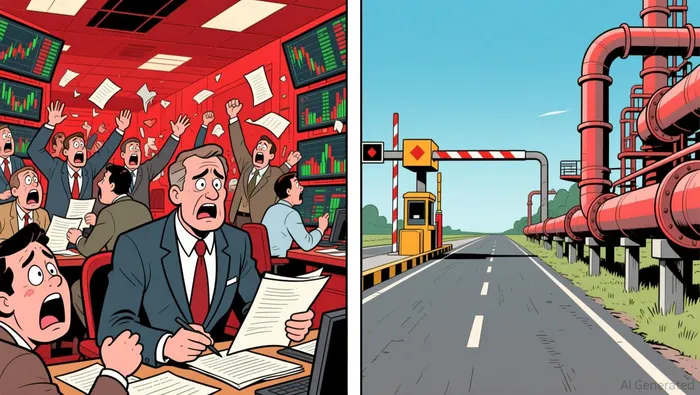
These are the "TOLL" stocks - companies that own toll roads, pipelines, and contracts the economy cannot function without - not FANG growth stories that depend on cheap money and distant earnings. When inflation runs hot, financial assets with long duration get crushed. Tangible assets with pricing power compound.
The equity yield curve still applies. The sweet spot is moderate yields - 2-4% - combined with strong dividend growth of 8-15%. That's the compounding engine. When a company raises its dividend by 12% a year, it doesn't matter if inflation is 3% or 5%. The math works either way, and it works better when you buy these businesses when they're out of favor.
The compounding case is clearer now than it was in January
In January, the argument for positioning toward pricing-power dividend growers was conditional. It depended on whether inflation proved sticky. It proved more than sticky. It accelerated.
A company that raises its dividend by 12% annually, starting from a 2.5% yield, reaches a 60% yield on cost in 25 years. That is not speculation. That is arithmetic. And it only works if the underlying business can sustain price increases without losing customers - which brings us back to pricing power as the single most important filter.
I don't think investors are being paid to chase the highest current yield in this environment. The better setup is a company that can turn a modest yield into decades of dividend growth without betting the portfolio on one macro outcome.
The bond market isn't warning anyone. It's pricing reality. The question is whether your portfolio reflects that reality or whether it's still waiting for a world where inflation goes away.
I believe it won't. And that belief is worth building a portfolio around.