

Do you know what should frighten an income investor more than the bond market collapsing? Believing the old inflation regime is still alive.
Bonds from Tokyo to New York are getting hammered. The 10-year U.S. Treasury yield has surged to 4.63 percent - its highest since February 2025. The 2-year hit a 14-month high of 4.10 percent. The 30-year climbed to 5.16 percent, a one-year high. Japanese 30-year government bonds touched a record 4.17 percent.
The headlines blame the Middle East. And they're right, on the surface. Fresh drone strikes on the UAE's Barakah nuclear power plant have stalled ceasefire talks and pushed oil above $100 a barrel again after weeks of oscillation around that level. Brent crude briefly spiked to $126 a barrel in late April when the Strait of Hormuz - the chokepoint through which roughly a fifth of the world's oil passes - remained effectively closed to commercial shipping since early March.
But here's what most investors are missing: the bond selloff is not just a geopolitical reaction. It is the market finally accepting an inflation reality it spent three years pretending was solved.
The inflation data does not support the old story
Annual U.S. consumer price inflation hit 3.8 percent in April - the highest reading since 2023, the first time it's climbed above that threshold in three years. Energy prices alone surged 3.8 percent in a single month, accounting for more than 40 percent of the headline gain. Year over year, the energy index is up nearly 18 percent.
This is not a one-off. The energy index jumped 10.9 percent in March. Prices are not mean-reverting. They are re-anchoring higher because the Strait of Hormuz disruption is structural, not temporary. Over 1,500 vessels are stranded, roughly 22,500 mariners are trapped, and the United States has acknowledged it could take six months or more before the strait is truly safe for commercial traffic again.
The market is responding. Traders now price in a better-than-50 percent chance the Federal Reserve will raise rates by December, with roughly a 60 percent probability of a hike by January. Bank of America recently dropped its entire remaining 2026 rate-cut outlook and now expects the Fed to hold steady through the year. The European Central Bank is seen hiking as early as June. The "higher for longer" narrative has upgraded to "higher than ever."
What this means for the income investor
I believe the regime has shifted in a way that most retirement portfolios are not positioned for. When inflation runs persistently above 3 to 4 percent - which is where we are heading, not where the Fed wants it - long-duration bonds lose purchasing power regardless of their yield. A 4.63 percent Treasury yield sounds attractive until you factor in 3.8 percent inflation and the reality that principal erosion compounds over a 10-year holding period.
The better framework is to ask which businesses can pass higher costs to customers without losing them. Pricing power is the single most important filter. If a company cannot raise prices, it cannot grow dividends through inflation. Period.
This is where the macro-to-micro bridge gets concrete.
Midstream energy: the toll road you're overlooking
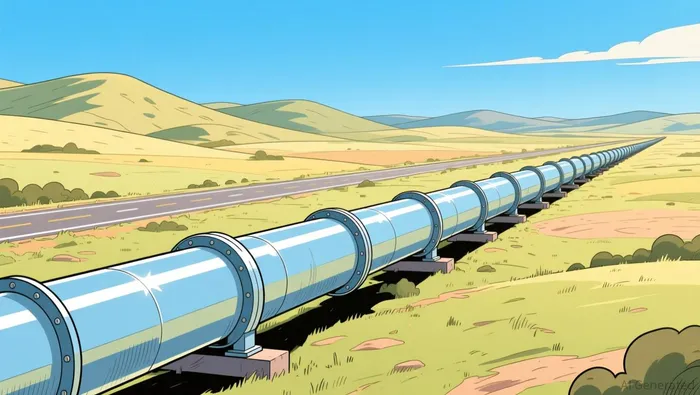
Midstream energy companies - the pipeline operators, storage terminals, and processing facilities that move and handle crude, natural gas, and refined products - operate on fee-based, contracted revenue models. They charge per barrel moved, per gallon stored, per million cubic feet processed. Their income does not depend on the direction of commodity prices. It depends on volume. And volumes are not collapsing; they are being rerouted and restructured through the same infrastructure that already exists.
Enterprise Products Partners, the largest midstream MLP in the United States, has increased its quarterly distribution for 26 consecutive years and trades at a yield near 6 percent with a coverage ratio around 1.7 times - meaning cash flow covers the distribution nearly two times over. Energy Transfer, another major operator, yields approximately 7.1 percent with a coverage ratio near 1.8 times and has grown its payout at a 3-plus percent annual clip over the past year alone.
These are not speculative yields. They are backed by long-term contracts, regulated fee structures, and physical infrastructure that cannot be replicated. When oil moves from $80 to $126 to $100 and back, the pipeline still gets paid to move it.
This belongs in the income-growth sleeve of a portfolio because the balance sheet, the contract structure, and the payout profile support compounding through a full cycle - including an inflationary one.
The equity yield curve still works
The equity yield curve describes the relationship between current dividend yield and dividend growth. The sweet spot sits at moderate yields - 2 to 4 percent - with strong growth of 8 to 15 percent annually. But when cyclical stress pushes yields higher on quality businesses, you can accept more current income with the same growth trajectory and end up with superior total returns.
Midstream names with 6 to 7 percent yields and low-single-digit distribution growth sit above that sweet spot on yield and below it on growth rate, but the math still works because the payout is exceptionally durable. The coverage ratios are wide enough to survive a volume shock. The contracts are long enough to prevent a sudden revenue cliff. And the dividend compounding works regardless of whether the broader market loves energy or ignores it.
I don't think investors are being paid to own bonds right now. The 10-year Treasury at 4.63 percent does not compensate you for inflation risk, reinvestment risk, or the fact that the Fed may push yields even higher if energy prices stay where they are. From an income and risk/reward point of view, a midstream business at 6 to 7 percent yield with contractual pricing power and a balance sheet that survives a stress test solves the same portfolio problem with more durability.
The leading indicators confirm the case
One more layer. The ISM Manufacturing PMI held at 52.7 in April - expansionary and near its highest level since August 2022. The New Orders subindex, a leading indicator, sat at 54.1. Manufacturing demand is not collapsing. It is expanding into an inflationary environment, which means energy consumption remains structurally