

The market for humanoid robots is squarely at the peak of the hype cycle. Analyst projections for annual units by 2030 span a staggering range-from under 1 million to more than 6 million. This massive uncertainty reflects the chasm between visible demonstrations and industrial reality. The excitement is understandable; manufacturers face persistent labor shortages and rising costs, and physical AI promises to handle complex, unstructured tasks that traditional automation cannot. Yet, as Gartner research indicates, the technology remains immature for most supply chain applications. The firm predicts that through 2028, most production deployments will be limited to tightly controlled environments, with fewer than 20 companies going live in production for supply chain use cases. In other words, the sector is transitioning from concept to capital expenditure, but the industrial infrastructure layer is just beginning to be built.
This is where Boston Dynamics' planned 2026 production launch becomes a pivotal signal. It is not a sudden leap to mass adoption, but the first step in a multi-year strategy to move from prototype to manufacturable hardware. The same shift is happening at Tesla, where Elon Musk has officially announced that Optimus 3 production begins this summer. Both moves mark a sector-wide pivot from showcasing capabilities to committing to manufacturing processes and scaling. Viewed through the lens of the S-curve, this is the slow, deliberate start of the ramp. The "classic S-curve" described for Optimus includes a slow initial phase at Fremont, followed by a steepening climb toward high-volume production. Boston Dynamics' entry into production aligns with this trajectory, positioning it to capture early industrial adoption as the first infrastructure layer for physical AI takes shape.
The bottom line is that we are witnessing the foundational phase of a new technological paradigm. The hype is real, but the real work-building the rails for exponential adoption-is just beginning. The coming years will separate the companies that are constructing viable industrial infrastructure from those whose robots remain confined to the lab.
The Infrastructure Layer: Compute, Control, and Strategic Partnerships
The production launch of Atlas is not just a hardware milestone; it is the debut of a new infrastructure layer for physical AI. This layer is built on three interconnected pillars: advanced compute and control, strategic AI partnerships, and the capital and scale provided by automotive giants.
First, the robot itself is a compute platform. Boston Dynamics is training Atlas using new AI foundation models for a wide variety of industrial tasks. This shift from task-specific programming to adaptable, general-purpose physical AI is critical. It moves the system from being a one-off solution to a scalable platform capable of learning new skills rapidly. The promise is that once one Atlas learns a task, that knowledge can be replicated across the entire fleet. This creates a network effect for training data and operational efficiency, a foundational element for exponential growth in the physical AI S-curve.
Second, the partnership with Google's DeepMind division provides access to cutting-edge AI research. This is not merely a software upgrade; it is an integration of a key infrastructure layer for physical autonomy. DeepMind's expertise in reinforcement learning and complex system control is essential for enabling Atlas to navigate dynamic, unstructured environments reliably. This collaboration accelerates the development of the "brains" that will allow these robots to move beyond simple, repetitive motions to true problem-solving on the factory floor.
Finally, the scale and commitment from Boston Dynamics' parent company, Hyundai, provide the industrial and financial backbone. Hyundai's $26 billion investment in U.S. manufacturing is a direct bet on this infrastructure. More telling is its stated plan to deploy "10,000s of thousands" of Boston Dynamics robotics in its own facilities. This isn't just a customer list; it's a commitment to be the first major industrial adopter and a builder of the manufacturing rails. The company's goal to produce around 30,000 systems per year from a single factory signals a move from prototype to industrial-scale production, a necessary step for the sector to exit the slow initial phase of the S-curve.
Together, these elements form the first viable infrastructure stack for physical AI. The compute layer is being trained, the control layer is being advanced through a top-tier partnership, and the scale layer is being funded and adopted by a major industrial player. This convergence of technological capability, strategic research, and committed capital is what will determine whether this is the start of a steep climb or a brief plateau.
Financial Trajectory and Adoption Rate Metrics
The financial story for Atlas begins with premium pricing and high-margin early revenue. The initial 2026 production run is already sold, with industrial units priced at over $250,000. This is not a mass-market product; it is a high-value, first-of-its-kind infrastructure component. The revenue from these committed units provides crucial capital to fund the next phase of scaling. The long-term target of eventually shipping 30,000 per year from a single factory represents a slow, controlled S-curve adoption. This is not a sudden explosion of demand, but a deliberate build-out of manufacturing capacity and operational experience.
The critical metric for investors is not the number of units shipped, but the robot's ability to operate in dynamic, high-throughput supply chain environments. Gartner research provides a stark benchmark: fewer than 20 companies will go live in production for supply chain and manufacturing use cases through 2028. Most deployments will remain in tightly controlled settings. For Atlas to signal a paradigm shift, it must be one of those early adopters that successfully navigates the complex, unstructured reality of a factory floor. Its enterprise-grade design, including autonomous recharging and shared workspace certification, is a direct response to these challenges. The real test is whether it can achieve the reliability and throughput that justify its premium cost compared to simpler, task-specific robots.
Viewed through the lens of exponential adoption, the path is clear. The first year is about proving the industrial infrastructure works. The next several years will be about scaling that infrastructure while the technology matures. The company's goal of 30,000 units per year aligns with a slow initial phase, but it sets a tangible target for the ramp. Success will be measured by the rate at which Atlas moves from a few committed pilot sites to becoming a standard, high-utilization asset in production lines. Until that operational proof is widespread, the market will remain in the early, high-margin phase of the S-curve.
Catalysts, Risks, and What to Watch
The thesis for Atlas hinges on a few near-term inflection points. The first is operational proof. The planned 2026 deployments at Hyundai and Google DeepMind are not just sales; they are the first public demonstrations of the robot performing complex industrial tasks. Success at Hyundai's Robotics Metaplant Application Center will be a key signal of readiness for dynamic, high-throughput environments. Failure to meet reliability or throughput benchmarks there would validate Gartner's warning that most deployments will remain in tightly controlled settings, stalling the S-curve's steepening phase.
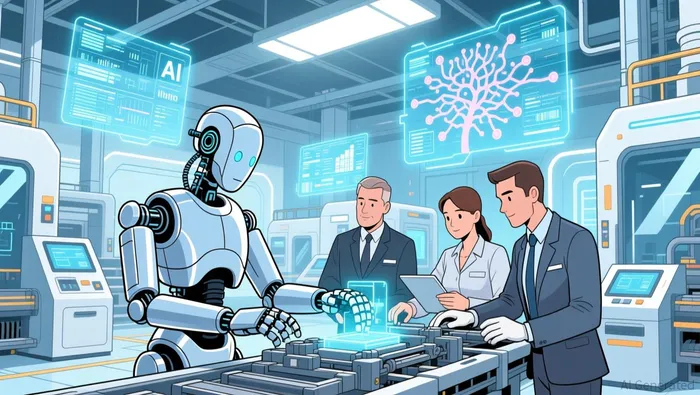
The primary risk is technological stagnation. The high-margin early phase is short-lived if Atlas cannot adapt to unstructured environments faster than competitors. Its reliance on new AI foundation models for a wide variety of industrial tasks is a double-edged sword. It promises rapid skill transfer across a fleet, but the training data and real-world adaptation must be robust. If competitors develop more agile, cost-effective platforms, the premium price point of over $250,000 will become a liability, not a value proposition.
Watch the pace of cost reduction and the scaling of Hyundai's planned factory. The company's goal to produce around 30,000 systems per year from a single factory is a tangible target for the ramp. Achieving this scale will determine if the unit economics improve and if the market can transition from a few committed pilot sites to widespread adoption. The $26 billion investment in U.S. manufacturing is a bet on this scale-up, but execution is everything. Any delay or cost overrun in building that factory will push back the timeline for exponential growth.
The bottom line is that 2026 is a year of validation. The first public demonstrations at the Robotics Metaplant will show if the infrastructure layer is solid. The next few years will be about scaling that layer while the technology matures. For investors, the watchlist is clear: operational proof, adaptation speed, and manufacturing execution. These are the metrics that will determine whether Atlas is the start of a steep climb or a brief plateau on the physical AI S-curve.