

Brent crude surged above $111 per barrel today, extending a rally that has seen the benchmark climb 7.84% for the week as geopolitical risks compress supply expectations. US WTI crude settled at $105.42 a barrel, posting a 10.48% weekly gain-its strongest weekly performance in months. The move comes after prices touched as high as $119.50 per barrel earlier this month during the height of Strait of Hormuz fears.
The Strait of Hormuz remains the focal point, with nearly one-fifth of the world's oil and liquefied natural gas flows passing through this critical chokepoint. Markets are bracing for prolonged volatility after President Trump rejected Iran's latest peace proposal on May 11, calling it "totally unacceptable" and dampening hopes for a quick resolution to shipping disruptions.
Adding structural pressure, the UAE exited OPEC effective May 1, removing a key producer from the cartel and fracturing regional cohesion. The announcement alone sent prices jumping roughly 3% higher, and the move comes amid a 44% drop in UAE production since Hormuz disruptions began. With the Strait handling roughly 100 million barrels per week, any sustained disruption would ripple through global supply chains and keep crude premiums elevated.
Geopolitical Catalysts: Supply Route Threats Intensify
The attack on a UAE nuclear facility intensified concerns that the already fragile situation around the Strait of Hormuz could spiral into a wider regional conflict. This came after the Trump administration instructed staff to prepare for a prolonged Iran blockade, signaling Washington expects tensions to persist rather than resolve quickly. The combination pushed Brent crude above $111 per barrel with immediate 2.37% intraday gains.
Iranian Foreign Minister Abbas Araqchi's "no trust" statement dampened hopes for a near-term diplomatic breakthrough, with markets now pricing in extended supply disruptions. Yet prediction markets show participants view a spike to $150 as unlikely, with WTI hitting $150 in May priced at just 2.2% probability. This disconnect suggests traders see elevated volatility but not a complete supply cutoff scenario.
The de-escalation pathway remains blocked: the UAE's OPEC exit removes a key moderating voice, while Trump's rejection of Iran's peace proposal eliminated the near-term diplomatic off-ramp. Markets are effectively pricing a prolonged risk premium rather than a binary shock event.
Market Implications: Inflation and Fed Policy at Risk
Energy prices now pose a direct threat to the Fed's inflation framework. With Brent crude surging 7.84% for the week and WTI gaining over 10%, energy input costs are climbing at a pace that directly pressures core inflation measures. The Fed's ability to deliver rate cuts this year hinges on inflation moderating, but sustained crude above $110 reverses that trajectory. Markets are already pricing in reduced rate cut expectations-the same week Brent rallied 7.84%, the Fed's preferred inflation gauge (PCE) faces immediate upward pressure from transportation and heating costs.
Oil marketing companies and household budgets face simultaneous squeeze. Refiners and fuel distributors operate on thin margins, and input costs jumping 3% in a single session compress profitability while forcing retail price hikes. Households feel this immediately at the pump and in utility bills, reducing disposable income for other sectors. This creates a feedback loop: higher energy costs feed into broader inflation, which constrains consumer spending, which then pressures economic growth-a trifecta the Fed desperately wants to avoid.
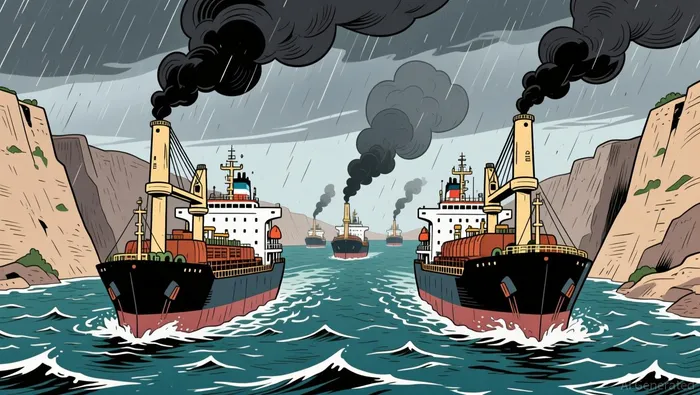
Two scenarios dominate the forward view: Strait breakthrough or escalation toward $120+. A diplomatic resolution reopening the Strait of Hormuz could knock 15-20% off current premiums, but Trump's rejection of Iran's peace proposal and the "no trust" stance from Tehran eliminate the near-term off-ramp. The alternative-further escalation-pushes Brent toward $120 or higher, with Morgan Stanley warning the market is in "a race against time" if disruptions persist into June. Portfolio positioning must account for both: a sharp reversal if diplomacy resumes, or a sustained premium if the Strait remains contested.