

Empire Metals Limited Announces Appointment of Joint Corporate Broker. That's the headline. The company added Canaccord Genuity to its advisory team, which already includes S.P. Angel and Shard Capital. Three brokers for one stock. That is not a story about governance. That is a story about who is available to sell you shares when the company needs money again.
On the London Stock Exchange's AIM market - the alternative investment market, basically the UK's home for companies that are too small or too speculative for the main board - the broker is the fundraising engine. Corporate brokers don't just advise. They find institutional investors, price the placement, and take the fee for turning a capital raise into a share subscription. So when an AIM company appoints a joint broker, it usually means one thing: it needs more investor coverage for the next time it needs to dilute existing shareholders.
Empire Metals is a pure exploration company. It has zero revenue. Its last reported net loss was £3.54 million. Its total assets are £17.82 million, most of which sits in cash and in the Pitfield titanium project in Western Australia. The project is still in the drilling and metallurgical testwork phase - meaning the company can't yet tell you what the mine will cost to build, let alone what the product will sell for when it's ready.
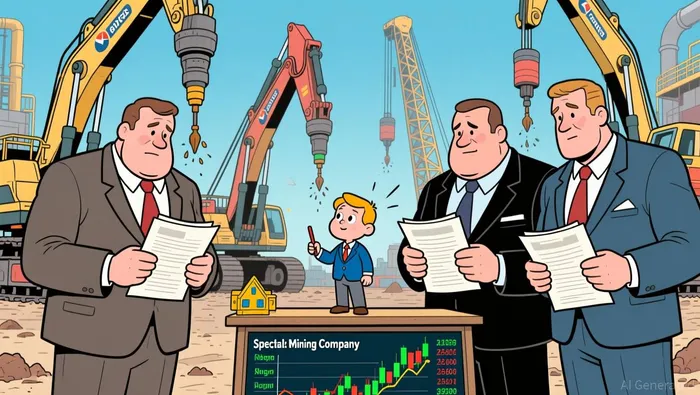
The basic point is not that the company lacks revenue. Exploration companies never have revenue. The basic point is that Empire Metals raised £11.5 million in share issues during 2025, another £7 million in October 2025, and £8 million in May 2026 - all to fund the same project that still doesn't have a mine plan.
Here's how the math works. Empire Metals has roughly 711 million shares outstanding. The May 2026 raise added another 26.7 million shares at 30 pence each, bringing in £8 million. That dilutes existing holders by about 3.6% in one transaction. Spread the dilution across all the raises in the last eighteen months and existing shareholders own roughly a tenth less of the company than they did before the cycle began. The cash balance went from a thin position to about £8.4 million as of March 2026, then to roughly £16.4 million after the May raise. That's a run rate of about £13–14 million of capital raised every six months or so to fund a project that may still be years from production.
The share price tells you how the market has priced this cycle. Empire Metals stock traded as low as 10.35 pence and as high as 82.50 pence over the past year. It was at 36 pence as of early June. The stock more than septupled from its low, mostly on drilling results and the "transformational year" language in the March 2026 annual report. Then it came back down. The range alone - from 10p to 82p - tells you everything about the liquidity and sentiment profile: thin book, binary moves, and institutional money that enters on a drill result and exits when the next raise comes around.
The odd thing is not that the company raised another broker. The odd thing is that the company needed a third one. S.P. Angel is the nominated adviser - the mandatory AIM gatekeeper - and Shard Capital is the original broker. Adding Canaccord, a firm with a metals and mining sector team that also advised on other AIM fundraises, means the company is widening its investor Rolodex before the next transaction. You don't hire a third broker because you have too many interested parties. You hire one because you need more reach.
This is basically the standard AIM exploration funding model, which is just shadow banking with more PowerPoint slides. The company borrows capital by selling equity at whatever price the brokers can support. Institutional subscribers get a discount off the market price (the May raise was at 30p when the stock was trading above 35p), which means the raise itself is a short-term overhang for retail holders. The brokers get fees. The company gets a runway of a few more months of drill rigs and testwork. The cycle repeats.
The structural question is not whether Pitfield has potential. Titanium is a strategic material and Western Australia is a real mining jurisdiction. The structural question is whether the funding model is sustainable. The simplest model is: at the current pace, Empire Metals needs to raise roughly £12–15 million every six months to stay alive. That requires either the share price to hold above a level where institutions want to participate, or the discount to widen to a point where existing holders feel the dilution is too steep to ignore. It's the same liquidity-versus-dilution tension you see in private credit funds and SPACs and a dozen other wrappers that want investor money today but can't show them a revenue line yet.
Empire Metals' own language is telling. The March 2026 report called the year "transformational" and says the strategy is "to accelerate Pitfield's development pathway to become a leading producer of premium titanium products". Acceleration costs money. The three brokers are there to make sure the money keeps arriving.
The investor's position is clear once you see the plumbing. You are holding shares in a company that will not generate revenue for years, and whose business plan is partly funded by selling more of the same shares at a discount to what you paid. The upside is real if Pitfield turns into a mine. The downside is that each raise between now and then shrinks your slice. The three brokers are the mechanism that makes that trade possible, and they will each take a fee for doing it.