

Warren Buffett's final major investment before handing the reins at Berkshire Hathaway was not a tech giant or a pharmaceutical breakthrough-it was 5.1 million shares of The New York Times Company, purchased in the final quarter of 2025 at a cost of approximately $352 million. The stake, which sent NYT shares climbing to an all-time high upon disclosure, represents Buffett's last explicit vote of confidence in a business he understood-a beloved institution navigating the digital transition that has reshaped so many legacy businesses.
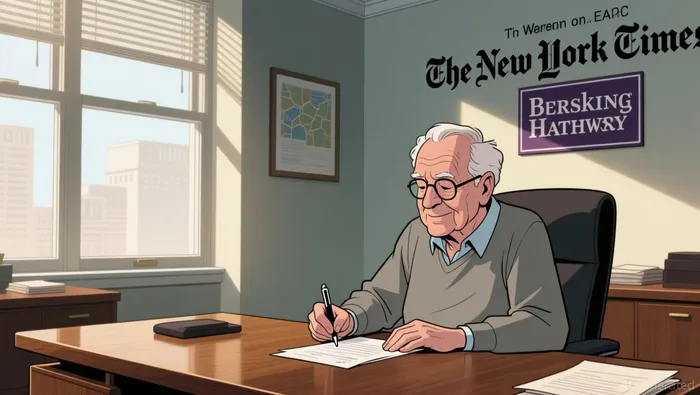
The timing matters. Buffett made this purchase in the three months before stepping down as CEO in January 2026, at the same moment he was trimming his Apple position and liquidating three-quarters of his Amazon holding. This was not a random allocation of capital. It was a deliberate signal: while Berkshire shed exposure to the tech giants that had powered its recent returns, it doubled down on a company whose business model-subscriptions, games, cooking and sports content-mirrors the digital transformation Buffett has watched closely for decades.
His media investment history reveals a clear pattern. Buffett held The Washington Post for decades until Jeff Bezos purchased it in 2013, and he owned a string of local newspapers until selling them in 2020, at which point he declared many titles "toast." But the landscape has shifted. Major newspaper titles have enjoyed a renaissance amid the digital migration, with The New York Times specifically climbing 500% over the past decade as it built a sustainable subscription business. The company now trades at roughly $12 billion, a far cry from the distressed assets Buffett walked away from six years ago.
What makes this a classic value play rather than a tech bet is the underlying thesis. Buffett was not investing in a technology company; he was investing in a brand with enduring cultural authority that had successfully converted its reputation into a recurring revenue model. The Times has topped earnings per share estimates for 15 consecutive quarters and revenue projections for four straight quarters-a track record of execution that aligns with Buffett's preference for businesses with durable competitive advantages and predictable cash flows.
The $352 million stake, representing about 0.1% of Berkshire's portfolio, may seem modest for a man who built a fortune on conviction. But its significance lies not in size but in timing and context. It was Buffett's final explicit endorsement of a business thesis he understood: that beloved brands, even in traditional media, can compound value when they adapt to new channels while holding fast to what made them valuable in the first place.
The Moat: Why NYT's Subscription Model Compounding Works
The New York Times has built something rare in today's economy-a subscription business with genuine pricing power and expanding unit economics. That's the moat Buffett spent his life studying, and it's precisely why this stake makes sense as his final bet.
The numbers tell a clear story. Digital-only average revenue per user grew 3.6% year-over-year with expectations for continued growth. That may sound modest, but in a subscription business, ARPU expansion is compounding at the core. Every subscriber added at a higher price point compounds forward-not just for that year, but for every year they remain subscribed. This is the engine Buffett has favored: recurring revenue that grows organically without proportional cost increases.
Subscriber momentum reinforces the picture. Core news net additions improved to 490,000 for 2025, up sharply from 370,000 previously illustrating a positive trend. To put that in context, the presidential election year historically creates headwinds for news subscriptions-yet NYT is moving in the opposite direction. That signals something structural is happening: the brand's cultural authority is converting at higher rates, and the digital product is sticking.
This is the "forever holding" template Buffett has championed. A beloved institution. A brand people trust enough to pay monthly, year after year. A business that has navigated the digital transition without diluting what made it valuable. The competitive moat isn't a patent or a network effect-it's habit, trust, and the switching cost of replacing a daily ritual. That's durable. That's the kind of business you hold through volatility because you understand how it compounds.
The bear case exists-competition is intensifying, and economic downturns could pressure advertising. But these are cyclical headwinds, not structural decay. Buffett's media investments succeeded because he focused on the durable core, not the quarterly noise. The Times' subscription model does the same: it converts cultural relevance into predictable cash flows, and those cash flows compound when management reinvests wisely.
For a value investor, the question isn't whether the stock will pop next quarter. It's whether the business can keep compounding at attractive rates for a decade. The ARPU trajectory and subscriber momentum suggest the answer is yes. That's the moat. That's the bet.
The Buffett Signal: Buying Your Own Stock When It's Undervalued
Warren Buffett's purchase of The New York Times Company wasn't just a final bet on a beloved brand-it was a parallel play to the larger signal he's sending through Berkshire Hathaway itself. While he was buying NYT shares in late 2025, he was also clearing the deck for Berkshire to begin buying its own stock again. That's the same thesis: a quality business trading below its intrinsic value, waiting for the right moment to compound.
Buffett was a net seller of stocks for 13 consecutive quarters before stepping down as CEO at the end of 2025 before stepping down as CEO. That stretch of selling ended with a decisive pivot. In March 2026, Berkshire began repurchasing its own shares-the first buybacks in years, authorized by the board and blessed by Buffett himself the first buybacks in years. The timing wasn't accidental. Abel confirmed the stock buybacks in an interview with CNBC the same day, noting he "consulted with Warren relative to the value and the timing" consulted with Warren relative to the value and the timing. Berkshire will only repurchase when both men believe the share price sits below intrinsic value from a conservative viewpoint below intrinsic value from a conservative viewpoint.
The parallel is deliberate. Just as Buffett saw The New York Times as a brand with durable competitive advantages converting cultural authority into recurring revenue, he sees Berkshire Hathaway as a conglomerate whose pieces are worth more than the sum-especially when the market assigns a discount to the whole. The $373 billion cash position at year-end 2025 The $373 billion cash position gives Berkshire optionality to act when others cannot. That's not just dry powder for acquisitions; it's a statement that the company itself is underpriced relative to the cash-generating businesses it owns.
At 95 years old, Buffett is not retiring. He remains as board chair and continues coming to the Omaha headquarters five days a week five days a week. He has stated he will be "going quiet" and leaving decision-making to Abel going quiet. But his influence remains visible in every major move. The buyback authorization was adopted by the board last year, and the program stipulates that the CEO must consult with the Chairman of the Board must consult with the Chairman. This is continuity, not abdication.
For investors, the signal is clear: Buffett is putting capital where his conviction lies. He bought NYT for its subscription moat and digital compounding trajectory. He's having Berkshire buy back its own stock because he sees value where the market sees uncertainty. Both are classic value plays-buying dollar bills for 50 cents, whether that dollar bill carries the Times' masthead or Berkshire's ticker. The difference is scale. The NYT stake was $352 million. The buyback authorization opens the door to billions. When the Oracle of Omaha turns his attention to a stock, the question isn't whether he understands the business. It's whether you're willing to stand beside him when he believes the price is wrong.
Risks and What to Watch
Every investment carries risk, and the bear case against The New York Times is straightforward. The news industry faces intense competition from digital-native outlets, evolving consumer preferences that fragment attention, and technological changes that could disrupt revenue models. Economic downturns would pressure the advertising market-a secondary revenue stream for the company. These are real headwinds, and any one of them could slow the compounding engine Buffett is betting on.
But Buffett is not sentimental about media brands. He held The Washington Post for decades until Jeff Bezos purchased it in 2013, and he owned a string of local newspapers until selling them in 2020, at which point he declared many titles "toast" when he sold off the holdings. He walked away from those businesses because their moats had eroded. The difference with The New York Times is that the subscription model has proven durable-core news net additions improved to 490,000 for 2025, up sharply from 370,000 previously illustrating a positive trend, and digital-only ARPU grew 3.6% year-over-year with expectations for continued growth. The question is whether that momentum holds.