

Michael Burry's warning cuts to the heart of what disciplined investors must grapple with: the market has developed a dangerous disconnect from economic reality. His core message is simple but alarming-stocks are no longer reacting logically to fundamental data like jobs reports or consumer sentiment. "Stocks are not up or down because of jobs or consumer sentiment," he wrote. The S&P 500 hit a fresh record high recently despite a record low reading in consumer sentiment, rising instead on a slightly better-than-expected jobs report. That's not how markets are supposed to work.
The comparison Burry draws is specific and unsettling. He's watching the Philadelphia Semiconductor Index trace a path eerily similar to the run-up that preceded the March 2000 collapse. The index is up more than 10% this week, pushing its 2026 gains to 65%. This isn't a vague analogy about "market highs"-it's a direct structural parallel to the exact sector that led the dot-com bubble and suffered the exact collapse that followed.
Then there's the atmosphere. Burry's observation about the "non-stop AI" obsession captures something critical: when a single narrative consumes all market conversation, rational assessment becomes difficult. He heard this firsthand after listening to financial television and radio coverage during a long drive-"Nobody is talking about anything else all day." That's the emotional environment of late-stage bubbles, where conviction replaces verification and everyone claims to understand the new thesis.
For value investors, this matters because it tests the core discipline of waiting for price to reflect intrinsic value. When the market operates on momentum alone-"they are going straight up because they have been going straight up," as Burry put it-the gap between price and value widens dangerously. The question isn't whether Burry is right about timing. The question is whether his observation about market psychology is worth taking seriously, even if you disagree with his positioning.
What Burry Is Actually Doing With His Capital
Michael Burry's positioning reveals a more nuanced strategy than his bearish rhetoric might suggest. He's not simply selling everything and waiting out the storm. Instead, he's executing a calculated dual-track approach: building defensive flexibility while selectively deploying capital into specific opportunities.
He's substantially bolstered his cash position in anticipation of a market correction. This is the disciplined investor's defensive posture-preserving dry powder for when genuine opportunities emerge. At the same time, he's trading more aggressively from the short side than he has in a while, maintaining his bearish exposure on sectors he believes are overvalued.
But here's where it gets interesting for value investors: Burry is also deploying capital into long positions-specifically in Adobe, Autodesk, Veeva Systems, and Microsoft. These aren't speculative bets. They're targeted placements in companies he's examined "forensically" and found to possess durable competitive strengths.
The software positions make particular sense through a value lens. Adobe, Autodesk, and Veeva have all been hammered-down about 30%, 22%, and 29% year-to-date respectively as of April 2026. Burry's thesis, according to reports, is that these declines reflect "credit-driven selling exhaustion" rather than fundamental deterioration. The SaaS valuation compression was driven largely by leveraged investors unwinding positions as rates rose and liquidity tightened-not by collapsing business fundamentals.
This is a crucial distinction. Burry isn't betting on a reacceleration of enterprise spending. He's betting that the forced-selling overhang has cleared, leaving high-quality software franchises trading at valuations not seen since 2017 and 2018. For Adobe specifically, the forward P/E sits around 18x-levels not seen in years-while the company's AI products like Firefly remain discounted despite their potential according to press reports citing Burry's Substack.
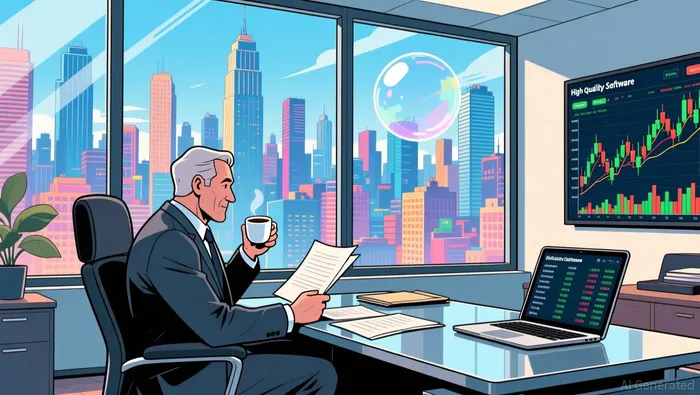
The Microsoft position is perhaps the most telling. This is a company leading in AI infrastructure, yet Burry has taken a long position after determining it has the competitive strengths to support long-term growth. This isn't a blanket endorsement of AI stocks; it's a selective bet on the player best positioned to win.
The lesson for value investors isn't to copy Burry's trades. It's to recognize that his positioning reflects the same discipline that made him famous: waiting for price to disconnect from value, then acting decisively when the gap becomes attractive. He's maintaining defensive flexibility while identifying specific opportunities where the market has overcorrected. That's not the behavior of someone simply betting on a crash. That's the behavior of someone preparing to capitalize when others panic.
The Value Investor's Path Forward
Michael Burry's positioning offers value investors a template, not a prescription. His actions reveal a disciplined approach to navigating bubble territory-one that aligns with the Buffett/Munger philosophy of waiting for price to disconnect from intrinsic value, then acting decisively.
Burry doesn't expect an immediate crash. He explicitly told subscribers that a "needle top"-where stocks spike and then immediately plummet-is "mythical until proven". Instead, he anticipates "new highs and big drops", a choppy distribution phase that tests investor conviction. This matters because it means the disciplined investor must be prepared for volatility, not just a clean collapse. The market can remain irrational longer than you can remain solvent-that's the cost of holding a contrarian position.
This connects directly to the lesson Burry lives by: patience under fire. During his subprime trade, Scion Capital was underwater for two years before the payoff arrived. His partners threatened lawsuits; his founding backer Joel Greenblatt flew across the country to call him a liar. Burry was forced to side-pocket his trades, locking up withdrawals to survive. He was six months from ruin before the market broke. "Being early and being wrong feel exactly the same," he wrote, "until they don't." Most investors don't survive the "until." This is the emotional discipline that separates those who can hold through dislocation from those who fold at the worst possible moment.
Burry's rotation into quality SaaS at 2022 lows demonstrates another critical principle: knowing what to buy when the disconnect appears. He's targeting Adobe, Autodesk, and Veeva-companies he's examined "forensically" and found to possess durable competitive strengths. The thesis isn't that enterprise spending will reaccelerate. It's that credit-driven selling exhaustion has cleared the forced-liquidation overhang, leaving high-quality franchises trading at valuations not seen since 2017 and 2018. Adobe's forward P/E sits around 18x. These are businesses with moats, now priced as if their fundamentals have deteriorated-when in reality, the selling was driven by leveraged investors unwinding positions as rates rose and liquidity tightened.
For Buffett/Munger disciples, the guidance is clear. First, maintain cash flexibility. Burry has "substantially bolstered his cash position" in anticipation of opportunity. This is the defensive posture that preserves dry powder for when genuine dislocations emerge. Second, avoid chasing AI momentum. Burry's bearish stance on the sector's valuation remains intact-he's not buying into the narrative, he's waiting for it to cool. Third, watch for quality companies with durable moats trading at discounts. The software positions reveal a selective approach: not a blanket bet on a sector, but targeted placements in franchises he believes can compound over long cycles.
The bigger picture is this: Burry's behavior reflects the same discipline that made him famous. He's not simply betting on a crash. He's preparing to capitalize when others panic-maintaining defensive flexibility while identifying specific opportunities where price has disconnected from intrinsic value. For value investors, that's the path forward. Wait for the price to reflect reality. When it doesn't, act decisively. And above all, survive the wait.