

The collapse in China's auto market is now a direct casualty of the Middle East conflict. Sales fell 21.6% from a year earlier to 1.4 million vehicles last month, marking a seventh consecutive monthly decline. This slump is being driven by a sharp spike in fuel costs, a classic demand shock for gasoline-powered cars.
The mechanism is straightforward. Since the war in Iran began on February 28, the conflict has disrupted shipping through the Strait of Hormuz, a vital global chokepoint. This has sent oil prices soaring, with Brent crude climbing from an average of $71 per barrel in February to an average of roughly $100. For the first time in four years, prices have climbed past $100 a barrel. Higher fuel costs directly pressure the economics of owning and operating an internal combustion engine vehicle.
When gasoline becomes more expensive, the total cost of ownership for a traditional car rises. This makes both the purchase and the ongoing operation of these vehicles less affordable and less attractive to consumers. In a market already facing intense competition and a push toward higher-end models, this added financial pressure is a powerful headwind. It accelerates the shift away from gasoline cars, directly contributing to the sustained sales slump now being felt by domestic automakers.
While China's strategic reserves and its rapid electric vehicle adoption provide a structural hedge against prolonged oil price shocks, the immediate impact on consumer behavior is clear. The war has triggered a gasoline demand shock that is now a key factor in the auto industry's downturn.
Supply-Side Buffers: Strategic Reserves and Diversified Imports
While the war has created a global oil shortage, China's supply chain is showing remarkable resilience. The country's strategic energy buffers and diversified sourcing are acting as a critical shock absorber, delaying the economic impact of the Strait of Hormuz closure.
China holds a substantial stockpile of crude oil, estimated at 1.2 billion barrels of onshore crude stockpiles as of January. This reserve represents roughly three to four months of consumption, providing a tangible buffer against immediate supply disruptions. Analysts note that this stockpile, combined with the country's rapid transition toward electric vehicles and renewable energy, means China is "less sensitive to a prolonged closure of the Strait of Hormuz than many of its Asian peers." This strategic buildup over the past two decades is a direct hedge against the maritime chokepoint's vulnerability.
Beyond reserves, China's import mix has been radically reshaped. The country has successfully diversified away from Gulf dependence, with Russian crude now accounting for a record 55% of its imports last month. This shift, driven by discounted pricing and new overland pipelines, has fundamentally altered the supply landscape. In the face of Middle East volatility, this established alternative is now a key advantage.
Recent trading activity underscores this pivot. After a four-month pause, Chinese state oil majors looking to head off supply shortages have resumed seeking Russian crude cargoes. They are doing so by taking advantage of a U.S. sanctions waiver, which provides a temporary window to secure the still-cheap Russian oil. This move is a practical response to the current crisis, allowing China to tap into a reliable, discounted supply while global prices surge. It demonstrates how the country's long-term supply diversification strategy is now providing immediate operational relief.
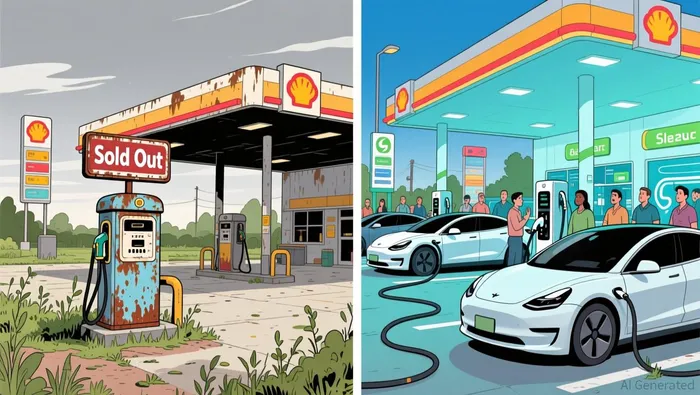
The bottom line is that China's supply-side buffers are working. Its massive strategic reserves provide a time cushion, while its diversified import portfolio-led by a dominant Russian supplier-ensures that gasoline production can continue with less immediate strain. This combination is helping to insulate the domestic fuel market from the worst of the Middle East shock, even as the demand side faces pressure from higher prices.
The EV Transition: A Structural Hedge Against Gasoline Volatility
While the immediate shock is a gasoline demand crunch, the longer-term story is one of structural change. China's rapid embrace of electric vehicles is fundamentally altering its oil demand profile, creating a powerful hedge against future price volatility. This isn't just a trend; it's a deliberate shift in the country's energy and transportation infrastructure.
The data shows a clear acceleration. In April, Leapmotor delivered 71,387 units, a 73.9% year-on-year increase, marking its third consecutive month at the top of the new force rankings. This surge is part of a broader industry boom. BYD, the market leader, sold 314,100 units last month, while other major brands like Geely and Chery also crossed the 100,000-unit threshold for NEV sales. The momentum is export-driven as well, with BYD's overseas sales hitting a record 134,500 units in April, a 70.9% jump from a year ago.
This rapid growth is a direct response to the same economic pressures that are hurting ICE sales. As fuel costs rise, the operational savings of an electric vehicle become more compelling. The transition is also being fueled by technological parity, with brands like Leapmotor bringing advanced features to the mass market. This shift is not happening in isolation. It is coupled with a parallel push to diversify the power sector, where China is gradually increasing the share of renewables in its total energy demand.
The bottom line is a dual-layered defense. On one level, strategic reserves and diversified imports buffer the supply shock. On the other, the structural growth of the EV industry reduces the country's underlying dependence on imported oil for transportation. This combination means that even if oil prices remain elevated, the economic pain is being absorbed by a smaller segment of the economy. The war in the Middle East is accelerating a transition that was already underway, reshaping China's commodity balance sheet for the long haul.
Catalysts and Risks: Monitoring the Commodity Balance
The immediate test for China's gasoline supply-demand balance is the persistence of weak auto sales. The seventh straight monthly decline, with sales falling 21.6% from a year earlier to 1.4 million vehicles last month, is a clear demand shock. For the balance to hold, this slump must stabilize. Any further deterioration would pressure gasoline demand, testing the resilience of the strategic reserves and diversified supply chain that are currently buffering the system.
The near-term catalyst to watch is the confirmation of new Russian crude deals. The resumption of inquiries by Chinese state oil majors after a four-month pause is a positive signal, but the real test is whether these turn into firm contracts. As sources noted, transactions were likely to be imminent as Russian oil remains cheap. A steady flow of discounted Russian barrels would solidify the supply diversification strategy, but it would also confirm a continued reliance on this alternative source. Monitoring the pace of these deals will show whether the supply-side buffer is holding firm.
On the demand side, the long-term trajectory hinges on the electric vehicle transition. The record overseas NEV sales by BYD in April-134,500 units, a 70.9% year-on-year surge-is a key indicator of the shift's momentum. This export boom helps offset domestic weakness but also signals that the structural reduction in gasoline demand is accelerating. The critical metric is the ratio of EV adoption to gasoline vehicle sales. If EV growth continues to outpace the decline in ICE sales, the long-term pressure on oil demand will ease, even if the current price shock persists.
The bottom line is that the commodity balance is being monitored on two fronts. On the supply side, watch for the conversion of Russian crude inquiries into deliveries. On the demand side, track monthly auto sales data for any stabilization and continue to gauge the pace of the EV transition. The current setup is one of managed resilience, but it depends on these near-term events unfolding as they have so far.