

The market is now paying close attention to a specific financial theme: the race to secure North American supply chains for clean tech minerals. This isn't just a niche investor interest; it's a viral sentiment driving capital flows. And phosphate has just become a central character in that story.
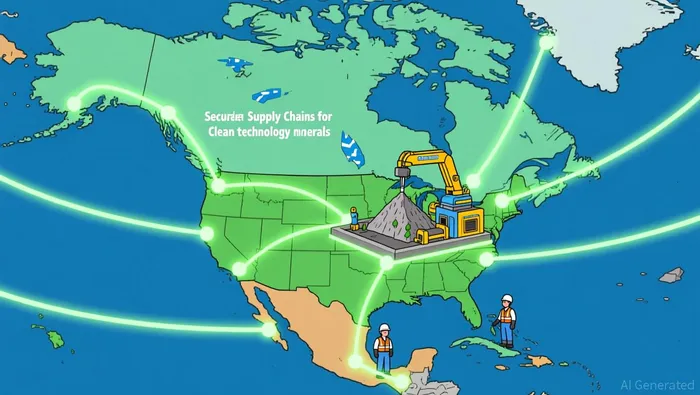
The catalyst is clear policy action. In 2024, Canada added phosphate to its official list of critical minerals, a move that aligned with the U.S. and EU. But the real momentum shift came this week, when the 2025 federal budget was amended to include phosphate specifically as a mineral essential for clean technology. This isn't just a label change. It unlocks tangible financial benefits, making exploration and downstream processing eligible for key federal programs, including two 30% refundable tax credits. For junior miners, this is a direct funding lifeline.
This policy tailwind has created a major catalyst for the sector. The amendment has focused intense market attention on the entire North American critical mineral supply chain, with phosphate now firmly in the spotlight. Companies like First Phosphate are already touting how these credits will support fundraising and infrastructure development for projects like phosphoric acid and lithium iron phosphate (LFP) cathode plants. The setup is classic: a trending financial theme (secure domestic supply chains for clean tech) meets a company with a strategic asset (a permitted mine and processing potential). In this environment, strengthening the board is a tactical move to signal readiness to capitalize on the surge in policy and investor interest.
The Board Move: A Tactical Response to a Trending Catalyst
The board appointment is a classic case of governance following the news cycle. It comes not in a vacuum, but as a direct reaction to a major, trending catalyst. This week's policy shift, which added phosphate to Canada's list of critical minerals essential for clean tech, has created a viral sentiment around the sector. Search interest for terms like "critical minerals" and "phosphate mining" has surged, driving capital flows toward junior miners with eligible projects. Canadian Phosphate's move to strengthen its board is a tactical signal that it is preparing to raise capital and execute, leveraging this intense market attention.
The timing is precise. The company recently secured an exploration permit for its Wapiti Phosphate Project in British Columbia, a concrete step forward that aligns with its key 2026 exploration campaign. This permit is the operational catalyst that needs to be paired with financial and governance readiness. By bringing on new board members with relevant expertise, Canadian Phosphate is aligning its governance with this major operational catalyst. It's a way to signal to investors that the company is structured to move quickly from securing permits to advancing exploration and, ultimately, fundraising.
The broader context is clear. As First Phosphate noted, the new federal budget amendment makes exploration eligible for a 30% refundable tax credit. This isn't just policy talk; it's a direct funding lifeline that lowers the cost of capital for junior miners. In this environment, a strengthened board is a prerequisite for executing a successful capital raise. The company is positioning itself to be the main character in the next phase of this story, where high search volume for critical minerals translates into tangible investment. The board move is the setup for that next act.
Financial Impact and Valuation Implications
The policy tailwinds are now translating into tangible financial benefits, creating a clear path for valuation upside. The key mechanism is the 30% refundable tax credit for exploration expenses, which directly lowers the cost of capital for junior miners. For a company like Canadian Phosphate, this isn't theoretical-it's a lifeline that makes raising funds for its 2026 exploration campaign significantly cheaper and more attractive.
This capital is already flowing. Arianne Phosphate recently secured up to $735,000 in government funding for processing R&D, demonstrating the immediate flow of capital to this sector. The broader government commitment is massive, with up to $165.2 million announced for 22 Canadian projects at the PDAC convention just last month. This creates a powerful feedback loop: policy support fuels investor interest, which drives search volume, which in turn attracts more capital and government backing.
The main character in this story is the search volume for terms like "critical minerals" and "phosphate." This viral sentiment directly influences investor attention and stock performance. When the market is googling a topic, capital follows. The recent budget amendment has focused that attention squarely on phosphate, making companies with eligible projects the prime beneficiaries. In this environment, a strengthened board and a secured exploration permit are not just governance steps-they are prerequisites for capturing this surge in market attention and converting it into a successful capital raise.
The bottom line is a more favorable financial setup. With exploration costs subsidized and government funding available, the path to advancing projects like Canadian Phosphate's Wapiti Phosphate Project is clearer and less risky. This improves the company's ability to generate value, which should be reflected in its market valuation as the 2026 campaign unfolds.
Catalysts and Risks to Watch
The setup is clear. The company has the policy tailwind, a secured permit, and a strengthened board. Now, the market's attention will shift to execution. The primary catalyst is the execution of the 2026 exploration campaign at the Wapiti project. This is the next leg of the story. Results from this campaign will provide the first tangible data on the project's potential, directly confirming or challenging the bullish thesis built on policy support and search volume. Strong results could drive the next leg of the stock's move, while weak or delayed results would be a major setback.
The key risk is headline risk. The viral sentiment around phosphate is powerful but can cool quickly. If the company fails to meet its exploration targets or if there are delays in policy implementation or government funding disbursement, it could trigger a sentiment shift. The recent $165.2 million in government funding for 22 projects shows the capital is flowing, but it also means competition is high. Any stumble in the 2026 campaign would make Canadian Phosphate look less like a leader and more like a follower in a crowded field.
For investors, the watchlist is straightforward. First, monitor for further government funding announcements. More capital flowing into the sector validates the entire trend, but a slowdown would be a red flag. Second, track search interest for the ticker itself. An increase in searches for "Canadian Phosphate" would be a direct proxy for market attention and could signal a new wave of interest. Conversely, a drop would indicate fading momentum. The board move was the setup; the exploration results are the payoff. Watch for those catalysts and the risks that could derail the trend.