

The core financial event is a mid-cycle pause in Cardano's capital allocation. Project Catalyst, the on-chain grants mechanism, has halted Fund15 and Fund16, returning 18.5 million ADA to the treasury. This isn't a simple delay; it's a structural reset as stewardship shifts to the Cardano Foundation. At the same time, developer Input Output Global (IOG) has slashed its own 2026 funding portfolio by nearly 50%, from $97.5 million to $46.8 million.
The immediate impact is a sharp reduction in capital flow into the ecosystem. The pause in Catalyst's voting rounds leaves hundreds of applicants without a timeline, while IOG's smaller portfolio means fewer resources for critical upgrades like the Leios consensus engine and Pogun Bitcoin DeFi infrastructure. This dual cut creates a capital crunch just as the network aims to scale.
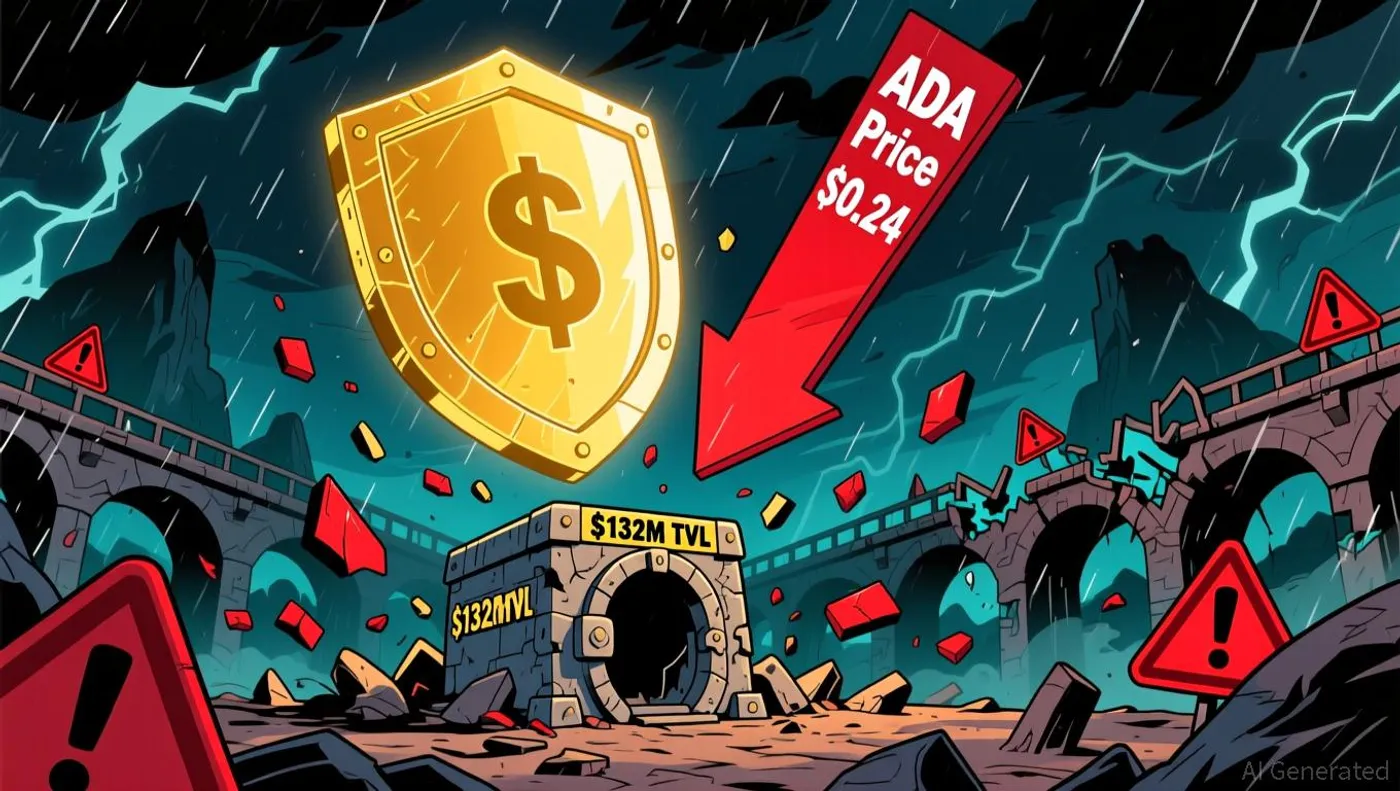
The scale of the freeze highlights the thin base for new capital. Cardano's DeFi ecosystem held approximately $132 million in Total Value Locked as of early April 2026. The combined $18.5M from paused Catalyst funds and IOG's reduced $46.8M portfolio represents a significant portion of that entire locked value. This sets up a critical test: can the network's existing capital and a leaner development budget drive the growth needed to close the gap between its high token valuation and its modest on-chain activity?
Catalyst Flow: Leios and Pogun's Funding
The remaining capital is now laser-focused on two critical technical upgrades. IOG's 2026 funding slate includes the Leios consensus upgrade, targeting a 10–65x increase in Layer 1 throughput. The testnet launch, scheduled for June, is a make-or-break technical catalyst. Its success will determine if Cardano can finally address its core scalability bottleneck, a prerequisite for any meaningful growth in transaction volume and DeFi activity.
Simultaneously, the portfolio funds Pogun, an end-to-end Bitcoin DeFi engine. This infrastructure aims to bring a non-margin credit market, yield tools, and a trust-minimized BTC bridge to the Cardano chain. The voting process for these proposals is open, with delegate representatives (DReps) expected to cast their votes until May 24. This creates a near-term governance pressure point, as the final allocation hinges on community buy-in during this window.
This concentrated flow into Leios and Pogun highlights a significant concentration risk within the ecosystem. The DeFi layer is dominated by a few protocols, with Minswap holding 25% of the chain's $132M TVL. While this provides a stable base for on-chain volume, it also means the entire capital allocation for scaling the network's core infrastructure is funneled through a relatively small number of key projects. The outcome of the Leios testnet and the Pogun build will therefore have a disproportionate impact on the network's trajectory.
External Threats and Liquidity Watchpoints
The broader DeFi environment presents a severe headwind. Losses have already topped $750 million in 2026 through mid-April, with major hacks at Kelp DAO and Drift Protocol alone accounting for over half a billion dollars. This wave of exploits, concentrated in cross-chain bridges, creates systemic risk and erodes capital across the sector. For a network like Cardano, which is still building its DeFi foundation, this external turbulence acts as a direct drag on liquidity and investor confidence.
The key metrics to monitor for Cardano's resilience are weekly DeFi volume and Total Value Locked (TVL) changes. A sustained decline in these figures would signal that the capital crunch is being exacerbated by a flight to safety from the wider DeFi market. Conversely, stability or growth in these numbers would indicate the ecosystem's core activity is holding up despite the external noise. Given Cardano's TVL of approximately $132 million, even modest outflows could have a pronounced percentage impact.
ADA price action remains a leading indicator of capital flow. The token has been under pressure, trading near $0.24. A decisive break above key technical resistance levels would be a strong signal that fresh capital is returning to the ecosystem, potentially offsetting the internal funding freeze. Until then, the price's inability to rally suggests that the combination of external DeFi losses and internal capital cuts is successfully draining liquidity.