

Here's what the market thinks it knows: Iran and the US-Israel coalition are nearing a ceasefire, so the geopolitical risk premium that pushed Brent past $120 is unwinding, and oil is falling as a result. Brent has dropped roughly 10% over the past month to around $93. WTI sits near $90. The narrative is tidy. The investment logic built on top of it is incomplete.
The ceasefire deal in negotiation calls for a 60-day truce, the reopening of the Strait of Hormuz, and some sanctions relief for Iran. That part is real. But the price decline isn't just about a supply premium evaporating. It's about something the market hasn't fully absorbed yet - the damage the war has done to oil demand.
The IEA's May 2026 Oil Market Report forecasts world oil demand will actually contract by 420,000 barrels per day year-over-year in 2026, settling at 104 million barrels per day. That's not a slowdown. That's a pullback. This was the first time the IEA has projected a full-year demand contraction since the 2020 pandemic crash. OPEC cut its own 2026 demand growth forecast to 1.17 million barrels per day, down from 1.38 million barrels per day previously. Both organizations are signaling the same thing: the $120 oil period broke something on the demand side.
Here's the mechanism. The Iran conflict disrupted oil and LNG supplies from the Middle East, creating what the World Economic Forum called the largest supply disruption in the history of the global oil market. Record prices forced Asian refiners to cut runs, European industry reduced throughput, and transport demand softened. Wood Mackenzie estimates Asian demand will be down 10 million tonnes per year in 2026 compared to last year, even after LNG supplies resume. Demand doesn't always come back. It finds substitutes, restructures supply chains, or simply doesn't reaccelerate because the macro environment - still weighed down by the cost-of-living shock from months of elevated energy prices - won't support it.
This matters because it changes the floor. When the Strait of Hormuz reopens under the ceasefire and Iranian export capacity gradually returns, supply is coming back into a market whose demand has been structurally impaired. The EIA's own models project Brent easing toward $89 in the fourth quarter as Middle East output recovers. That's a very different equilibrium than the $106 per barrel that sustained the sector through the first half of the year.
Now let's talk about what this means for energy stocks, because that's why you're here.
The ceasefire news is causing the usual whipsaw - E&P names getting sold off on lower oil, with investors worried about a rush back to supply. But the investment frame should be different. At $90 oil, the question isn't whether the ceasefire is permanent. It's whether the business you own can still generate cash flow when the price settles somewhere between $85 and $95.
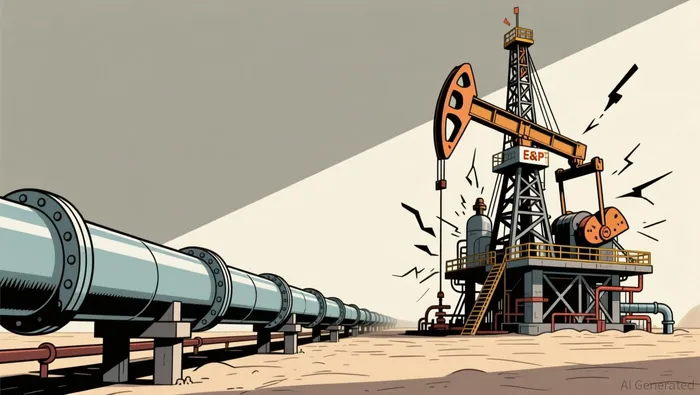
For midstream and pipeline companies, this is a non-event. Fee-based contract structures - the ones where the company charges a fixed toll on throughput regardless of the oil price - insulate cash flow from commodity moves. A company that derives 85% or more of its EBITDA from fee-based revenue will see almost no impact from whether Brent trades at $93 or $120. The distribution stays covered, the balance sheet keeps improving, and the peer-valuation gap created during the panic stays wide. This is where the fee-based insulation model earns its premium. The higher the contract share, the less any of this matters.
For exploration and production companies, it's a survival screen. At $90 oil, operators with all-in breakevens below $50 per barrel and net leverage below 3x will keep generating free cash flow, buy back debt, and grow through the cycle. Operators with breakevens above $60 and maturity walls looming will start cutting capital expenditure, and once capex cuts begin, production declines accelerate and the "cheap stock" becomes a dying one. Value investing is not about buying stocks that look cheap on a spreadsheet. It's about buying businesses that can survive the downturn and compound on the other side.
While it's true that the ceasefire creates near-term oversupply risk, I would argue that OPEC+ discipline is the counterweight. The cartel has already been making only symbolic output increases - 188,000 barrels per day for June, barely a rounding error. If demand stays soft, they'll hold the line. Historically, OPEC+ has been willing to let prices stay elevated rather than flood the market. That floor is real, even if the ceiling has come down.
There's one more layer of risk the ceasefire story glosses over. Since 2024, every Israel-Iran ceasefire has followed the same cycle: announcement, relief rally, deterioration, and collapse. The market is treating this deal as terminal. History says otherwise. If the Strait gets threatened again, the premium will come roaring back. That's a tail risk for midstream - their contracts don't care - but it's a genuine two-sided volatility call for E&P equities.
All things considered, the ceasefire headline is a distraction from the demand destruction underneath it. Oil prices are falling because the war broke something on the consumption side, not just because a supply premium is unwinding. For investors, the move isn't to panic-sell energy names on a lower oil price. It's to separate the fee-based cash flow generators from the commodity-exposed ones, check the balance sheet on every E&P position, and hold or add only where the margin of safety exists at $85 oil - not at $120. That's where the real value lives.
From a sector perspective, the opportunity is in fee-based midstream names that are still trading at a discount to peers despite predictable cash flows, and in ultra-low-cost E&Ps with fortress balance sheets that will survive whatever the ceasefire actually delivers. Everything else is pricing noise.