

A $950 million bet on falling oil prices was placed in the hours before the U.S.-Iran ceasefire announcement, a move that predictably drove prices lower. This specific trade is now the focal point of a regulatory investigation led by the Commodity Futures Trading Commission (CFTC).
The probe centers on a pattern of suspiciously timed trades. Regulators are examining at least two instances over a recent two-week period where oil futures volumes surged just before major policy announcements from the Trump administration. The first occurred on March 23, ahead of a postponed strike announcement, and the second was around April 7, preceding the ceasefire. In both cases, the trading spikes contributed to sharp price declines.
The key investigative tool is the request for 'Tag 50' identity data from exchanges like CME Group and Intercontinental Exchange. This data is critical for identifying the entities behind the trades and determining whether they possessed material nonpublic information. The central question is market integrity: whether these well-timed bets constitute price manipulation or insider trading, undermining the fairness of energy markets.
Price Action and Market Disconnect
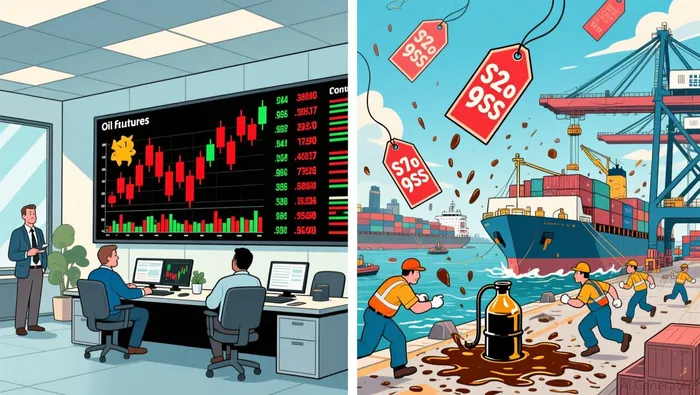
The ceasefire announcement triggered a violent price reaction, with WTI futures falling about 15% to $95.62 per barrel. This sharp plunge reflected immediate market relief on the geopolitical front. Yet, the physical market told a starkly different story, creating a dangerous pricing disconnect.
While paper prices signaled calm, physical crude is trading at record highs. Dated Brent, the benchmark for immediate physical delivery, trades around $120 a barrel, a level not seen since 2022. This gap between futures and physical prices is the widest in memory, indicating a profound misalignment between market bets and real supply realities.
The disconnect persisted and even widened after the U.S. imposed a new blockade on Iranian ports. This move pushed prices back up to around $100, but the physical premium remained elevated. The core issue is clear: the futures market is pricing in a rapid resolution, while the physical market prices in months of supply disruption.
Catalysts and Watchpoints
The immediate catalyst is the CFTC's investigation itself. The regulator has requested Tag 50 identity data from major exchanges, a move that will determine if enforcement actions follow. The probe's resolution timeline and any resulting fines or bans will set a precedent for market integrity in energy and, potentially, prediction markets.
The stability of the ceasefire is the next major watchpoint. The blockade on Iranian ports imposed after the initial ceasefire announcement has already pushed prices higher, showing how fragile the current calm is. Any new policy pivot from the Trump administration could trigger another wave of well-timed trades and renewed volatility.
Finally, watch for regulatory evolution. The investigation is part of a broader push to target insider trading in financial prediction markets. The CFTC's actions here could lead to new rules that directly impact how traders bet on geopolitical events, fundamentally altering the risk-reward calculus for such plays.