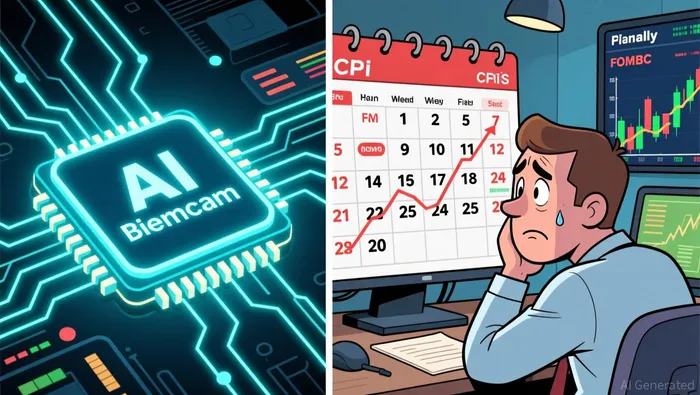
The rally looks strong, but options positioning still shows caution
The rally is real. The confidence underneath it is not.
The S&P 500 just added about $1.4 trillion in market cap in a single session. Yet the next day brought a more mixed signal: the index still hit a new closing high, while nine of eleven sectors declined. That points to a narrow, tech-led advance rather than a broad risk-on move.
The options tape tells a similar story. The VIX, the market's fear gauge, also rose, by nearly 5 percent on the same day, alongside demand for optionality rather than clean risk-on sentiment. That does not prove a drop is coming. It does suggest investors are still buying protection as the market heads into a busy macro stretch.
After last week's over 2.6% S&P 500 drop and the sharp unwind in AI and semis, that hedging looks more like damage control than confidence. With inflation and Fed risk still ahead, it is a setup where a strong close can hide underlying fragility.
Broadcom has become the market's closest AI demand read-through
Broadcom matters now because investors are using it to judge whether AI infrastructure spending is still accelerating. The company had been expected to report approximately $22 billion in quarterly revenue, including AI semiconductor revenue of $10.7 billion for Q2. More important than the headline numbers is management's commentary on the direction of demand.
Why one report can move the whole AI trade
Broadcom's results have become a proxy for the pace of hyperscaler AI infrastructure investment. Commentary on whether AI chip demand is still accelerating, stabilizing, or showing signs of saturation carries read-across implications for technology sector risk appetite broadly. In a narrow market, that turns one earnings report into a sentiment test for the whole basket.
If Broadcom looks strong, bulls can argue the infrastructure buildout is still intact and try to push sentiment back toward AI software and application names. Alphabet is one example. It has already benefited from an AI-driven rally, and recent options activity pointed to major players are positioning across multiple time horizons for further upside.
Bull and bear read-throughs
- Bull case: Broadcom beats, guidance holds, and management sounds constructive. The market can then return to the simpler story that the AI cycle still has room to run.
- Bear case: Broadcom is merely less accelerated rather than obviously weak. In a fragile setup, that may be enough to shake confidence.
After last week's sharp AI selloff and Violent Capitulation in the Semiconductor Sector, belief can unravel faster than fundamentals. That is why even a modest miss on tone may matter as much as the raw numbers.
CPI and the Fed now matter as much as Broadcom
Broadcom may settle the AI story for a day. Macro data decides whether the broader market gets repriced.
The debate is inflation, policy, and sensitivity
Investors are no longer judging one event. They are judging a chain of evidence leading into the June 16-17 FOMC meeting. That sequence starts with today's Beige Book publication, which matters more for tone than for the headline. The Beige Book does not typically move markets the way hard data releases do, but it still forms part of the evidence base Fed officials use.
J.P. Morgan still expects the Fed to remain on hold at its next meeting and likely continue holding rates steady for the rest of 2026. But market expectations can still move in either direction, which is exactly what makes this stretch risky. If inflation keeps looking sticky, the market does not need a rate hike to turn less friendly. It only needs fewer clues that cuts are getting closer.
What to watch in the data
The trap is treating CPI like a pass-fail test. The market also needs softer services inflation, softer wage language, and a labor market that stops reinforcing inflation fear. If that combination does not show up, even a decent headline number may not be enough.
Positioning into a crowded and nervous tape
After the inflation and Fed sequence, the practical move is to treat the rally as real but still fragile. Keeping short-dated index puts into the June 10 CPI release and the June 16-17 FOMC meeting is less about calling a crash and more about insuring a crowded tape that still shows demand for optionality rather than clean risk-on sentiment.
What makes sense here
- Keep time-boxed insurance. Short-dated index puts fit a market that is still trading fear as much as conviction.
- Treat Broadcom as a signal, not a blind chase. Its results matter because they reflect the pace of hyperscaler AI infrastructure investment.
- Respect squeeze risk without overtrusting it. The semiconductor complex still carried extreme positioning after the unwind, which can snap higher on relief but still looks fragile.
- Use Alphabet as a sentiment gauge.Aggressive call buying in Alphabet matters less as a standalone stock call and more as a sign of whether AI leadership is broadening again.
What would weaken the caution
This cautious view loses force if rate expectations soften, semis stabilize, AI leaders keep attracting call buying, and the index holds its gains without the VIX re-rating higher. For now, though, the cleanest evidence is still mixed: prices are pushing higher, but option markets are not acting like the rally is effortless.